news article
CDU horticulturalist helps raise school gardens in PNG
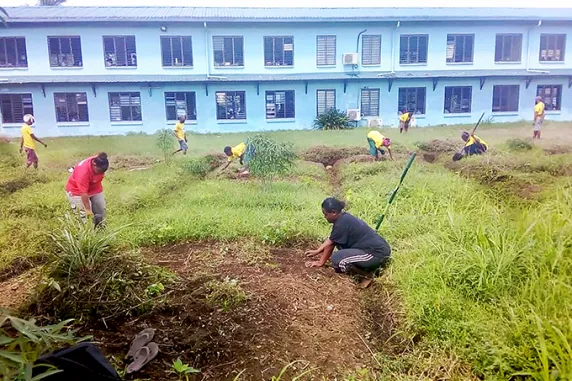
A Charles Darwin University horticulture expert is spearheading a project to help schools in Papua New Guinea grow their own produce to counter food supply issues caused by COVID-19.
School of Primary Industries horticulture and aquaculture team leader Tania Paul said that working with PNG high schools and primary schools was helping to strengthen agricultural education, provide nutritious meals to students, and educate them on good nutrition.
“Since COVID-19 hit, many families in PNG have lost jobs and income, local markets have closed, and supply chains for fresh food have been disrupted, causing a lot of hardship to the most vulnerable,” Ms Paul said.
“CDU and a team of PNG agriculture graduates have set up a school garden pilot in Lae District, Morobe Province, drawing on years of experience and research developed in the Northern Territory and across the world.
“The plan was to adapt the school garden pilot so that those hardest hit are paid to work on setting up horticultural plots, fish ponds and poultry sheds in local high schools and gardens in local primary schools.”
The project will provide a boost to local food production in the short-term and local food security in the long-term, with a supply of nutritious food for schoolchildren and any surplus going to local markets.
Ms Paul said the long-term goal was to work with schools and teachers to boost agricultural education, and to equip high school students with agricultural, business and entrepreneurial skills.
“The school farms are set up to be financially self-sustaining, so it’s a very cost-effective and sustainable way to run a project,” she said.
“Once initial costs are met and the teachers trained, the schools are able to maintain the farms themselves.”
The project is supported by the Lae City Hand Up program, and the Lae City Chamber of Commerce, and the Department of Foreign Affairs and Trade.
Related Articles
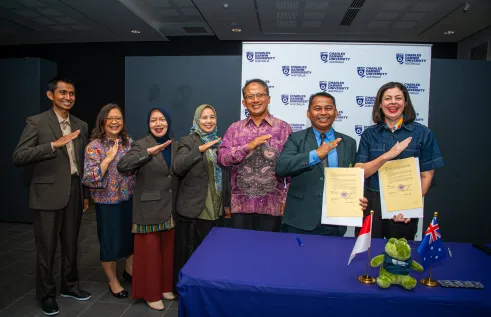
Partnership with Indonesian university to support education and research
A new partnership with one of East Java’s leading education institutions is aligning Charles Darwin University with priorities to strengthen Australia’s relationship with Indonesia.
Read more about Partnership with Indonesian university to support education and research
Darwin needs a BBL: Architecture student's vision for the Top End
A vertical promenade designed by a Charles Darwin University (CDU) architecture student and inspired by Singapore's Gardens by the Bay offers a glimpse into Darwin's future facelift.
Read more about Darwin needs a BBL: Architecture student's vision for the Top End
CDU improves standing in Times Higher Education rankings
Charles Darwin University (CDU) has improved its standing across all five categories in the 2027 Time Higher Education World University Rankings.
Read more about CDU improves standing in Times Higher Education rankings


