News
Delegates from more than 20 countries descend on Darwin to celebrate multilingualism

Charles Darwin University will welcome more than 130 delegates from 23 countries next week for the Applied Linguistics Association of Australia (ALAA) Conference.
The conference, hosted at Danala | Education and Community Precinct by the Education, Enabling and Linguistics Discipline at the University, will be in the Top End for the first time.
The ALAA Conference will bring together applied linguists, language teachers, curriculum specialists, and First Nations education practitioners from across the globe to share knowledge about innovations in language learning and teaching, transformative pedagogy, language policy and planning, and the role of artificial intelligence and other disruptive technologies in applied linguistics.
Located in one of Australia’s most linguistically and culturally diverse regions, this year’s ALAA Conference provides an important opportunity to showcase Northern Australia’s unique contributions to applied linguistics and to strengthen national and international collaboration in the field.
The three-day event will feature an exciting program of special sessions, workshops, and panel discussions, including ‘Celebrating First Nations Languages and Language Learning in Australian Schools’ and ‘Culturally and linguistically inclusive teaching and research’.
The program will also highlight the work of four distinguished keynote speakers: Dr Robyn Ober (Batchelor Institute), Professor Toni Dobinson (Curtin University), Associate Professor Shoshana Dreyfus (University of Wollongong) and Dr Roby Marlina (SEAMEO-RELC (Regional Language Centre), Singapore).
This year’s conference theme, “Language and the Interface of Mono-/Multi-/Translingual Mindsets,” invites delegates to reflect on how considerations of language and working within a multilingual community are fundamental aspects of contemporary society.
The theme is particularly significant as 2025 marks twenty years since esteemed linguist Michael Clyne coined the term ‘monolingual mindset’ in his book, Australia’s Language Potential, to describe how Australia’s multilingual society continues to adopt monolingual ways of being.
Two decades on, the theme continues to resonate, highlighting how the monolingual mindset continues to persist within Australian society, and particularly in our educational and bureaucratic institutions, despite the multilingualism present in the community.
Hosting the ALAA Conference in Darwin underscores CDU’s values and commitments to fostering inclusion and belonging, valuing diversity, and honouring Australian First Nations knowledges in approaches to language education and research.
The conference will be held 17-19 November at the CDU Danala | Education and Community Precinct. For more information, visit the conference website at https://alaaconference.cdu.edu.au/
Related Articles
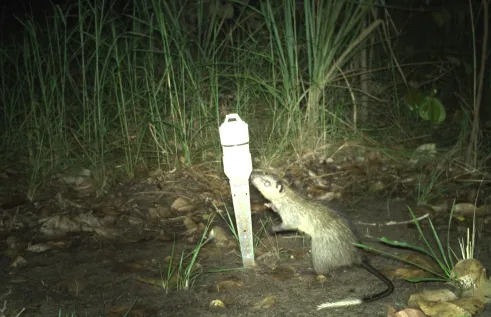
Rangers reimagine AI in wildlife monitoring
As workplaces around the world wrestle to integrate Artificial Intelligence in their operations, researchers and rangers in the heart of West Arnhem are successfully embracing this technology in conservation without compromising respect and knowledge.
Read more about Rangers reimagine AI in wildlife monitoring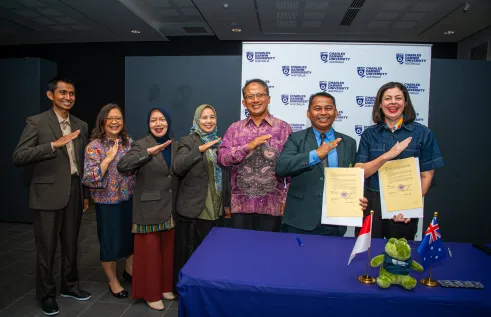
Partnership with Indonesian university to support education and research
A new partnership with one of East Java’s leading education institutions is aligning Charles Darwin University with priorities to strengthen Australia’s relationship with Indonesia.
Read more about Partnership with Indonesian university to support education and research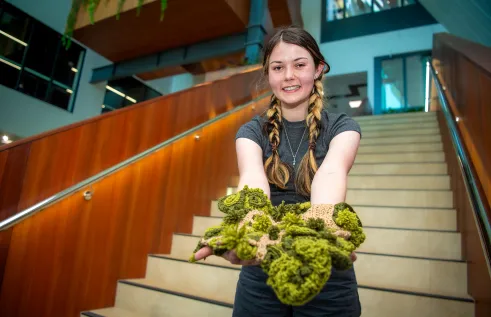
Crocheted landscape takes the gold in architecture competition
When tasked to defy growing reliance on artificial intelligence and create a landscape model without digital tools, Charles Darwin University (CDU) Bachelor of Architectural Design student Jorja Handebo turned to her hobby of the past five years: crochet.
Read more about Crocheted landscape takes the gold in architecture competition


