New study finds heat and cold exposure costing Australian workforce $94 million annually
Exposure to heat and cold is costing Australian workers and employers an estimated $94 million a year, with heat-related occupational injuries and illnesses (OIIs) projected to rise more than 25 per cent by 2050.
Researchers from Charles Darwin University (CDU), the University of Adelaide and Monash University analysed more than 2.3 million workplace injury claims across all capital cities - with the exception of Canberra - from between 2005 and 2018, linking them with daily maximum wet bulb globe temperatures (WBGT).
WBGT is a measure of heat stress in direct sunlight that can be applied both indoors and outdoors.
The study found 1.66 per cent of all OIIs could be attributed to heat, representing nearly 39,000 preventable OIIs over the 13-year study period.
Causes included working in clothing not suited to the conditions, doing physically demanding tasks in unusually hot or cold conditions, and having limited access to cooling measures like air-conditioning.
0.66 per cent of OIIs were prevented by cold, however this decrease was small compared to the increased costs from cold - with researchers estimating that OIIs associated with cold were more likely to be more severe or longer in duration, resulting in increased costs despite their reduced frequency.
Acknowledging the study as the first to provide a national cost profile of both heat and cold attributable OIIs - lead author, University of Adelaide (Faculty of Health and Medical Sciences) Postdoctoral Researcher, Dr Matthew Borg - said extreme temperatures were one of the most threatening health impacts of climate change.
“Under a high-emissions scenario, heat-related OIIs are projected to increase from 1.66 per cent to 2.10 per cent by 2050, posing major risks to worker safety and productivity," Dr Borg said.
“Understanding how temperature affects costs can help workplaces and public health agencies create cost-effective plans to prevent and manage temperature-related OIIs.
"Employers can protect workers by using heat safety measures such as setting work-to-rest ratios based on temperature and job demands, providing plenty of water and access to shade or air-conditioning, monitoring hydration, ensuring proper clothing, creating heat acclimatisation plans for new workers, and reducing heat generated in the workplace."
Dr Borg also noted urban planning strategies could reduce heat - including designing buildings that don’t retain too much heat or cold, adding more green spaces, creating walkable and bike-friendly areas, and installing more public electric vehicle chargers to encourage the use of electric cars.
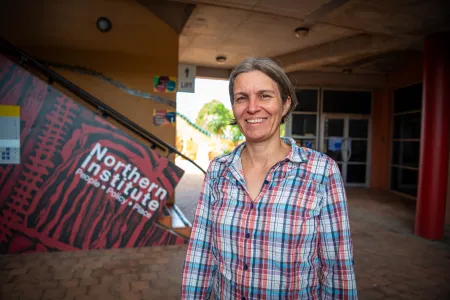
The study’s co-author - CDU Northern Institute Professor Kerstin Zander – said more research was needed to determine the true extent of OIIs and their burden on the Australian economy.
“OIIs of mild severity are less likely to be reported, potentially biasing the data to over-represent more severe OIIs and underestimating the true cost burden to Australian workers and employers,” Professor Zander explained.
"Future research on how temperature affects work-related health should look at both heat and cold.
“Since injuries and costs affect people of all ages, genders, industries, and jobs, prevention efforts should target the whole workforce."
The study, Anomalous temperatures increase occupational injuries, illnesses and associated cost burden in Australia, was published in Urban Climate Volume 59.
Related Articles

Federal funding for Country-based health and climate resilience
A new research collaboration to support and strengthen Country-based health and climate resilience has received funding through the National Health and Medical Research Council’s Centres of Research Excellence scheme.
Read more about Federal funding for Country-based health and climate resilience
New livestream brings remote Australian arid zone waterhole to the world
A new livestream from a remote waterhole in the Northern Territory is giving people around the world the opportunity to observe wildlife in real time.
Read more about New livestream brings remote Australian arid zone waterhole to the world
How ants are cashing in on the fight against money laundering
An AI model inspired by ants, bees, and birds could be the key to cracking down on blockchain-based money laundering, new research led by Charles Darwin University (CDU) has found.
Read more about How ants are cashing in on the fight against money laundering


