News
Northern Territory agriculture industry mover and shaker takes role with research institute
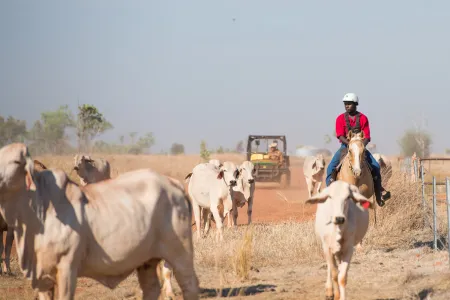
Former head of NT Farmers, Paul Burke, is now supporting the Research Institute of Northern Agriculture (RINA) after being appointed its Steering Committee Independent Chair.
Mr Burke was the CEO of the farmers’ association for four years, and was instrumental in getting mango pickers to help the industry in the Northern Territory to survive the lockdown, when fruit was rotting on the ground in other regions because of picker shortages.
“It was a challenging time, but it showed the best of what we can do. It showed us how to find a pathway through industry hardship,” Mr. Burke said.
“The (mango) season is short and we are remote, so there are always challenges even during the best of times.”
Mr Burke said the RINA would address and find solutions to many of the challenges facing the agricultural industry in Northern Australia.
“I’ve seen how misinformation can damage or hamper an industry’s growth in the NT, such as cotton,” he said.
He said the truth is that cotton doesn’t destroy rivers, but it's bad legislation and poor management that damages rivers.
“RINA is the vehicle to deliver evidence-based research for a range of issues with agriculture in the Northern Territory as we look for opportunity for growth,” he said.
“I expect research at the institute to have impact not only across Northern Australia, but also across south-east Asia.”
RINA Director Sam Banks welcomed Mr Burke’s appointment and said he has worked closely with the former head of NT Farmers on broad issues around agriculture, the environment and development in the NT.
“Mr Burke has always taken a collaborative approach to management, and we look forward to having his inclusive approach in helping us shape research programs that draw on the collective expertise and interests across the agriculture and land management sectors in northern Australia,” Professor Banks said.
RINA was established this year with the appointment of researchers in the fields of biosecurity, broadacre cropping, pastoral and aquaculture.
The institute is based at Charles Darwin University's Casuarina campus.
RINA, which aims to push agricultural innovation in Northern Australia, is funded by the Commonwealth Government and is supported by project partners including the Department of Tourism, Industry and Trade (DITT), NT Farmers, NT cattleman’s Association, NT Seafood Council, Murdoch University, James Cook University and Central Queensland University (CQU).
Related Articles

Federal funding for Country-based health and climate resilience
A new research collaboration to support and strengthen Country-based health and climate resilience has received funding through the National Health and Medical Research Council’s Centres of Research Excellence scheme.
Read more about Federal funding for Country-based health and climate resilience
New livestream brings remote Australian arid zone waterhole to the world
A new livestream from a remote waterhole in the Northern Territory is giving people around the world the opportunity to observe wildlife in real time.
Read more about New livestream brings remote Australian arid zone waterhole to the world
Leading scientist recognised for lifetime of dedication to Australian biodiversity and conservation
One of the nation’s most distinguished experts in Australian biodiversity and conservation will be celebrated in an upcoming Charles Darwin University graduation ceremony.
Read more about Leading scientist recognised for lifetime of dedication to Australian biodiversity and conservation


