RIEL seminar series
Models for interpreting ecosystem change
| Presenter | Dr Anna Richards (CSIRO) | |
|---|---|---|
| Date/Time |
to
|
|
| Contact person | E: RIEL.outreach@cdu.edu.au | |
| Location |
Savanna Room, Yellow 1.2.48 at CDU Casuarina Campus And online via Zoom (see below for Zoom link) All times are ACST |
|
| Open to | Public | |
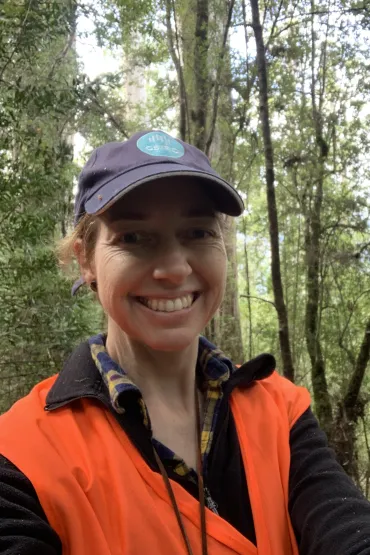
Dr Anna Richards is a plant and soil ecologist and senior research scientist at the Commonwealth Scientific and Industrial Research Organisation (CSIRO), based in Darwin. She has a broad interest in ecosystem management – particularly how the science of vegetation and soil dynamics, along with land management practices, can be used to better monitor, evaluate and forecast ecosystem condition.
Healthy ecosystems contribute to human wellbeing and the economy, but to achieve this they must be effectively managed, which requires credible and trusted information. Ecosystem accounts are one potential source of this information; they quantify stocks of natural capital and flows of ecosystem services, using the System of Environmental Economic Accounting – Ecosystem Accounting.
Here we describe a set of regional ecosystem accounts, developed in collaboration with the Australian government, for the gulf region in Queensland. To interpret change in the accounts, including ecosystem extent, condition, biodiversity and services over time, we collaborated with regional experts to develop a set of conceptual models – state and transition models – to show graphically how ecosystems work.
In the seminar ‘Models for interpreting ecosystem change’, Anna will describe the models and their application to understanding how different land management actions alter ecosystem characteristics and the values and benefits that flow from them.
Related Events
Last refugium of a critically endangered species: Three decades of conservation
The Banggai Crow (Corvus unicolor), is one of the world’s most threatened endemic species. The bird survives in an increasingly fragmented refugium within the Banggai Archipelago, Central Sulawesi.
Read more about Last refugium of a critically endangered species: Three decades of conservation
Time for research
This workshop shows you how to guarantee you spend high quality time on your research outputs. It covers prioritising, goal setting and managing competing demands in a university context. If you want to increase your research output without compromising your work/life balance, then this workshop is for you.
Read more about Time for research
What does it mean to be an academic today?
Hear from a panel of individuals from a range of backgrounds and career stages. Key topics to be covered include:
- The academic career in today’s context and the different types of academic roles
- The emergence of the impactful researcher
- From industry to academia and vice versa
- Being strategic: understanding external forces at play, including regulation and policy directions from government
- The importance of consistency and resilience


