
Leading resilience in a changing world
In an era of increasing climate volatility and complex global crises, the demand for adaptive, evidence-based Humanitarian, Emergency and Disaster Management (HEDM) research and practise has never been more urgent. Charles Darwin University stands at the forefront of this challenge. As Australia’s "Northern Gateway" to Southeast Asia and the Indo-Pacific, we provide a critical nexus where academic rigor meets high-stakes, real-world application.
Central to our identity is a profound respect for First Nations knowledge and perspectives. In the Northern Territory, resilience is not a new concept. For over 60,000 years, Indigenous Australians have managed this landscape through sophisticated ecological knowledge, social systems, and community-led adaptation. By centring First Nations voices in our curriculum and research, our HEDM studies program bridges the gap between ancient wisdom and contemporary practice. We ensure that disaster management strategies are not just reactive, but are inclusive, sustainable, and deeply connected to the "Country" and its people.
Our Darwin campus serves as a "Living Laboratory" where theory meets the frontline. Charles Darwin University sits at the heart of the most disaster-prone region on Earth. From the tropical cyclones and extreme heat of Northern Australia to the seismic volatility and climate-driven crises of Southeast Asia and the Indo-Pacific, our environment is a constant teacher. Here, students don't just study disaster management in the abstract; they experience it within a vibrant cultural and tropical context.
While we utilise modern pedagogical, the true strength of our program lies in the integration of diverse worldviews. We empower the next generation of researchers and practitioners to work with communities, honouring local expertise and traditional ecological knowledge to build a more resilient and equitable world.
Discover World-Class Research and Education In Humanitarian, Disaster, And Emergency Management at Charles Darwin University
Explore HEDM courses Explore HEDM research
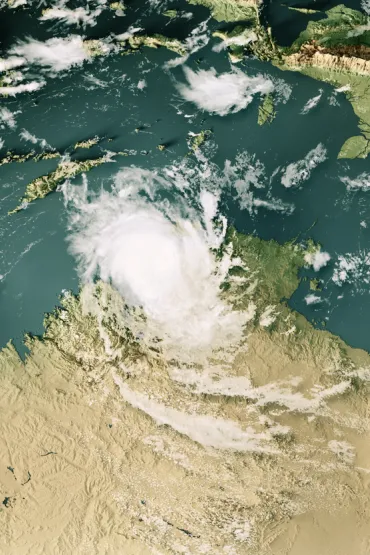
Historical resilience and future impact
We are located at the "Top End" of Australia—a gateway to Asia and one of the most disaster-affected regions on Earth. Darwin isn't just a campus; it’s a living laboratory. From the historical lessons of Cyclone Tracy and the WWII bombings to current climate adaptation challenges to learning about recovery through the lens of Darwin’s unique urban resilience history.
Four strategic pillars
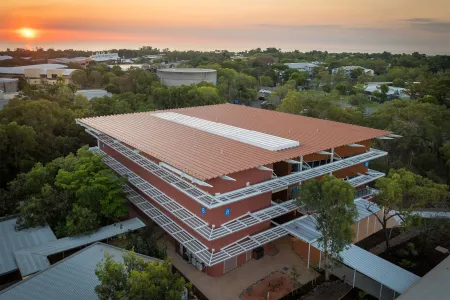
Practical excellence and simulation
Bridge the gap between theory and practice using our Hazard Interactive Virtual Environment (HIVE).
Centre for Better Health Futures
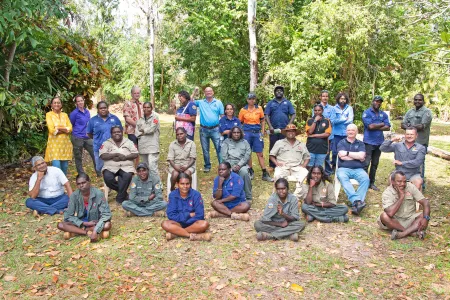
Indigenous perspectives
Centering Sovereign Knowledge and Ancient Wisdom in modern resilience strategies.
Disaster resilience
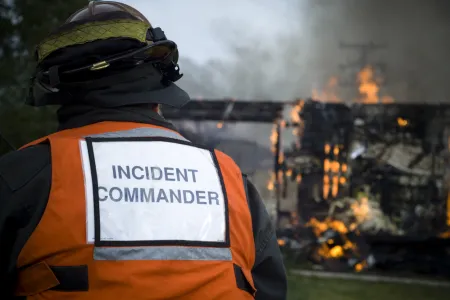
Regional leadership
Fostering partnerships across the Northern Gateway to enhance collective Asia-Pacific capacity.
Humanitarian disaster and emergency management
Evidence-based innovation
Transformative research addressing the drivers of modern crisis and recovery.
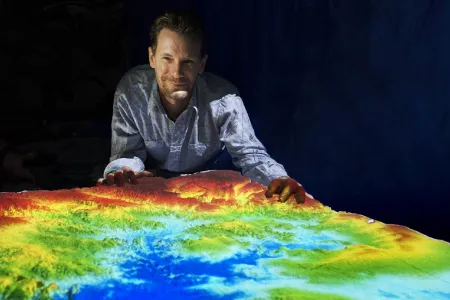
Projection Augmented Landscape Models

Unique field access
Darwin provides firsthand access to significant field sites, including the history of the WWII bombing and Cyclone Tracy, offering students a visceral understanding of disaster impact and recovery. Students benefit from an inter-disciplinary approach, learning from experienced practitioners shaping the field.
On-country immersive programs
Career outcomes
Graduates are highly sought-after by organisations worldwide, including NGOs, government agencies, and the private sector.
Roles include: Emergency Managers and Responders, Disaster Risk Management Specialists, Humanitarian Aid Workers, Policy Advisors, and Researchers.
Check out opportunities
Empower your professional journey
Study pathways
Micro-credentials
Rapid upskilling - Immediate impact with targeted courses in disaster preparedness and response. Focus on specific skills like Disaster Risk Reduction or Leadership in Crisis.
Undergraduate
The Bachelor of Humanitarian and Community Studies Provides the essential academic and practical foundation for a career in the sector.
Postgraduate
Master of Emergency and Disaster Management exit points at Graduate Certificate and Graduate Diploma levels. These also serve as direct pathways into higher study.
PhD Research
PhD opportunities focusing on innovative solutions for the Asia-Pacific region.
Your journey is as unique as the crises you will solve. We offer flexible entry and exit points designed for working professionals and career-changers.