Birds of a feather: Unexpected relationships take flight in the face of climate change
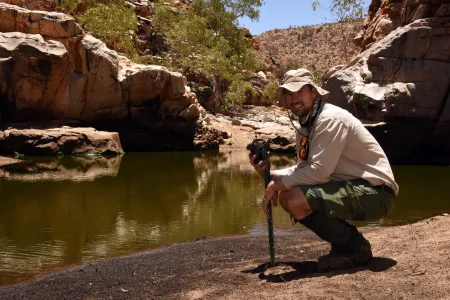
The pressures of climate change may be strengthening bonds between unlikely allies in Central Australia’s bird community as species are forced to work together to access life-saving resources, a study has found.
A species of Central Australian honeyeater, which has a reputation for being territorial and protective of limited food sources and other resources, is relying on potential competitors like finches to safely access waterholes.
Hotter weather associated with climate change threatens biodiversity on a global scale, and new research led by Charles Darwin University (CDU) PhD student Simon Votto has revealed the rising mercury means scarce water sources are becoming even more important.
Previous research from Mr Votto as an Honours student found birds that usually rely on their diet for hydration as opposed to surface water were seeking out the critical water sites once temperatures rise above 35°C.
This shaped the premise for his PhD.
“I expected that in cases where water is limited during hot, dry summers, honeyeaters might try and defend those sites, but we actually found they would often go into waterholes with other birds,” Mr Votto said.
“One possible explanation for that is that they're doing it to reduce the risk of predation at the individual level by accessing drinking with other species – a number of times, I found honeyeaters waited until species like finches went in to drink, and they would follow them in.”
Mr Votto said several canopy foraging birds, despite the heat, would not use waterholes unless there was fringing vegetation cover within 10 metres of the site, meaning these species were unlikely to access sites degraded by feral animals like camels.
“Long-lasting waterhole sites are often supported by groundwater input, which means there’s usually more vegetation and better food sources for honeyeaters to access in the habitat surrounding them,” Mr Votto said.
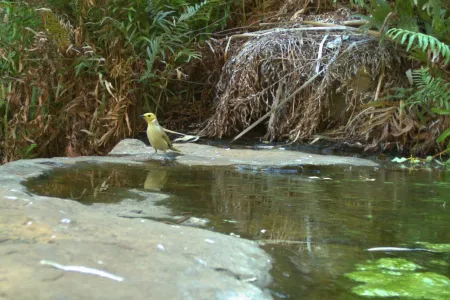
He said understanding the habits of the birds frequenting Central Australian waterholes would play a critical role in managing such sites.
“Sites that are affected by habitat degradation from feral animals like camels, for example, could be restored and better protected from pests,” Mr Votto said.
“These sites are going to be very important for birds in a warming climate, particularly when they already live in environments subject to extreme heat conditions – many of them will become more dependent on these sites to meet their water needs.”
Principal supervisor for the study, Professor Jenny Davis, said the study highlighted the importance of maintaining the vegetation surrounding arid zone waterholes.
Professor Davis said about 70 per cent of inland Australia experienced arid or semi-arid climates.
“Controlling wildfires and fire-promoting plants such as Buffel grass, restricting access by feral herbivores, especially camels, and replanting vegetation with local species are all important strategies to conserve much-valued waterholes and the birds they support in central Australia,” she said.
Associate Professor Christine Schlesinger, who also supervised the study, said maintaining the sites would not just support the ecosystem, but was also of high cultural importance.
“Many of the smaller sites in particular have been actively maintained and cared for by Central Australian First Nations people for millennia, allowing both humans and other species to persist in areas where there might be no other free-standing water for tens or even hundreds of kilometres,” Professor Schlesinger said.
“Maintaining the health of these waterholes – work that is already of high priority across Indigenous Protected Areas – is critical, as is further research to inform management approaches.
“We know these sites provide critical access to water but we know relatively little about the behavioural adaptations and social dynamics of animals that rely on these resources, or about how these are changing with the climate.”
Related Articles

Darwin needs a BBL: Architecture student's vision for the Top End
A vertical promenade designed by a Charles Darwin University (CDU) architecture student and inspired by Singapore's Gardens by the Bay offers a glimpse into Darwin's future facelift.
Read more about Darwin needs a BBL: Architecture student's vision for the Top End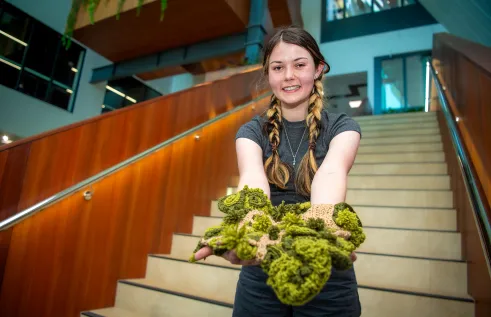
Crocheted landscape takes the gold in architecture competition
When tasked to defy growing reliance on artificial intelligence and create a landscape model without digital tools, Charles Darwin University (CDU) Bachelor of Architectural Design student Jorja Handebo turned to her hobby of the past five years: crochet.
Read more about Crocheted landscape takes the gold in architecture competition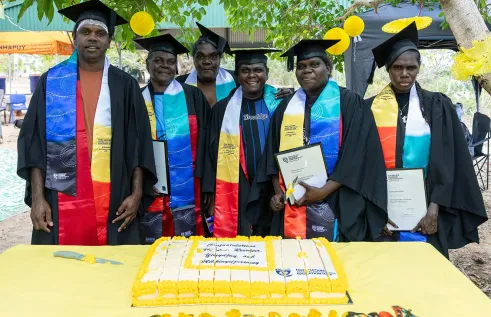
First Nations Training and Teacher Education Hub celebrates first major milestone
As Charles Darwin University's (CDU) First Nations Training and Teacher Education Hub draws closer to the end of its first year, one of its greatest milestones to date was conferring its first six graduates.
Read more about First Nations Training and Teacher Education Hub celebrates first major milestone


