Can regional construction projects achieve zero waste? Study reveals how
It is possible to create little to no rubbish from building construction in regional towns, but the chain of responsibility starts at the top with those commissioning a project needing to consider waste reduction from the planning stages.
New research by Charles Darwin University (CDU) academics explored the barriers to adopting a circular economy in construction projects in Alice Springs.
A circular economy is a system which aims to minimise waste and maximise resource efficiency by reusing, repairing and recycling products instead of sending them to the landfill.
Globally, building construction contributes about 30 per cent to total waste.
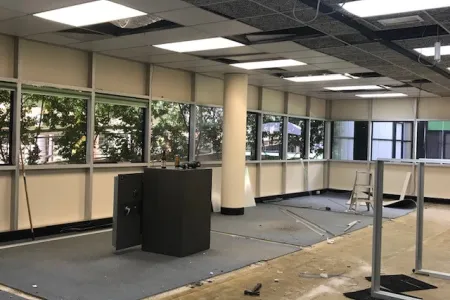
The research focused on using circular economy principles in the design and construction of a renovation project at CDU’s Alice Springs campus.
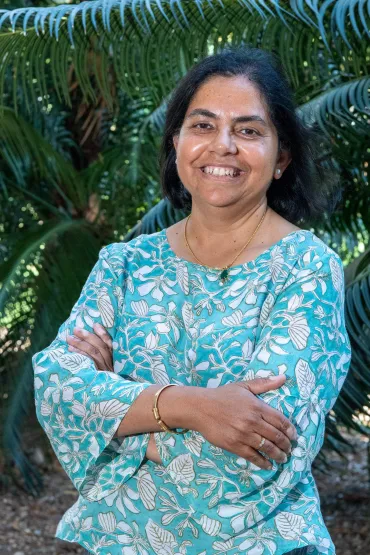
The study, led by Senior Research Fellow Dr Deepika Mathur from CDU’s Northern Institute, involved implementing the principles when commissioning the project, conducting interviews with the main stakeholders such as the project manager, architects and contractors, and monitoring the movement of the waste.
The results revealed the main barrier to implementing a circular economy is the willingness of the clients commissioning a construction project.
“In this research project, the clients (CDU) showed leadership by adopting a circular economy approach and thereby asking architects to reuse certain materials and by including a weightage for waste management in their tender documents,” Dr Mathur said.
“Since the client appoints the architect, project manager, builder and any other consultant, their acceptance of a circular economy practice in building construction projects is critical to the adoption of circularity aspects.”
The stakeholders were able to reuse partitions, ceiling tile frames, timber paneling and other materials, resulting in diverting reusable and recyclable materials from the landfill.
“The inclusion of waste management as a sustainability criterion, made the actors more aware of the ways they could divert building materials from landfill,” Dr Mathur said.
“The architect and the glaziers worked together to design new partitions in the Info Shop, such that the old glass and the doors could be reused. Ceiling tile frames and timber paneling were reused on site by the builders. Waste was sorted on site and materials were sent for reuse and recycling to the local Tip shop or the metal recyclers, rerouting them to more sustainable solutions.”
Materials which did not meet new Australian safety standards were not reused.
Dr Mathur said the other key barriers were the lack of knowledge among small to medium sized businesses about how to reduce and manage waste, and the cost of transporting waste from regional towns. Metal, paper, plastics and cardboard are all sent interstate for reprocessing.
“The small sizes of businesses, such as architects, builders and sub-contractors, faced the barrier of lack of knowledge about how to reduce and manage waste as well as having limited options for recycling locally,” Dr Mathur said.
“They can be up skilled through their peak body organisations, for example the Institute of Architects or Master Builders Association, via their professional development programs.
“To boost circular economy adoption in regional construction, procurement policies should embed circular criteria, to balance sustainability and budgets. Financial incentives, regional environmental ratings, transport subsidies, and upskilling building industry stakeholders are key to enabling widespread industry participation in these areas.”
The study was conducted alongside CDU Dean of Business and Accounting Professor Maneka Jayasinghe and Professor Kerstin Zander from CDU’s Northern Institute.
Implementing a circular economy in regional Australia: who bears the economic costs in construction projects? was published in the journal Urban Research & Practice.
Related Articles

The good, the bad, and the ugly food: Why religious shoppers are buying bruised veggies
A recent study with Charles Darwin University examines how consumers’ religiosity influences the purchase of “ugly foods”, or foods that are aesthetically imperfect but nutritious.
Read more about The good, the bad, and the ugly food: Why religious shoppers are buying bruised veggies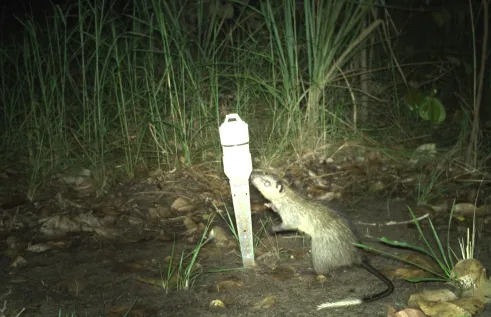
Rangers reimagine AI in wildlife monitoring
As workplaces around the world wrestle to integrate Artificial Intelligence in their operations, researchers and rangers in the heart of West Arnhem are successfully embracing this technology in conservation without compromising respect and knowledge.
Read more about Rangers reimagine AI in wildlife monitoring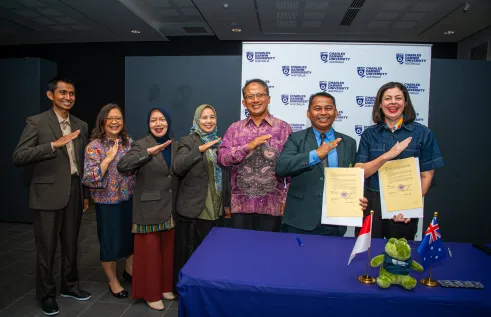
Partnership with Indonesian university to support education and research
A new partnership with one of East Java’s leading education institutions is aligning Charles Darwin University with priorities to strengthen Australia’s relationship with Indonesia.
Read more about Partnership with Indonesian university to support education and research


