News
CDU’s world-class instrument training meets workforce demands
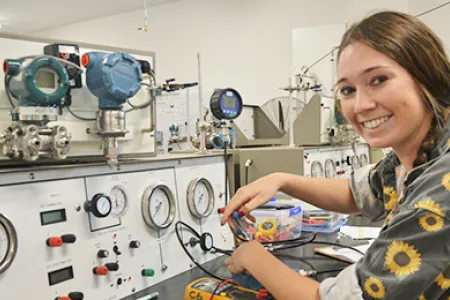
Located in Darwin at the heart of Northern Australia’s emerging natural resources industry, Charles Darwin University’s (CDU’s) high-tech instrumentation training facility is meeting the workforce shortages of the sector.
There is a critical shortage of automation, instrumentation and control engineers, technicians and technologists around the world due to the rapid growth in new technologies and industries, which is good news for CDU students undertaking a Certificate III in Instrumentation and Control and Certificate IV in Electrical Instrumentation.
The qualification is much in demand and provides competencies to maintain systems and devices for measuring and recording physical or chemical phenomenon, with graduates working in mining, oil and gas, chemical plants, petroleum refineries and more.
CDU VET Lecturer and Workplace Assessor, Electrotechnology, Rick Baker, said qualified instrumentation technicians are increasingly sought after.
“Our graduates find work with the likes of Inpex, Santos, NT Power and Water, refineries, mining operations and more and can find opportunities nationally and worldwide with their ongoing work experience,” Mr Baker said.
“They all have rooms full of instrumentation and they need someone qualified to keep it all working.”
CDU’s instrumentation facility is rated as one of the best in Australia and is an essential resource for students. CDU has recently acquired new equipment for the facility, a DCS, or distributed control system valued at over $300,000. The high-tech equipment includes a simulated control room, which allows instructors and students to monitor and control instrumentation through a graphic display on a computer screen.
Licenced electrician Savanne Canobie won Australian Apprentice of the Year this year and said she’s taking the course as a means of upskilling to get promoted.
“If you’re an electrician who can also service and repair instrumentation, it moves you well up the ladder in terms of employability and wages,” Ms Canobie said.
Team Leader Electrotechnology in CDU’s College of Engineering, IT and Environment, Brett Willowhite, said CDU had invested heavily in its instrumentation training facility.
“The equipment our students train with here is the most modern and comprehensive you’ll find in any training centre anywhere,” Mr Willowhite said.
“It includes programmable controllers, human-machine interfaces, and a wide array of instrumentation systems of all kinds.”
The average instrumentation salary in Australia is around $123,000 per year. Entry-level positions start at $93,000, while the most experienced workers make up to $151,000 per year.
Related Articles

Darwin needs a BBL: Architecture student's vision for the Top End
A vertical promenade designed by a Charles Darwin University (CDU) architecture student and inspired by Singapore's Gardens by the Bay offers a glimpse into Darwin's future facelift.
Read more about Darwin needs a BBL: Architecture student's vision for the Top End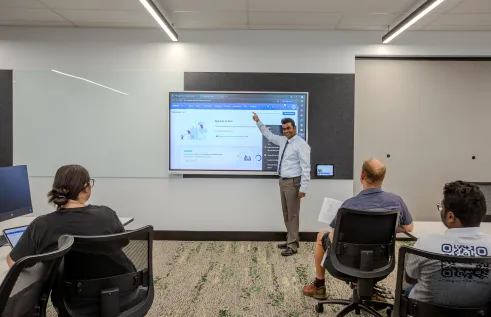
Trainer’s passion to help students succeed recognised
While Veeramani Ramasami used his studies to launch an early career as an accountant and financial Manager, it was the encounter with his first accounting teacher that inspired him on a different path into education.
Read more about Trainer’s passion to help students succeed recognised
Crocheted landscape takes the gold in architecture competition
When tasked to defy growing reliance on artificial intelligence and create a landscape model without digital tools, Charles Darwin University (CDU) Bachelor of Architectural Design student Jorja Handebo turned to her hobby of the past five years: crochet.
Read more about Crocheted landscape takes the gold in architecture competition


