News
Innovative ideas called for Science Week grants
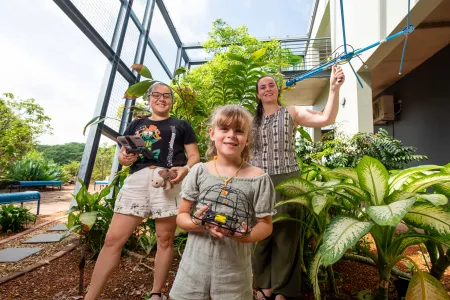
Inspiring and innovative science projects fit for all ages are being sought from the Northern Territory community for the 2022 National Science Week.
The National Science Week will run from August 13 to 21 across the NT, bringing a wide range of science activities to children and adults in the Territory.
The 2022 National Science Week is expected to include a range of displays including presentations and workshops on science, robotics, drones, chemistry experiments and even tracking teddy bears.
A highlight of last year’s 2021 Science Week at CDU was the STEAM Spectacular, making essential oil and liquid soap, glow-in-the-dark jewellery making and solar power bank workshops for young children.
This year, CDU’s science outreach program, Inspired NT, is seeking bright ideas for projects that could receive funding ranging from $2,000 to $10,000.
Individuals and groups, especially members of the community such as university students and researchers, and STEAM providers are encouraged to bring their bright ideas forward to spark the public’s interest in science.
Inspired NT Manager and CDU STEM Pathway Lecturer, Dr Carla Eisemberg, said anyone passionate about STEM should give their ideas a go.
“We need people who are passionate about STEM, and they can be anyone from all different fields,” Dr Eisemberg said.
“The beauty of the Science Week is that anybody can apply for grants and they can share their passion for science and technology.”
“We have had amazing results in previous years that engaged people of all ages.”
The purpose of Science Week is to involve the community in fun and innovative activities in STEM and share science discovery processes with the public.
The week starts with an award ceremony that celebrates achievements in science outreach.
“The NT has very interesting and unique science and technology, and it’s the time of the year to celebrate that,” Dr Eisemberg said.
“The NT has its own challenges, which need to be tackled with innovation.
“When people come along and experience the science behind everything, that can prepare the next generation for the upcoming challenges and developments in science.”
Applications closing dates are Monday, February 22 for Large Science Week Community Grants and March 21 for Remote and Major Centres Science Week Community Grants. To apply head to www.inspirednt.net/science-week-nt-funding.
Related Articles

CDU wins gold at NT Export and Business Awards
Charles Darwin University (CDU) has won the International Education and Training Export Award at the 2026 Northern Territory Export and Business Awards.
Read more about CDU wins gold at NT Export and Business Awards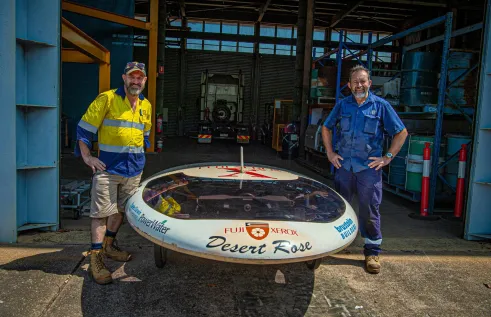
'Desert Rose' to be preserved
The legacy of a world record-breaking solar car, developed by and raced by Charles Darwin University students and staff, will be preserved and celebrated in the Northern Territory’s premier museum.
Read more about 'Desert Rose' to be preserved
Africans reuse, repair, recycle and resell waste: what’s needed to build on the circular economy basics
Africa’s circular economy is already at work in repair shops and scrap yards. Backing the people who keep goods in use could cut waste and create better jobs.
Read more about Africans reuse, repair, recycle and resell waste: what’s needed to build on the circular economy basics


