News
More hairdressers on their way to support industry
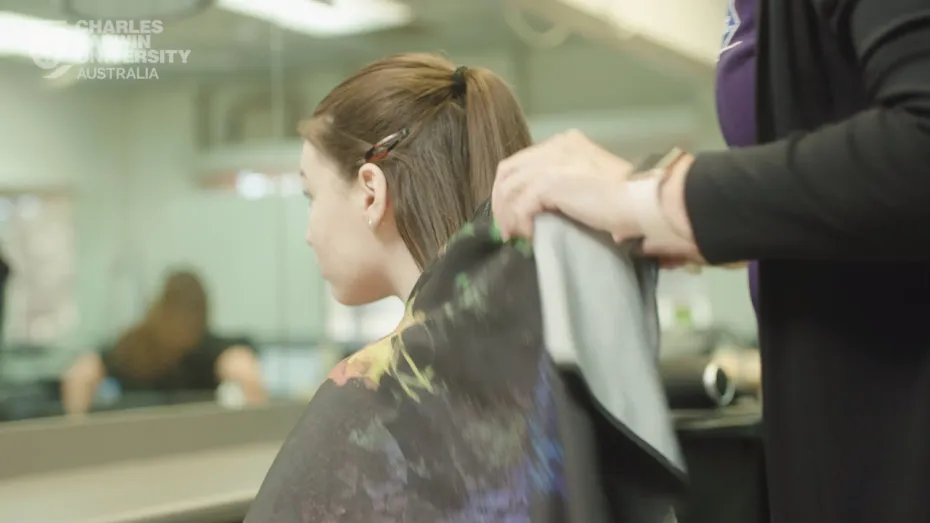
Charles Darwin University (CDU) is working to address skill shortages in hairdressing in the Northern Territory, as a part of the university’s apprenticeship offerings.
The University delivers the Certificate III in Hairdressing at both the Alice Springs and Palmerston campuses in tandem with hair salons across the Territory.
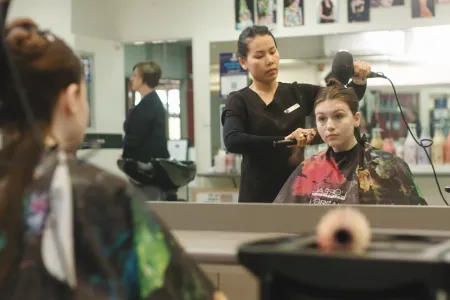
The students study from their very own hair salons on campus, which provide a practical, real-life training environment where they learn theory and practical components covering everything from colouring, cutting, head massages, handling tools and workspaces, to conducting salon transactions, hygiene and customer service.
The practical training that the students gain as part of the three-year apprenticeship reflects industry standards and expectations and ensures students graduate job ready, without tying up qualified hairdressers when they start work.
Charles Darwin University has about 50 apprentices who do training at the University and each year graduates around 15-20 fully qualified hairdressers.
CDU Team Leader Beauty Services Tim Francis said there was huge demand for apprentices to come on board across salons in the Northern Territory and for students wanting to study hairdressing.
“There is a huge shortage of hairdressers in Darwin and the wider area, so the more students we can get in to study, the more we can get out to industry and filling the gaps,” Mr Francis said.
“The benefit of having this sort of salon set up, is that when the students leave CDU they’ve developed more of their technical skills and they really are ready for the workforce.
"We are finding that barbering is a huge growth market, and we’ve now dedicated a whole area in our Palmerston salon, just for barbering because the demand has become so strong.
“We are about to reopen and reinvigorate our Alice Springs salon which we hope will alleviate some of the shortages experienced there. And we’re hiring a new Hairdressing Lecturer to work full-time out of the salon in Alice Springs.”
The Australian Government Department of Jobs and Small Business reports that there has been a shortage of hairdressers in Australia for more than 20 years. The department reports that in 2018, two out of every three hairdressing vacancies went unfilled.
The Australian Skills and Industry Committee has reported that employment levels for hairdressers had a “notable decrease” from 77,700 in 2019 to 60,500 in 2020. It predicts numbers will increase to 79,600 by 2024.
Hair and beauty students learn the latest skills and techniques from industry professionals at CDU’s hair and beauty training salons in Palmerston and Alice Springs.
Members of the public can support the training and education of students by booking an appointment at the salon in Palmerston here: www.cdu.edu.au/vocational-education-training/vet-businesses/hair-and-beauty-salons
Related Articles
Partnership with Indonesian university to support education and research
A new partnership with one of East Java’s leading education institutions is aligning Charles Darwin University with priorities to strengthen Australia’s relationship with Indonesia.
Read more about Partnership with Indonesian university to support education and research
Darwin needs a BBL: Architecture student's vision for the Top End
A vertical promenade designed by a Charles Darwin University (CDU) architecture student and inspired by Singapore's Gardens by the Bay offers a glimpse into Darwin's future facelift.
Read more about Darwin needs a BBL: Architecture student's vision for the Top End
CDU improves standing in Times Higher Education rankings
Charles Darwin University (CDU) has improved its standing across all five categories in the 2027 Time Higher Education World University Rankings.
Read more about CDU improves standing in Times Higher Education rankings


