New initiatives to strengthen our approach to DFSV prevention and response
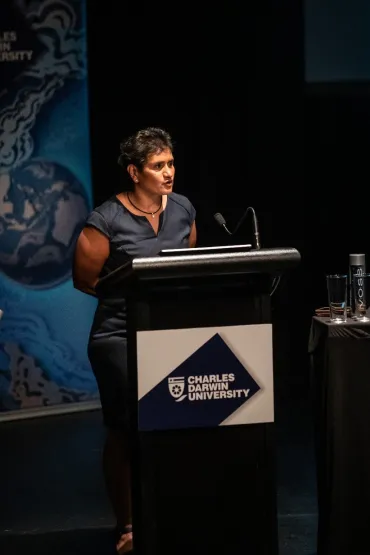
A new evidence platform and curriculum initiative to support domestic, family and sexual violence (DFSV) prevention and response in the Northern Territory will be developed through the NT Government and Charles Darwin University (CDU) Partnership Agreement.
The initiatives, led by CDU’s Molly Wardaguga Institute, aim to strengthen workforce development, increase the use of evidence in policy and practice, and improve early support for people experiencing violence in the Northern Territory.
The project will establish the NT DFSV Knowledge Exchange, a repository of NT-specific evidence, including previously unpublished evaluations and reports which are often hard to access.
The NT DFSV Knowledge Exchange will also serve as a platform for researchers, policymakers and service providers to link with each other, share insights, identify gaps, and build a Territory-informed research agenda.
The second initiative will develop and deliver a new CDU subject on supporting victim-survivors of violence, while also integrating trauma-informed responses across other CDU courses.
This knowledge will equip future professionals to recognise and provide support to prevent harm in their communities.
Molly Wardaguga Institute Director Professor Yvette Roe said the initiatives would build the skills of a future workforce, and lay a foundation for ongoing collaboration to provide evidence-based approaches to DFSV prevention and response.
“At CDU, the Molly Wardaguga Institute is leading this work to ensure lived-experience and First Nations perspectives are foregrounded throughout its co-design and delivery,” Professor Roe said.
“Supporting communities to feel and be safer is critical for a thriving future generation for First Nations people in the NT. This initiative is an important step towards that goal.”
Northern Territory Minister for Prevention of Domestic Violence Robyn Cahill said new approaches were needed to tackle the NT’s persistently high rates of domestic violence.
“This research unit will be a Territory-first - a place where our local knowledge, lived experience and frontline data come together to drive meaningful change,” Ms Cahill said.
“This investment will help us understand what’s happening on the ground and shape responses that achieve real outcomes.
“Combining this research investment with training for future frontline workers is linking evidence with action, driving real change to reduce violence and making the Territory safer.”
Project lead Associate Professor Kayli Wild said these initiatives would provide much-needed support for the Northern Territory’s frontline workers.
“These initiatives will equip new graduates with the knowledge and skills to reduce trauma through systems, and will include innovative new content on working with people who use violence,” Associate Professor Wild said.
“It will complement the strong in-service training already underway across the NT, contributing to a skilled, sustainable workforce to support better outcomes for people experiencing violence.”
CDU’s Deputy Vice-Chancellor of Research and Community Connection Professor Steve Rogers said the University was well-placed to help enhance research collaboration and education in the prevention and response space.
“This partnership reflects CDU’s commitment to being a university of impact,” Professor Rogers said.
“It builds on our collaboration with Our Watch to prevent violence against women and advance gender equality, strengthening the role of research in building safer, more evidence-informed practice in the NT.”
Related Articles
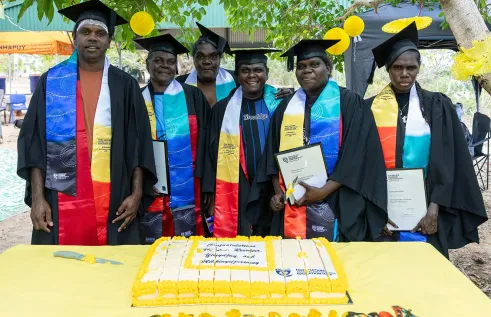
First Nations Training and Teacher Education Hub celebrates first major milestone
As Charles Darwin University's (CDU) First Nations Training and Teacher Education Hub draws closer to the end of its first year, one of its greatest milestones to date was conferring its first six graduates.
Read more about First Nations Training and Teacher Education Hub celebrates first major milestone
Federal funding for Country-based health and climate resilience
A new research collaboration to support and strengthen Country-based health and climate resilience has received funding through the National Health and Medical Research Council’s Centres of Research Excellence scheme.
Read more about Federal funding for Country-based health and climate resilience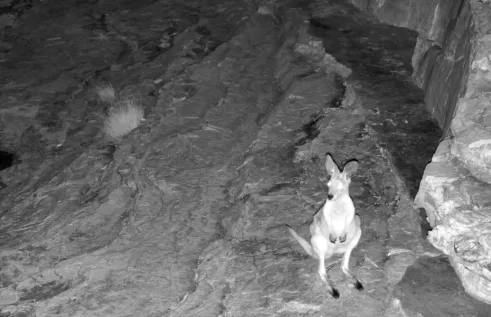
New livestream brings remote Australian arid zone waterhole to the world
A new livestream from a remote waterhole in the Northern Territory is giving people around the world the opportunity to observe wildlife in real time.
Read more about New livestream brings remote Australian arid zone waterhole to the world


