News Article
Spotlight on birthweight impact on sporting success

A Charles Darwin University PhD candidate is investigating the health status and sporting prowess of adults who were born underweight, as part of a project to develop a training approach that optimises gains for low birthweight people.
Tim Howarth, of the College of Health and Human Sciences, said currently there were no interventions for people born weighing less than 2.5kg, who later faced increased risk of chronic health problems. These health problems were driven by issues such as low muscle mass, increased body fat, increased stress hormones, reduced growth hormones, respiratory issues, and reduced aerobic and heartrate recovery.
“These people need something they can do to help themselves rather than just be told ‘you are low birthweight and you’re at higher risk’,” Mr Howarth said.
A pilot survey with Netball NT seeks to determine how birthweight has influenced players’ sporting journeys - what level they achieved in the sport and the injuries or health challenges they experienced along the way.
“It will be interesting to see if there is a distribution of people with low birthweight through certain sports, given that those decisions may have been influenced by weakness in certain areas, and what level of eliteness they achieved,” Mr Howarth said.
Results will inform a national survey that will examine how low birthweight affects choice of sport and various factors at play throughout players’ sporting careers.
Mr Howarth said he wanted to hear from people who had engaged in sports of any type, at any level, throughout their lifetime.
“The study will compare people born with low birthweight and those born in the normal weight range,” he said.
“We will look at changes in sporting engagement and level of competition between the two groups and what that means for longer term responses to exercise.”
Contact Mr Howarth at E: timothypaul.howarth@cdu.edu.au
Related Articles
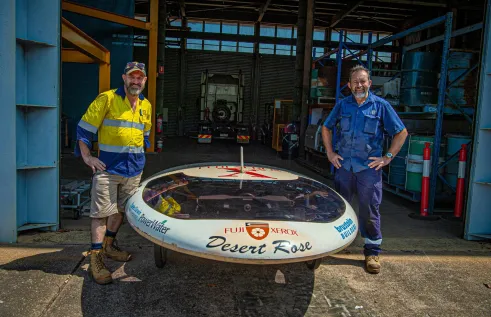
'Desert Rose' to be preserved
The legacy of a world record-breaking solar car, developed by and raced by Charles Darwin University students and staff, will be preserved and celebrated in the Northern Territory’s premier museum.
Read more about 'Desert Rose' to be preserved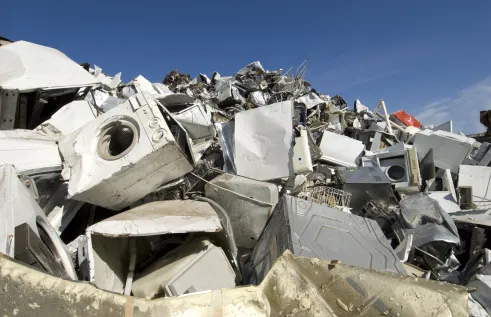
Africans reuse, repair, recycle and resell waste: what’s needed to build on the circular economy basics
Africa’s circular economy is already at work in repair shops and scrap yards. Backing the people who keep goods in use could cut waste and create better jobs.
Read more about Africans reuse, repair, recycle and resell waste: what’s needed to build on the circular economy basics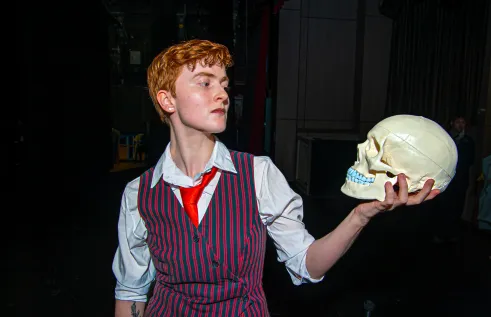
Hamlet gets a contemporary twist in Darwin
Shakespeare’s most famous tragedy will be brought into the modern world in a bold new production of Hamlet at Charles Darwin University Theatre this month.
Read more about Hamlet gets a contemporary twist in Darwin


