News Article
Study shows barra seek safe refuge after rains
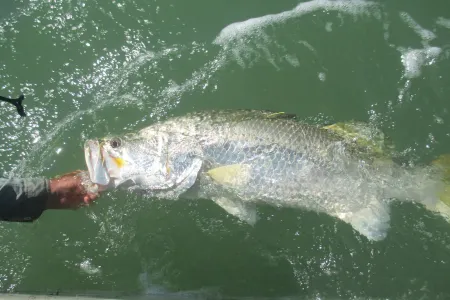
Research to understand the movements of fish in Top End waterways has found that barramundi exhibit very accurate homing behaviour, travelling up to 80 km to their “home” billabongs after wet season rains.
Funded through the Australian Government's National Environmental Research Program (Northern Australia Hub) the research was recently published in the Journal of Animal Ecology.
Charles Darwin University Associate Professor and project lead David Crook said the research aimed to improve understanding of the seasonal movements of large-bodied fish in tropical rivers.
“It is widely understood that as the wet season rains flow into floodplains, fish begin to leave the refuge of their dry-season waterholes to capitalise on the abundance of new aquatic habitat and food resources,” Dr Crook said.
“What we wanted to understand was the movements and behaviour of individual fish and their dispersal over floodplains.”
To find out, Dr Crook worked with researchers from the Department of Primary Industry and Resources, Fisheries Division and with support from Parks Australia, to implant radio transmitters into 25 barramundi and 29 fork-tail catfish to track their movements over an eight-month flood cycle in Kakadu’s South Alligator River, 300 kms south-east of Darwin.
“We found that the majority of fish that survived the wet season sought out and recolonised their ‘home’ billabong, even if there was suitable habitat closer to their wet season feeding grounds,” he said.
Dr Crook said both species altered their behaviour in response to changes in the availability and distribution of aquatic habitat.
“Although there was a lot of individual variation in movement patterns, some barramundi and catfish travelled up to 80 km from their dry-season waterhole during the wet,” Dr Crook said.
He said this type of homing behaviour allowed fish to travel widely to seek food during the wet season, while reducing the risk of fish becoming stuck on drying floodplains as the flood waters receded.
“This research has helped address a gap in understanding the behaviour and fates of individual fish,” he said. “It gives us a better understanding of food webs and energy flows in these dynamic river systems as environmental conditions change.”
Related Articles
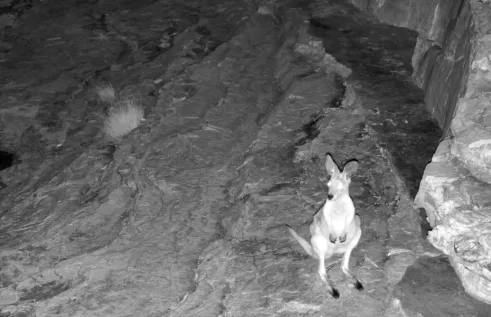
New livestream brings remote Australian arid zone waterhole to the world
A new livestream from a remote waterhole in the Northern Territory is giving people around the world the opportunity to observe wildlife in real time.
Read more about New livestream brings remote Australian arid zone waterhole to the world
Leading scientist recognised for lifetime of dedication to Australian biodiversity and conservation
One of the nation’s most distinguished experts in Australian biodiversity and conservation will be celebrated in an upcoming Charles Darwin University graduation ceremony.
Read more about Leading scientist recognised for lifetime of dedication to Australian biodiversity and conservation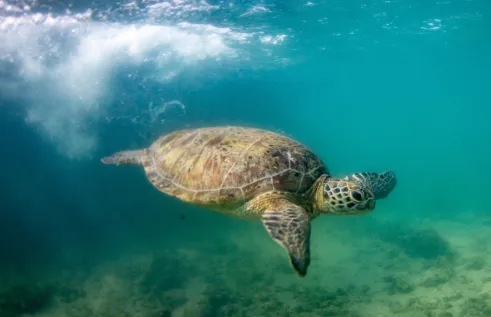
First Nations ranger knowledge reveals the threats facing NT’s green turtles
First Nations ranger groups working in protected areas such as national or marine parks identified illegal commercial fishing as a major concern for the Northern Territory’s green turtle populations, a study led by Charles Darwin University (CDU) and James Cook University (JCU) has found.
Read more about First Nations ranger knowledge reveals the threats facing NT’s green turtles


