News
Australia mapped into global sharks and rays database
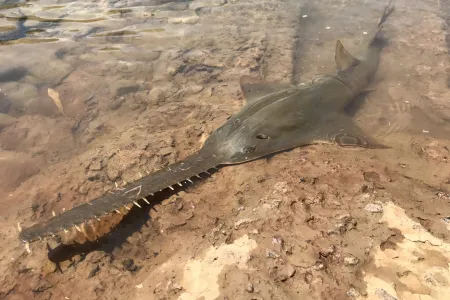
A global database documenting the location of critical habitats for sharks, rays, and chimaeras has recently expanded to include Australia, with years of extensive research by Charles Darwin University (CDU) contributing to this crucial digital record.
The Important Shark and Ray Areas (ISRA) project is a global collaboration led by the International Union for Conservation of Nature (IUCN) Species Survival Commission Shark Specialist Group (SSG), aiming to map key habitats of sharks, rays, and chimaeras, and identify locations that have the potential to be managed for conservation (known as ISRAs).
According to the SSG, it’s estimated that more than one-third of sharks, rays, and chimaeras are threatened with extinction.
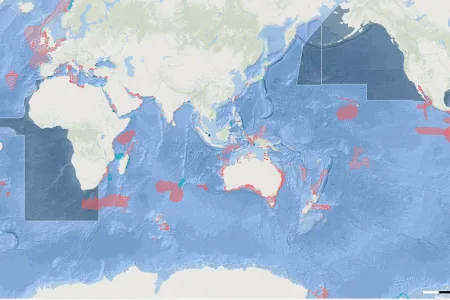
Australia and the Southeast Indian Ocean are among the latest regions to be assessed in the initiative, with 158 ISRAs delineated.
This is a crucial step towards mapping important habitat globally, increasing the number of ISRAs worldwide to ~1,000 areas.
Of the >1,400 contributors globally, members of CDU’s Northern Shark and Ray Research Group (NSRRG) provided significant information to delineate ISRAs across the Northern Territory, Queensland, Western Australia and New South Wales.
CDU Adjunct Senior Research Fellow Dr Peter Kyne, who established NSRRG, is an ISRA project member who has been part of the initiative since its inception.
Dr Kyne said the evidence-based data can be used by policy and decision-makers to make informed decisions about the conservation of these creatures. This can include using data for marine protected area designations.
“We’re helping to feed into these processes by identifying areas that may be suitable candidates for protection, given their importance for species of sharks and rays,” Dr Kyne said.
“Spatial management – protected areas or areas that are managed to conserve species – are really good for the management and conservation of marine and freshwater environments in the context of the global decline of sharks and rays.”
Through this process, nine ISRAs were identified in the Northern Territory. These ISRA included numerous river systems as well as estuaries and offshore oceanic habitats.
“All the research we’ve done at CDU over the last 18 years on northern Australian sharks and rays has allowed us to delineate ISRAs, otherwise we wouldn’t have been able to,” Dr Kyne said.
“ISRAs are a scientific and evidence-based process. We need to have good data and information that meets a set of criteria to be able to define an ISRA.
“The Northern Territory has very limited marine parks. It’s one of the jurisdictions that has very low coverage anywhere in the world. There’s a real need and we hope this can feed into conservation processes.”
The NSRRG is the only group of its kind dedicated to researching sharks and rays in northern Australia.
Leader Dr Joni Pini-Fitzsimmons, who is a Research Fellow with CDU’s Research Institute for the Environment and Livelihoods, said the group played a crucial role in contributing data and knowledge for the Top End, particularly for species such as threatened sawfish and river sharks.
“We’re fortunate to have good populations of these species and it's really important they’re recognised and this information is used to implement better conservation or protection for these threatened species,” Dr Pini-Fitzsimmons said.
“Australia is one of the last strongholds for species like sawfish. They’ve had such significant population declines across their range globally, and now Australia, and northern Australia in particular, is a refuge for these species.”
Dr Pini-Fitzsimmons said one highlight of this contribution was inputting First Nations knowledge into such a significant platform.
“We’ve had long-running collaborations with groups such as the Malak Malak Rangers on the Daly River,” she said.
“The NT had a very high amount of Indigenous knowledge incorporated into ISRAs. It’s important this knowledge is taken up through processes such as ISRAs and not just as a tool for Australia. It’s a global audience.”
ISRAs around the world can be explored on the platform’s eAtlas, on which users can learn about the areas and the species within them.
Aligned with the United Nations Sustainable Development Goals
Life below water
Goal 14
Conserve and sustainably use the oceans, seas and marine resources for sustainable development.
Related Articles

Federal funding for Country-based health and climate resilience
A new research collaboration to support and strengthen Country-based health and climate resilience has received funding through the National Health and Medical Research Council’s Centres of Research Excellence scheme.
Read more about Federal funding for Country-based health and climate resilience
New livestream brings remote Australian arid zone waterhole to the world
A new livestream from a remote waterhole in the Northern Territory is giving people around the world the opportunity to observe wildlife in real time.
Read more about New livestream brings remote Australian arid zone waterhole to the world
Leading scientist recognised for lifetime of dedication to Australian biodiversity and conservation
One of the nation’s most distinguished experts in Australian biodiversity and conservation will be celebrated in an upcoming Charles Darwin University graduation ceremony.
Read more about Leading scientist recognised for lifetime of dedication to Australian biodiversity and conservation


