News Article
Workshop to inform Darwin Harbour Report Card

A community-led workshop will be held this week (19-20 March) to inform the Darwin Harbour Report Card, a strategy to support the harbour’s long-term sustainability.
Chair of the Darwin Harbour Advisory Committee (DHAC), and Co-Director of RIEL at Charles Darwin University Professor Karen Gibb said the workshop would begin the collaborative process to ask stakeholders to identify what outcomes and indicators were important for Darwin Harbour.
“DHAC has identified the need to encompass Indigenous cultural, environmental, economic and social indicators into an integrated, comprehensive reporting platform for Darwin Harbour, which would build on the existing water quality reporting,” Professor Gibb said.
She said the workshop aimed to select indicators and thresholds as the first step in developing an integrated report card for Darwin Harbour.
The workshops are part of a project titled “Towards Integrated Reporting for Darwin Harbour”, which will help to manage the long-term sustainability of Darwin Harbour.
They are supported by a $125,000 grant from The Ian Potter Foundation and co-funding from Government and Industry.
Participants at the two-day workshop will include Larrakia Traditional Owners, environmental and natural resource experts from across government, industry and academia, along with community members and representatives from not-for-profit organisations.
Larrakia Traditional Owner Lorraine Williams will present outcomes from a smaller group meeting held earlier in the week to identify Indigenous cultural values and indicators.
Professor Gibb said the community-led activity would bring together data from multiple sources to create a practical tool to better manage this vital resource for the benefit of everyone using the harbour.
“Which environmental, social and economic indicators are included and how they are assessed is the primary outcome of this workshop,” she said. “It will also provide an opportunity for stakeholders to meet and share different perspectives of their value of the harbour and begin to co-design and co-develop the new report card.”
She said this was the first in a series of workshops that would be held over the next 18 months.
“This will ensure that the Darwin Harbour Report Card is a living document, relevant to the community, and will support multiple sectors by working to make their efforts integrated and effective,” she said. “Workshop participants will continue to be involved as draft report card scores and grades are drafted, findings defined, and recommendations developed.”
The workshop will be held from Thursday, 19 March to Friday, 20 March at the Novotel Darwin Airport Resort.
Related Articles
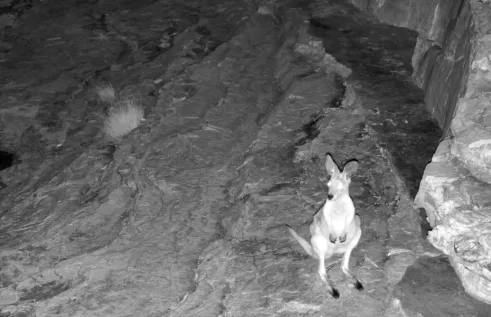
New livestream brings remote Australian arid zone waterhole to the world
A new livestream from a remote waterhole in the Northern Territory is giving people around the world the opportunity to observe wildlife in real time.
Read more about New livestream brings remote Australian arid zone waterhole to the world
Leading scientist recognised for lifetime of dedication to Australian biodiversity and conservation
One of the nation’s most distinguished experts in Australian biodiversity and conservation will be celebrated in an upcoming Charles Darwin University graduation ceremony.
Read more about Leading scientist recognised for lifetime of dedication to Australian biodiversity and conservation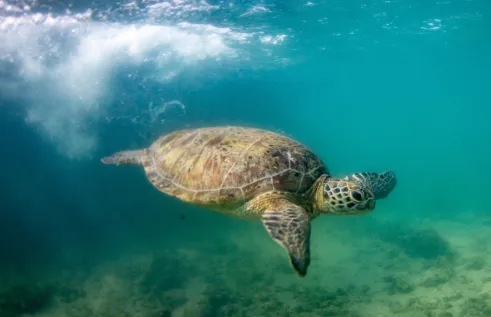
First Nations ranger knowledge reveals the threats facing NT’s green turtles
First Nations ranger groups working in protected areas such as national or marine parks identified illegal commercial fishing as a major concern for the Northern Territory’s green turtle populations, a study led by Charles Darwin University (CDU) and James Cook University (JCU) has found.
Read more about First Nations ranger knowledge reveals the threats facing NT’s green turtles


