News article
Lecture to explore vexed PFAS question

An engineer and scientist with a distinguished career in research will examine the issues raised for petrochemical and aviation firefighting following the introduction of fluorine-free foams, when he delivers the final Charles Darwin University Professorial Lecture for 2019.
The Deputy Vice-Chancellor and Vice President Research and Innovation, Professor Bogdan Dlugogorski, will discuss “PFAS and Fluorine-Free Firefighting Foams: Performance vs Environment and Health”.
Professor Dlugogorski said the firefighting foam industry was in turmoil.
“On one hand, PFAS foams do not biodegrade and persist in the environment, a situation that poses unacceptable risk to large parts of the community and several environmental NGOs.
“On the other hand, while fluorine-free foams satisfy a range of international standards, they do not pass the US military specification, which makes them unacceptable for defence use.
“For civilian purposes, fluorine-free foams require higher application rates and demand careful redesigning of the suppression systems.
“So where does this leave us? Do we want the millions of plane passengers each day and petrochemical plants protected by the most environmentally friendly firefighting option or the most effective at suppressing fire,” he said.
Professor Dlugogorski is internationally recognised for his contribution in the field of industrial fire safety and environment protection, especially to fire mitigation and fire chemistry.
He holds a DSc in Fire Science and Engineering and a PhD in Chemical Engineering and has expertise in process safety, fire and explosion safety, metallurgy and environment protection.
The lecture will be held on Tuesday 29 October from 5pm to 7pm (lecture starts at 6pm) in the Charles Darwin Theatre, building Orange 3, Casuarina campus. This event is free and open to the public. RSVP to E: cduevents@cdu.edu.au or T: 8946 6554.
Related Articles
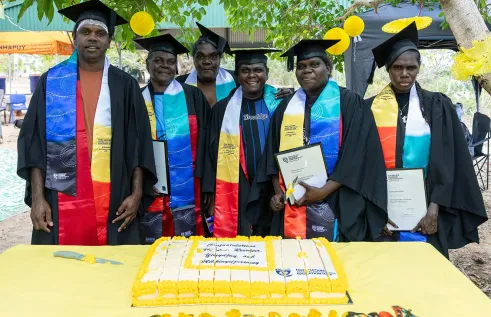
First Nations Training and Teacher Education Hub celebrates first major milestone
As Charles Darwin University's (CDU) First Nations Training and Teacher Education Hub draws closer to the end of its first year, one of its greatest milestones to date was conferring its first six graduates.
Read more about First Nations Training and Teacher Education Hub celebrates first major milestone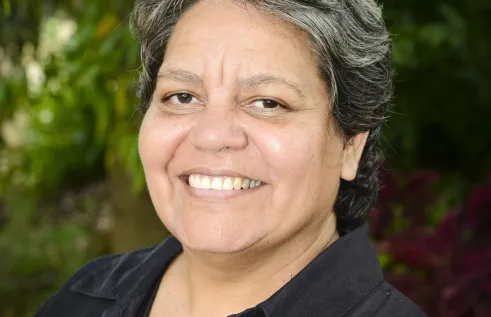
Federal funding for Country-based health and climate resilience
A new research collaboration to support and strengthen Country-based health and climate resilience has received funding through the National Health and Medical Research Council’s Centres of Research Excellence scheme.
Read more about Federal funding for Country-based health and climate resilience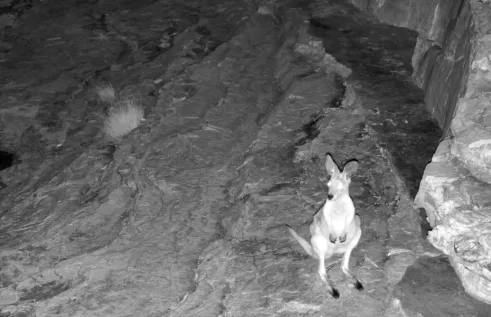
New livestream brings remote Australian arid zone waterhole to the world
A new livestream from a remote waterhole in the Northern Territory is giving people around the world the opportunity to observe wildlife in real time.
Read more about New livestream brings remote Australian arid zone waterhole to the world


