News
Agricultural research boost for Charles Darwin University
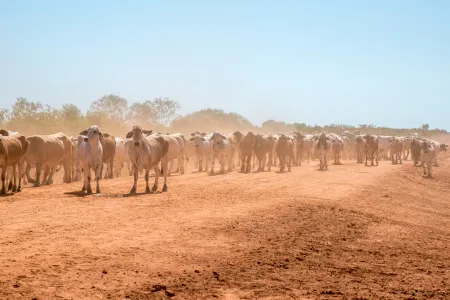
Charles Darwin University (CDU) with the Northern Territory primary production sector is set to expand critical research that will boost food security, sustainable primary production, and drought resilience, thanks to the Federal Government.
The $4 million investment will establish the Research Institute for Northern Agriculture and Drought Resilience to increase CDU’s research capability in aquaculture, livestock, pastoral production and cropping and horticulture systems.
CDU Director of Research and Innovation Steve Rogers said the Research Institute for Northern Agriculture and Drought Resilience will improve the productivity, profitability and resilience of the primary production sector in Northern Australia.
“The new Research Institute will build the Northern Territory’s research capability and capacity and develop research strengths and skills to assist the NT primary production sector to achieve sustainable industry expansion and resilience to future drought,” Dr Rogers said.
“This project will drive the development of new research capability at CDU, an industry-relevant postgraduate student program and will support Indigenous-led enterprise development to meet the challenges of the primary production sector in Northern Australia.
“CDU looks forward to supporting this project that will incentivise greater university and business collaboration in research innovation, local economic growth, and workforce development.”
Senator for the Northern Territory Sam McMahon said the funding would provide a huge boost to Darwin and the whole Top End and grow the skills of the Northern Territory’s agriculture workforce.
“Conducting this research in the Northern Territory means its findings can be tailored to meet the unique challenges of farming in Northern Australia,” Senator McMahon said.
“How we feed our population in future will remain a key challenge for Australia and the research conducted at CDU will go a long way to overcoming those challenges.”
Minister for Education and Youth Alan Tudge said the project is one of six that is sharing in nearly $20 million through the first round of the Government’s Regional Research Collaboration (RRC) Program.
“We want our world-class research to be at the forefront of our economic and social success and we want the NT to be a big part of that,” Minister Tudge said.
“Our funding will support CDU to work with local industry partners to make their research more viable and targeted, boosting local businesses and creating jobs.
“Australia is a world-leader in agricultural research and development and this project will help the NT increase the efficiency and resilience of its agriculture sector.
The RRC Program is being implemented in response to the National Regional, Rural and Remote Tertiary Education Strategy and is part of the Government’s mission to strengthen the regional and remote tertiary education sector.
Related Articles

Federal funding for Country-based health and climate resilience
A new research collaboration to support and strengthen Country-based health and climate resilience has received funding through the National Health and Medical Research Council’s Centres of Research Excellence scheme.
Read more about Federal funding for Country-based health and climate resilience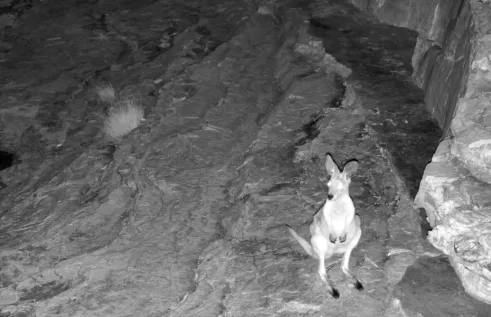
New livestream brings remote Australian arid zone waterhole to the world
A new livestream from a remote waterhole in the Northern Territory is giving people around the world the opportunity to observe wildlife in real time.
Read more about New livestream brings remote Australian arid zone waterhole to the world
How ants are cashing in on the fight against money laundering
An AI model inspired by ants, bees, and birds could be the key to cracking down on blockchain-based money laundering, new research led by Charles Darwin University (CDU) has found.
Read more about How ants are cashing in on the fight against money laundering


