Cassowaries still crucial to seed dispersal, study shows
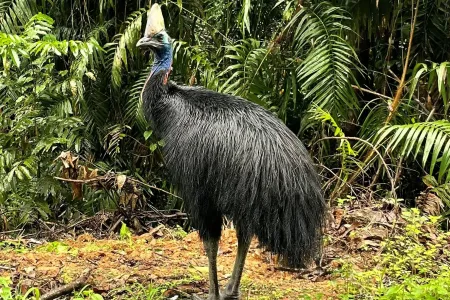
Cassowaries continue to be one of nature’s most critical gardeners, with a new study into seed dispersal through their scats reaffirming their role in the ecological function of pockets of remnant rainforests.
The study led by Charles Darwin University (CDU) explored whether the southern cassowary remains important to native seed dispersal in areas where tropical rainforests are highly fragmented and exotic fruits are abundant.
Researchers focused on four study sites within the Wet Tropics region of Queensland, with various levels or development and rainforest clearing. The foraging of the birds was monitored using a novel ingestible tracking device.
CDU research associate and lead author Dr Mariana Campbell said the cassowaries monitored in pristine rainforest fed only on native fruits, and birds inhabiting more urbanised areas had more exotic seeds in their droppings.
However, cassowaries in the more urbanised landscapes still fed on native fruits. They moved rapidly between rainforest patches and deposited native plant seeds between pockets of remnant rainforest.
The study showed cassowaries remain a significant disperser of seeds from native plants between rainforest patches, and as such, cassowaries continued to be essential in maintaining native plant diversity within these fragmented patches.
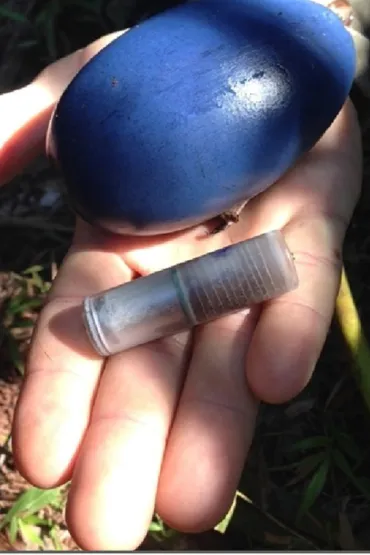
Dr Campbell said as far as she knew, it was the first time anyone had used this technology to study an animal’s foraging habits.
She said the technique offered great potential in studying animal-plant interactions in areas where the environment blocked out the sky so much that using satellites was impossible.
Dr Campbell added it was encouraging to find most cassowaries in the study ate native fruits, but more effort should be made to increase their consumption of native plants.
“Native plants are vital for the health and integrity of the remnant rainforest. Introduced species, on the other hand, can be extremely detrimental,” Dr Campbell said.
“When a new (exotic) plant finds its way into a forest, it often has a knock-on effect throughout the entire ecosystem. Exotic species can damage land and water resources, carry diseases and compete with native plants for resources.
“To help promote the persistence and ecological function of remnant rainforest patches we suggest an effort be made to limit cassowary access to exotic fruiting plants and supplement urban gardens with native fruiting plants, such as the cassowary plum.”
The research, ‘The southern cassowary (Casuarius casuarius johnsonii) remains an important disperser of native plants in fragmented rainforest landscapes’ was published in the journal Austral Ecology.
Read the full findings here.
Related Articles
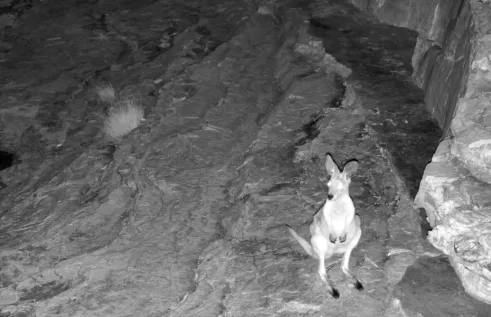
New livestream brings remote Australian arid zone waterhole to the world
A new livestream from a remote waterhole in the Northern Territory is giving people around the world the opportunity to observe wildlife in real time.
Read more about New livestream brings remote Australian arid zone waterhole to the world
Leading scientist recognised for lifetime of dedication to Australian biodiversity and conservation
One of the nation’s most distinguished experts in Australian biodiversity and conservation will be celebrated in an upcoming Charles Darwin University graduation ceremony.
Read more about Leading scientist recognised for lifetime of dedication to Australian biodiversity and conservation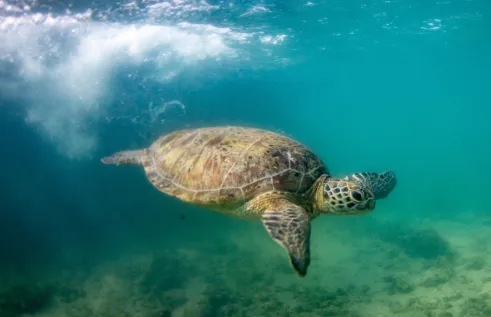
First Nations ranger knowledge reveals the threats facing NT’s green turtles
First Nations ranger groups working in protected areas such as national or marine parks identified illegal commercial fishing as a major concern for the Northern Territory’s green turtle populations, a study led by Charles Darwin University (CDU) and James Cook University (JCU) has found.
Read more about First Nations ranger knowledge reveals the threats facing NT’s green turtles


