News
CDU expert delivers warning about dystopian future after Black Summer bushfires
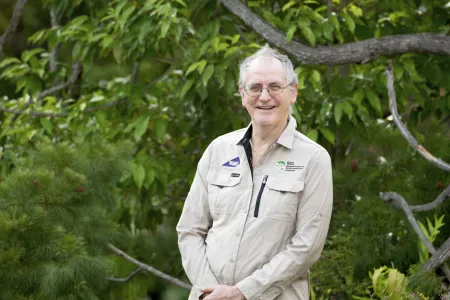
A Charles Darwin University (CDU) researcher will reignite the spark of conversation about the impact of the 2019-2020 Black Summer wildfires at a major ecological conference this week.
This will include a review of the shortcomings in planning, policy and management that contributed to the devastating impacts on biodiversity, and of the factors that have helped post-fire recovery.
CDU Research Institute for the Environment and Livelihoods (RIEL) Lecturer Professor John Woinarski said there is a pressing need to prepare and prioritise to improve national fire management, as the likelihood of frequent, severe fires increases due to climate change.
“The Black Summer bushfires were exceptional in scale and severity,” Professor Woinarski said.
“These fires provide a foretaste of a likely future driven by climate change – with fires of this severity and extent becoming increasingly more frequent. We need to consider how prepared we are for these wildfires and the impact our response will have on future biodiversity.”
From these shortcomings, there are significant lessons to be learnt in better management methods, governance and knowledge, including long-term recovery planning.
“These wildfires caused many deaths, destroyed infrastructure, and decimated populations of native animals. We need to build resilience before fires, make more informed choices at the time, and implement long-term recovery management afterwards,” he said.
The conference of the Ecological Society of Australia and the Society for Conservation Biology Oceania brings together academics in ecology and biodiversity to exchange knowledge, research and insights developed through conservation projects.
CDU Research Institute for the Environment and Livelihoods Lecturer Professor Alan Andersen will also be presenting on ant diversity in monsoonal Australia.
CDU Pro-Vice Chancellor Research and Innovation Professor Steve Rogers said the conference is an important opportunity to showcase the ecological expertise produced by RIEL, which has contributed significantly to CDU’s renowned research standing in the field.
“Like many CDU academics, our researchers at RIEL are publishing phenomenal work that is making an impact in Australia and around the world,” Professor Rogers said.
“Both Professor Woinarski and Professor Anderson are well known for their significant, insightful contributions to fire ecology, and we are proud to support their research efforts.”
The conference of the Ecological Society of Australia and the Society for Conservation Biology Oceania is being held from Monday, November 28 to Friday, December 2 in Wollongong, NSW.
As part of the conference, Professor Woinarski will be speaking at the 2019/20 Bushfire Symposium: national synthesis of biodiversity responses at 4:45pm AEST on Wednesday, November 30.
Related Articles
Federal funding for Country-based health and climate resilience
A new research collaboration to support and strengthen Country-based health and climate resilience has received funding through the National Health and Medical Research Council’s Centres of Research Excellence scheme.
Read more about Federal funding for Country-based health and climate resilience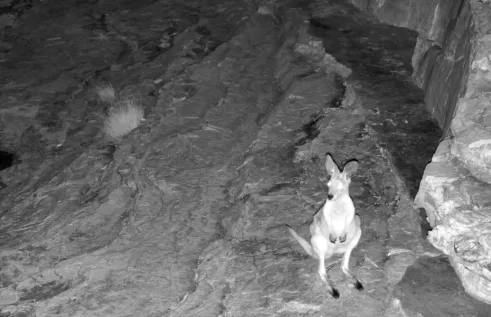
New livestream brings remote Australian arid zone waterhole to the world
A new livestream from a remote waterhole in the Northern Territory is giving people around the world the opportunity to observe wildlife in real time.
Read more about New livestream brings remote Australian arid zone waterhole to the world
Leading scientist recognised for lifetime of dedication to Australian biodiversity and conservation
One of the nation’s most distinguished experts in Australian biodiversity and conservation will be celebrated in an upcoming Charles Darwin University graduation ceremony.
Read more about Leading scientist recognised for lifetime of dedication to Australian biodiversity and conservation


