news article
CDU graduate looking to trial ‘life-saving’ smartwatch
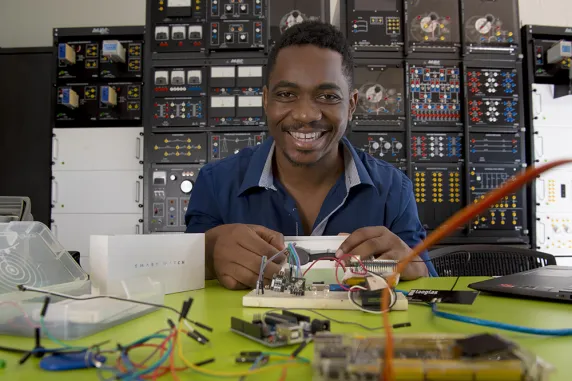
A Charles Darwin University graduate who has developed a potentially lifesaving smartwatch designed to help address remote health issues is aiming to trial the project in Indigenous communities.
Developed by Bachelor of Software Engineering graduate Joel Benesha, the smartwatch prototype uses Telstra’s 4G sim network and several sensors to provide feedback to doctors on how to best aid remote patients.
An emergency location button can be pressed in a serious medical incident to allow a patient to be found quickly, while a flashing light and vibration system helps bridge language barriers and alerts patients when a doctor is visiting their community.
Joel, 23, said he had been in discussions with Indigenous elders to trial the smartwatch in several remote Northern Territory communities.
“I have been working alongside the elders in some communities to find out if the watch is something they would be interested in,” Joel said.
“You wear it just like a normal watch but it feeds important health information to doctors, such as heartrate data.
“The watch can send notifications and vibrations to patients alerting them that a doctor is in town and to go to the clinic if they need help.”
Joel said the technology could potentially prove to be lifesaving.
“If a patient experiences an emergency, a heart attack or a serious incident, they or someone around them can press the emergency button and it sends a signal out to doctors in the area and lets them know exactly where the patient is and that they need urgent help,” he said.
The smartwatch was recently recognised at the Northern Territory Young Achiever Awards, where Joel was awarded the Charles Darwin University Innovation Award.
Joel said he was confident the watch could be trialled successfully, but he needed to secure additional funding to get the project off the ground.
“I’ve been working with some elders in some communities who really do trust us and the way we do things and they would be excited if given the opportunity to trial this product,” he said.
“We have the backing of these communities, but we just need some more funding.”
Related Articles
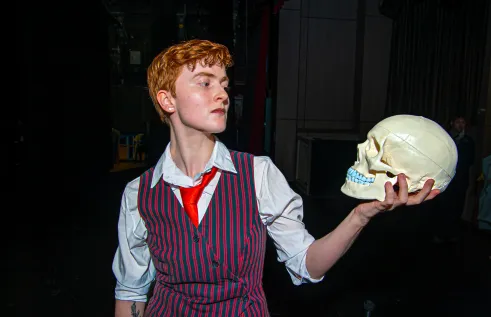
Hamlet gets a contemporary twist in Darwin
Shakespeare’s most famous tragedy will be brought into the modern world in a bold new production of Hamlet at Charles Darwin University Theatre this month.
Read more about Hamlet gets a contemporary twist in Darwin
The good, the bad, and the ugly food: Why religious shoppers are buying bruised veggies
A recent study with Charles Darwin University examines how consumers’ religiosity influences the purchase of “ugly foods”, or foods that are aesthetically imperfect but nutritious.
Read more about The good, the bad, and the ugly food: Why religious shoppers are buying bruised veggies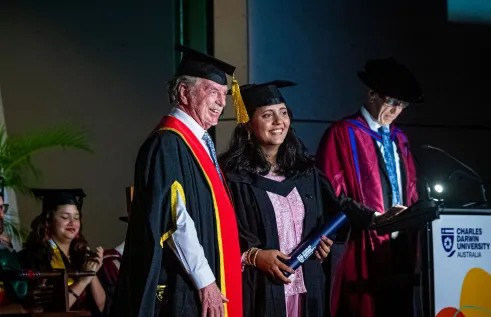
Student Council President celebrates graduation, prepares to pass the torch to new team
After serving as the Charles Darwin University (CDU) Student Council President for two years, Shishtata Bhandari has graduated and is preparing to hand over the reins to the council's next leader.
Read more about Student Council President celebrates graduation, prepares to pass the torch to new team


