News
Circular economies should work for communities, not against them

The circular economy concept is often thought of as a model to eliminate waste and pollution – but when applied thoughtfully, circular approaches can create jobs, strengthen local economies, improve public health and more, according to new research led by Charles Darwin University (CDU).
Circular economies – a system which aims to minimise waste by keeping materials, products and resources in use for as long as possible – is a key strategy for societies to transition into being more resource-efficient and environmentally friendly.
While there is considerable global conversation around the need to adopt circular economies, little is known about how this concept can benefit community development.
The study, led by CDU Senior Lecturer in Business Dr Michael Odei Erdiaw-Kwasie and CDU Outstanding Future Researcher in Psychosocial Resilience Dr Matthew Abunyewah, examined the cooperation and trade-offs between circular economy initiatives and four core goals of community development: resilience, social inclusion, empowerment, and social equity.
Results showed three recurring challenges: investment in circular infrastructure is costly, so cash-strapped local governments often struggle to fund them despite long-term benefits such as jobs, lower waste costs and cleaner air.
Second, some circular business models use large companies to control data, revenue and repair services, thus squeezing out jobs and opportunities for small businesses or the community.
Third, when new tools or programs don't match how people already reuse, repair or handle materials, they don't adopt these processes. Resources are also wasted, and livelihoods can be harmed.
“Many have expressed concerns about the absence of societal development goals and the need to scale up social and environmental activities as corporate circular economy actions intensify,” Dr Erdiaw-Kwasie said.
“To achieve sustainable outcomes, circular strategies must incorporate social processes and structures."
An example of how circular economies can support community development is with Vietnam fashion textiles manufacturer Saitex, which implements circular strategies such as waste reduction, water conservation and on-site renewable energy production – while creating thousands of jobs for people with disabilities.
The study draws on Rekut, an initiative within Saitex’s social inclusion program for people with disabilities, which produces bags, cushion covers, and facemasks from about 600,000 pieces of surplus and stock fabric.
“Socially inclusive workplaces foster innovation by bringing together individuals with diverse perspectives, experiences, and problem-solving skills. This diversity can lead to the development of more innovative and effective circular economy solutions that address the needs of a broad range of stakeholders,” Dr Erdiaw-Kwasie said.
He added that from the evidence, there were several steps policymakers and practitioners could make to ensure the circular economy concept benefits community development.
This includes realigning goals to set community development objectives alongside material-efficacy targets, and investing in local skills and smaller businesses to allow communities to engage in and manage circular enterprises and infrastructure.
“Besides enhancing well-being, increasing social inclusion, fostering community empowerment, and promoting social equity, circular economies possess significant potential to accelerate the development of communities,” Dr Abunyewah said.
The study was conducted with academics from the University of Amsterdam, Hamburg University of Applied Sciences, and University of Southern Queensland.
Synergies and trade-offs in circular economy and community development nexus: Pathways to local sustainability was published in the journal Corporate Social Responsibility and Environmental Management.
Aligned with the United Nations Sustainable Development Goals
Decent work and economic growth
Goal 8
Promote sustained, inclusive and sustainable economic growth, full and productive employment and decent work for all.
Reduced inequalities
Goal 10
Reduce inequality within and among countries.
Sustainable cities and communities
Goal 11
Make cities and human settlements inclusive, safe, resilient and sustainable.
Related Articles

Rangers reimagine AI in wildlife monitoring
As workplaces around the world wrestle to integrate Artificial Intelligence in their operations, researchers and rangers in the heart of West Arnhem are successfully embracing this technology in conservation without compromising respect and knowledge.
Read more about Rangers reimagine AI in wildlife monitoring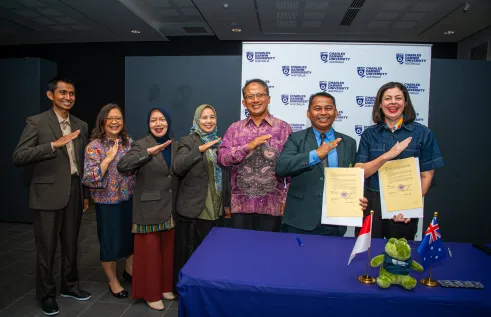
Partnership with Indonesian university to support education and research
A new partnership with one of East Java’s leading education institutions is aligning Charles Darwin University with priorities to strengthen Australia’s relationship with Indonesia.
Read more about Partnership with Indonesian university to support education and research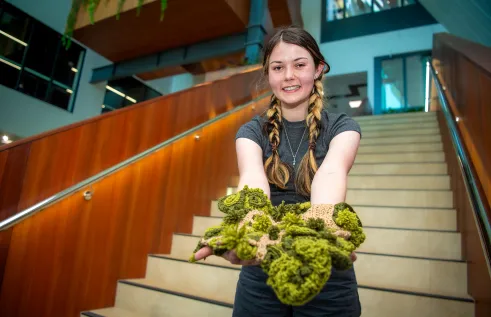
Crocheted landscape takes the gold in architecture competition
When tasked to defy growing reliance on artificial intelligence and create a landscape model without digital tools, Charles Darwin University (CDU) Bachelor of Architectural Design student Jorja Handebo turned to her hobby of the past five years: crochet.
Read more about Crocheted landscape takes the gold in architecture competition


