News Article
Experts gather in lead-up to Darwin Day

International biologists, including a mammal expert from the Natural History Museum in Vienna, Austria, will gather at Charles Darwin University in the run-up to the university’s celebration this week of its namesake Charles Darwin.
Funded by the International Union for Biological Sciences, the workshop and discussions will focus on the governance of species lists that underpin global biodiversity conservation.
Meeting convenor and CDU conservation biologist Professor Stephen Garnett said the experts would convene to discuss the “Principles for creating a single authoritative list of the world’s taxa”.
“Species lists are issued by governments the world over but differences in the ways people think of species means some lists are longer than others,” Professor Garnett said. “Our workshop is about developing rules to help people chose which lists reflect the best science.
“For conservation this is vital,” he said. “If a species is recognised and gets listed it may get funded and conserved. Species that are overlooked because of poor taxonomy may get no attention and go extinct.”
Professor Garnett said the prestigious group included curator of the Mammal Collection at the Natural History Museum in Vienna, Austria, Dr Frank Zachos, who also would speak at CDU’s Darwin Day celebrations on Wednesday, 12 February.
Dr Zachos’ main research focus is on mammal biology and will speak on the importance of taxonomy in his presentation titled “What is a species? Problems and answers in Darwin’s time and today”.
The conference will run from 10 to 12 February. CDU’s Darwin Day celebrations will be held on Wednesday, 12 February from 10am to 11:30am in the Mal Nairn Auditorium, Casuarina campus.
Related Articles
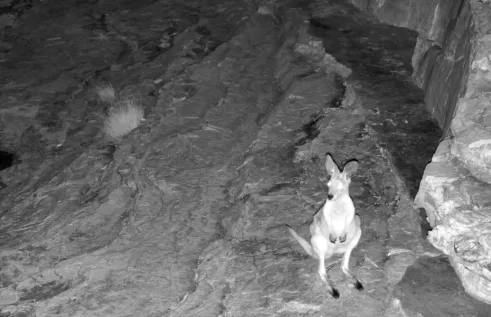
New livestream brings remote Australian arid zone waterhole to the world
A new livestream from a remote waterhole in the Northern Territory is giving people around the world the opportunity to observe wildlife in real time.
Read more about New livestream brings remote Australian arid zone waterhole to the world
Leading scientist recognised for lifetime of dedication to Australian biodiversity and conservation
One of the nation’s most distinguished experts in Australian biodiversity and conservation will be celebrated in an upcoming Charles Darwin University graduation ceremony.
Read more about Leading scientist recognised for lifetime of dedication to Australian biodiversity and conservation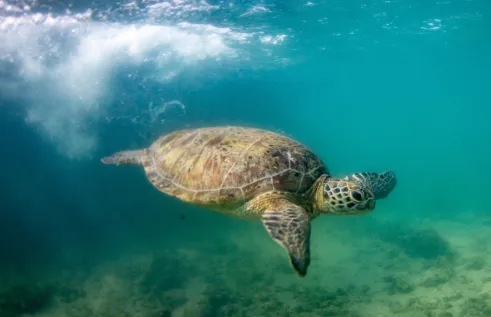
First Nations ranger knowledge reveals the threats facing NT’s green turtles
First Nations ranger groups working in protected areas such as national or marine parks identified illegal commercial fishing as a major concern for the Northern Territory’s green turtle populations, a study led by Charles Darwin University (CDU) and James Cook University (JCU) has found.
Read more about First Nations ranger knowledge reveals the threats facing NT’s green turtles


