Friend or foe: Why homebuilders have a lot to learn from termites
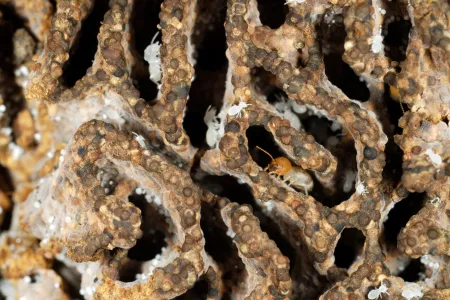
Termites are often thought of as bad news when it comes to a building’s integrity – but what if the voracious insects hold the blueprint to designing the coolest homes in the Territory?
Charles Darwin University’s (CDU) new Professor of Architecture, Lindy Burton, said a key component when designing buildings to support occupants’ wellbeing is air flow.
CDU's Bachelor of Architectural Design opened to its first cohort of students at the start of 2025.
Professor Burton said the iconic termite mounds decorating Territory landscapes were perfect examples of the naturally ventilated, self-cooling cathedrals termites design and thrive in.
“If there's even just one little bit of information that can help architects improve the way we design buildings, to help us to ventilate them better, reduce temperature, and limit our reliance on energy consumption, we've got to investigate it,” she said.
“We are part of nature and we can learn a lot from it – we should never assume humans have all the answers.”
Professor Burton hopes to attract PhD candidates to the University to explore those lessons with her.
Wellbeing has been a strong theme throughout Professor Burton’s career – before taking on her first academic role at Queensland University of Technology, she specialised in the design of health infrastructure such as hospitals and laboratories.
“I built a career around healthy buildings and how buildings support your wellbeing through lighting levels, air quality, and connection to nature,” she said.
Now turning her sights on cultivating the Northern Territory’s first crop of homegrown architects, Professor Burton said it was important to ensure her students focused on context, climate, culture, and community throughout their studies and design processes.
“Today's reality is that currently, the NT often relies on southern solutions that neglect to address the Territory’s unique complexities,” she said.
“The Territory’s geographical position demands innovative, adaptive, climate-responsive design research, and should incorporate First Nations knowledges to create infrastructure representative of the NT’s vibrant communities.”
Related Articles
Africans reuse, repair, recycle and resell waste: what’s needed to build on the circular economy basics
Africa’s circular economy is already at work in repair shops and scrap yards. Backing the people who keep goods in use could cut waste and create better jobs.
Read more about Africans reuse, repair, recycle and resell waste: what’s needed to build on the circular economy basics
The good, the bad, and the ugly food: Why religious shoppers are buying bruised veggies
A recent study with Charles Darwin University examines how consumers’ religiosity influences the purchase of “ugly foods”, or foods that are aesthetically imperfect but nutritious.
Read more about The good, the bad, and the ugly food: Why religious shoppers are buying bruised veggies
Rangers reimagine AI in wildlife monitoring
As workplaces around the world wrestle to integrate Artificial Intelligence in their operations, researchers and rangers in the heart of West Arnhem are successfully embracing this technology in conservation without compromising respect and knowledge.
Read more about Rangers reimagine AI in wildlife monitoring


