News
Getting ranger ready in Kakadu
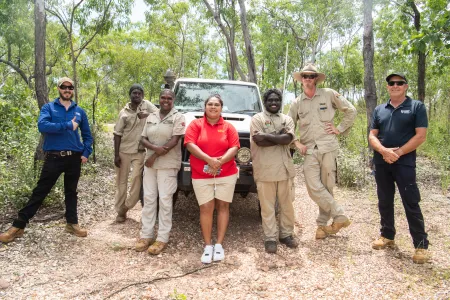
First Nations ranger trainees from across the Top End are learning valuable and useful skills as they are trained to become certified rangers through a course providing meaningful employment, training, and career pathways for First Nations Australians.
This year the program will host 50 rangers from across the Top End, mainly from Jabiru, Mary River and as far as Croker Island, as part of a program developed in coordination with local ranger groups and the Northern Land Council.
The program is designed to support First Nations people to combine traditional knowledge with conservation training to protect and manage their land.
This week the rangers will learn valuable skills training such as chemicals and weeds, small machinery operations and maintenance, four-wheel driving, chainsaws and work health and safety.
Charles Darwin University (CDU) Vocational Education and Training Lecturer, Jacqui Paine, is one of the trainers teaching the one-week intensive Ranger Ready Program in Kakadu National Park.
Ms Paine said the program offers an opportunity for the rangers to come together with other rangers and learn and work together gaining practical skills and knowledge that are needed for their jobs.
“We have rangers attending who have worked at the park for years, and other trainees have only just started. They get the chance to share what they are doing on country and we can help ensure that they are doing it in the safest way possible,” Ms Paine said.
“Observing how they are looking after their country helps us to share our ideas, and provide alternative methods or new technologies that can be incorporated into the work that they are already doing.”
This year the program will also see a 1-1 ranger session where trainees will spend time one on one with a Kakadu Ranger to receive a firsthand experience of what a day in the life of a ranger might look at.
Richard Cooper has been a Kakadu Ranger with NT National Parks for almost 15 years, he is attending the Ranger Ready Program to help refresh his skills and to share his knowledge with the next generation.
“It is important for me to know that these kids are willing to get back onto country to look after it for the next twenty or thirty years,” Mr Cooper said.
“We have always learned on country and to share my knowledge both with the trainees and lecturers will ensure we can keep our country safe for generations to come.”
The goal of the program is to encourage more First Nations rangers to obtain qualifications in Conservation and Ecosystem management and to become role models for their community.
More information on CDU’s Ranger Ready and Conservation Land Management programs can be found at www.cdu.edu.au/study/vet-conservation-land-management#/courses
Related Articles

Darwin needs a BBL: Architecture student's vision for the Top End
A vertical promenade designed by a Charles Darwin University (CDU) architecture student and inspired by Singapore's Gardens by the Bay offers a glimpse into Darwin's future facelift.
Read more about Darwin needs a BBL: Architecture student's vision for the Top End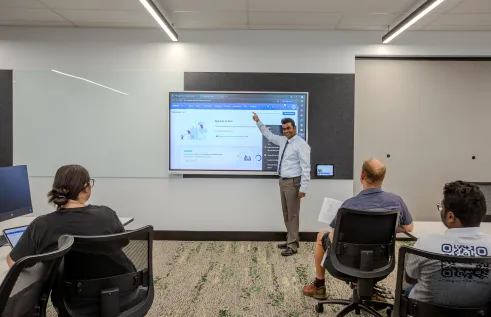
Trainer’s passion to help students succeed recognised
While Veeramani Ramasami used his studies to launch an early career as an accountant and financial Manager, it was the encounter with his first accounting teacher that inspired him on a different path into education.
Read more about Trainer’s passion to help students succeed recognised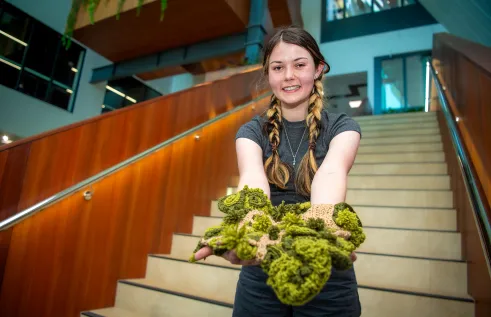
Crocheted landscape takes the gold in architecture competition
When tasked to defy growing reliance on artificial intelligence and create a landscape model without digital tools, Charles Darwin University (CDU) Bachelor of Architectural Design student Jorja Handebo turned to her hobby of the past five years: crochet.
Read more about Crocheted landscape takes the gold in architecture competition


