News
Gold standard in NT quarantine useful for global pandemics
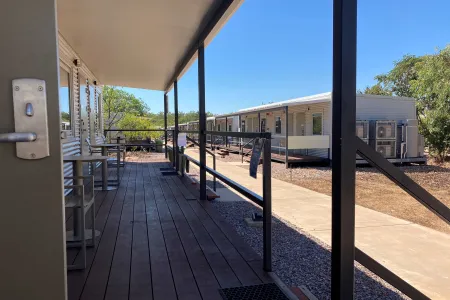
Australian healthcare workers can be better prepared for future pandemics, infection prevention and other scenarios that require quarantine or isolation, according to authors of a new quarantine toolkit.
Researchers from Charles Darwin University’s (CDU) Menzies School of Medicine developed the pandemic quarantine facility guide based on management of the Howard Springs Centre for National Resilience, which served as a quality model of quarantine and care during the COVID-19 pandemic.
CDU Menzies School of Medicine Senior Research Officer Angela Sheedy said the COVID-19 pandemic presented an opportunity to develop new strategies and workforce structures for quarantine, underpinned by a primary health care approach.
“The COVID-19 pandemic prompted the unprecedented use of quarantine facilities in Australia as a public health strategy to reduce community transmission,” Ms Sheedy said.
“However, the lack of a standardised approach resulted in varying models of care and problems arose, particularly in hotel quarantine.”
"The NT's response to quarantine has demonstrated that we can be better prepared for future crises. By capturing our success and identifying challenges, we can understand what were the most effective elements that could improve our future emergency response.”
These essential points of difference were the involvement of the National Critical Care and Trauma Response Centre, a team with lived experience of working with communicable disease transmission in communities, and the health model of care approach.
The guide also features sections on infrastructure, processes and communications, infection control, resident care and an overview of the health workforce.
“The NT's Howard Springs Quarantine Facility stood out as a large-scale operation that hosted over 33,000 residents,” she said.
“Remarkably, there were no recorded instances of COVID-19 transmission from residents to staff throughout the facility's operation, or out into the community. So we wanted to explore what was being done to ensure that the infection rate was minimised despite the high number of residents.”
CDU Menzies School of Medicine Foundation Dean, Professor Dianne Stephens, said it was important to establish an accessible resource that could be applied to future pandemics.
“Too often in health, we fail to capture and translate important lessons learned during health emergencies into guidance for the future,” Professor Stephens said.
“On an international scale, regional pandemics can be quite common, and affect many at-risk communities. We hope this project reflects our experience in a way that is helpful the next time we need to stand up quarantine facilities in this country and beyond our borders.”
The toolkit's development was made possible through funding from the Australian Government's Medical Research Future Fund, highlighting the importance of research in addressing public health challenges.
Related Articles

Federal funding for Country-based health and climate resilience
A new research collaboration to support and strengthen Country-based health and climate resilience has received funding through the National Health and Medical Research Council’s Centres of Research Excellence scheme.
Read more about Federal funding for Country-based health and climate resilience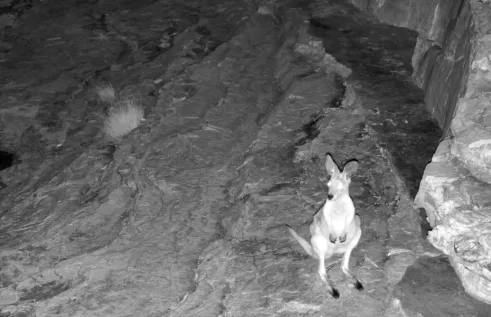
New livestream brings remote Australian arid zone waterhole to the world
A new livestream from a remote waterhole in the Northern Territory is giving people around the world the opportunity to observe wildlife in real time.
Read more about New livestream brings remote Australian arid zone waterhole to the world
How ants are cashing in on the fight against money laundering
An AI model inspired by ants, bees, and birds could be the key to cracking down on blockchain-based money laundering, new research led by Charles Darwin University (CDU) has found.
Read more about How ants are cashing in on the fight against money laundering


