News
New project to study how things are heating up in the agriculture industry
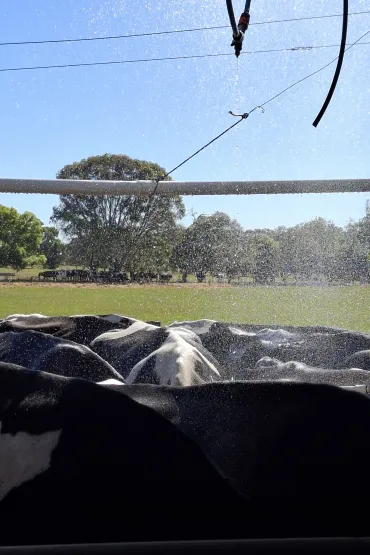
As Australia's agricultural sector tries to navigate more frequent and intense heatwaves, a new project by Charles Darwin University (CDU) aims to better understand the impact of the climate extreme on this essential industry.
The project, led by CDU's Northern Institute, aims to explore how rising temperatures are affecting labour productivity, operational costs, crop and livestock production, and the long-term sustainability of agricultural businesses in Australia.
Farmers, farm managers, agricultural workers, contractors, and others working in Australia's agricultural industry are invited to participate in an anonymous survey, which will examine the effects of rising temperatures.
The study is part of a broader research initiative supported by Natural Hazards Research Australia, which focuses on strengthening the nation's resilience to natural hazards and climate-related risks.
Principal Investigator Professor Kerstin Zander, a Senior Research Fellow with CDU's Northern Institute, said the research would address a major knowledge gap in understanding the real-world impacts of extreme heat on agriculture and food security.
“While drought has traditionally received significant attention in Australian agriculture, the impacts of extreme heat and heatwaves on workers’ health and productivity, as well as farm operations remain comparatively underexplored,” Professor Zander said.
“This is particularly important as Australia experiences more frequent and intense heatwaves, placing growing pressure on essential food-producing industries and regional communities.”
This survey is one of the few Australian studies designed to examine human and operational dimensions of heat impacts across multiple agricultural sectors, including horticulture, cropping, viticulture and livestock production.
Professor Zander said the findings could support evidence-based policy development, improve preparedness planning and strengthen climate resilience, and encouraged agricultural workers across the sector to participate to ensure a diverse response.
Research Assistant Amila Udage said the project combined climate resilience research with practical agricultural challenges faced by farmers and workers.
“Extreme heat is not only an environmental issue. It is increasingly becoming a labour, productivity and economic challenge for agricultural businesses,” Mr Udage said.
The study will investigate how heatwaves affect day-to-day farming operations, worker wellbeing, production systems, and adaptation decisions across the agriculture sector.
The project also aims to identify emerging adaptation strategies used by farmers. This includes operational changes, heat-mitigation practices, and future technology-based responses, particularly those enabled by emerging digital technologies.
Detailed information can be accessed on the survey page: http://go.cdu.edu.au/frdq
Participants may also volunteer for a follow-up interview to further discuss their experiences.
Aligned with the United Nations Sustainable Development Goals
Industry, innovation and infrastructure
Goal 9
Build resilient infrastructure, promote inclusive and sustainable industrialization and foster innovation.
Sustainable cities and communities
Goal 11
Make cities and human settlements inclusive, safe, resilient and sustainable.
Responsible consumption and production
Goal 12
Ensure sustainable consumption and production patterns.
Climate action
Goal 13
Take urgent action to combat climate change and its impacts.
Life on land
Goal 15
Protect, restore and promote sustainable use of terrestrial ecosystems, sustainably manage forests, combat desertification, and halt and reverse land degradation and halt biodiversity loss.
Related Articles
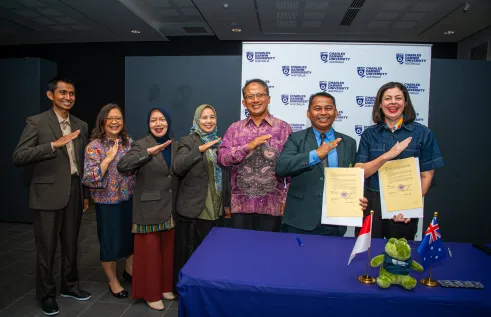
Partnership with Indonesian university to support education and research
A new partnership with one of East Java’s leading education institutions is aligning Charles Darwin University with priorities to strengthen Australia’s relationship with Indonesia.
Read more about Partnership with Indonesian university to support education and research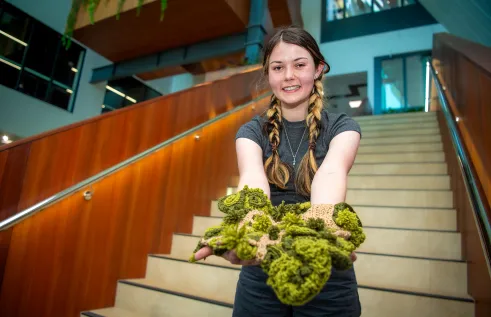
Crocheted landscape takes the gold in architecture competition
When tasked to defy growing reliance on artificial intelligence and create a landscape model without digital tools, Charles Darwin University (CDU) Bachelor of Architectural Design student Jorja Handebo turned to her hobby of the past five years: crochet.
Read more about Crocheted landscape takes the gold in architecture competition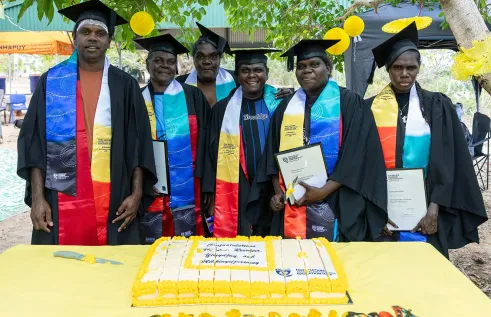
First Nations Training and Teacher Education Hub celebrates first major milestone
As Charles Darwin University's (CDU) First Nations Training and Teacher Education Hub draws closer to the end of its first year, one of its greatest milestones to date was conferring its first six graduates.
Read more about First Nations Training and Teacher Education Hub celebrates first major milestone


