News article
Grant to support Darwin Harbour report card
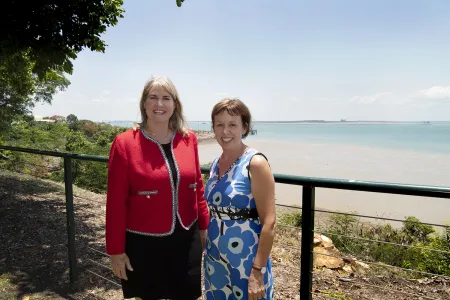
Chair of the Darwin Harbour Advisory Committee, and Co-Director of RIEL at CDU Professor Karen Gibb has been awarded a $125,000 grant from The Ian Potter Foundation to support and manage the long-term sustainability of Darwin Harbour.
The grant for the project “Towards Integrated Reporting for Darwin Harbour” was announced as the Northern Territory Government released the draft Darwin Harbour Strategy 2019-2024 for comment on the “Have Your Say” website.
“The strategy provides a framework to promote ecologically sustainable development and foster good stewardship of our beautiful harbour to protect its environmental, cultural, social and economic values,” Professor Gibb said.
“This grant will allow the team to undertake a collaborative, community-led process to ask stakeholders to identify what outcomes and indicators are important for Darwin Harbour.
This will ensure the Darwin Harbour Report Card is a living document, relevant to the community, and will support multiple sectors by working to make their efforts integrated and effective.
“The report card will take the form of an interactive website and pamphlet produced annually showing several indicators of environmental, cultural, social and economic health of Darwin Harbour,” Professor Gibb said.
The Northern Territory Government provided $100,000 to help secure the grant that will support lead researchers to introduce integrated reporting for Darwin Harbour to compare environmental, social, cultural, recreational and economic information against predefined objectives.
Minister for Environment and Natural Resources Eva Lawler thanked Professor Karen Gibb and her team for their hard work in the creation of the Strategy.
“This Strategy will underpin the future management of Darwin Harbour, protecting and enhancing its value to the community well into the future,” she said.
The Ian Potter Foundation, Chair Charles Goode said the Foundation was pleased to support Charles Darwin University to facilitate this collaborative project that aims to ensure the future sustainability of Darwin Harbour.
“Importantly, this community-led initiative will bring data together from multiple sources to create a practical tool to better manage this vital resource for the benefit of all,” he said.
Related Articles
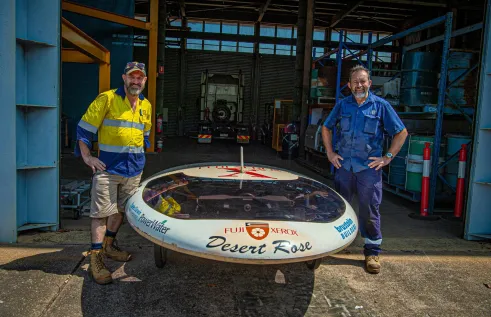
'Desert Rose' to be preserved
The legacy of a world record-breaking solar car, developed by and raced by Charles Darwin University students and staff, will be preserved and celebrated in the Northern Territory’s premier museum.
Read more about 'Desert Rose' to be preserved
Africans reuse, repair, recycle and resell waste: what’s needed to build on the circular economy basics
Africa’s circular economy is already at work in repair shops and scrap yards. Backing the people who keep goods in use could cut waste and create better jobs.
Read more about Africans reuse, repair, recycle and resell waste: what’s needed to build on the circular economy basics
Hamlet gets a contemporary twist in Darwin
Shakespeare’s most famous tragedy will be brought into the modern world in a bold new production of Hamlet at Charles Darwin University Theatre this month.
Read more about Hamlet gets a contemporary twist in Darwin


