News
Green thumbs up: Project combines YouTube and AI to boost biosecurity
Gardening videos attract millions of views on YouTube each year, but an innovative research project has showed how this content could be critical in protecting Australia’s biosecurity.
The project by Charles Darwin University (CDU), supported through the Northern Australia Biosecurity Strategy, combined YouTube gardening content and OpenAI to map urban green spaces and detect previously unregistered community gardens across northern Australia.
Researchers fed a dataset of YouTube content into detailed large language model (LLM) prompts. The prompts classified whether a video related to community gardens and extracted the name of the garden, its address and a summary of the clip.
The identified gardens were then compared against the Australian Government’s community garden registry for the northern Australia region.
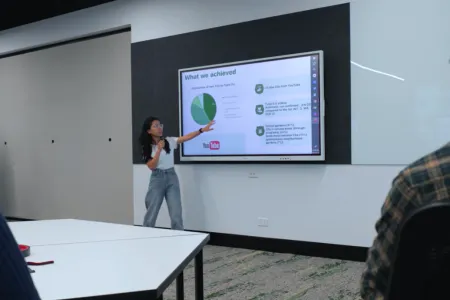
This method had an accuracy of 76.8 per cent. Thirty-four community gardens were identified through this method, with 28 gardens not in the Australian Government’s current registry. The remaining six matched gardens in the current registry.
The majority of the identified community gardens were school-based at 34 per cent, followed by remote gardens at 39 per cent, urban or suburban gardens at 11 per cent and ad hoc gardens at 7 per cent.
This study is the result of a project collaboration between CDU Master of Data Science students and Darwin-based industry partner Anima Co.
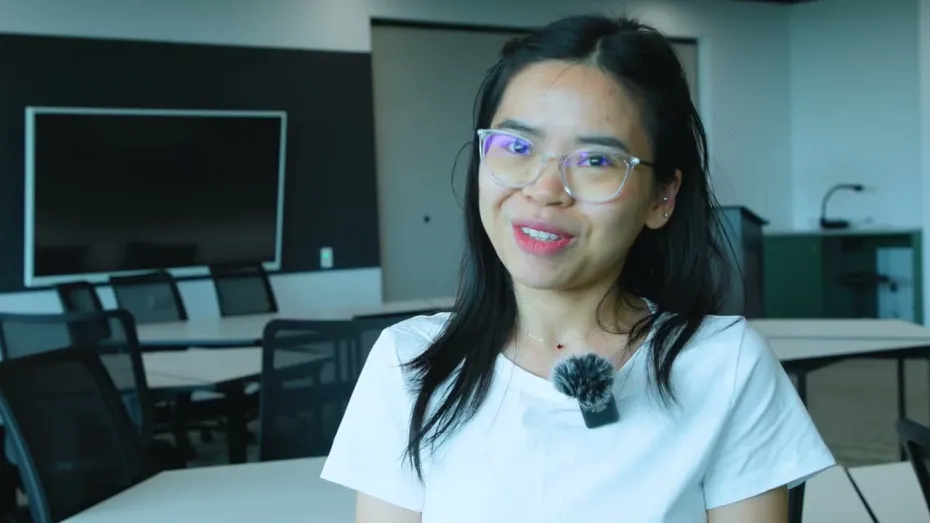
Lead author, research team member and CDU Master of Data Science student Thi Loan Trinh said the results showed why expanding research to community gardens was of value.
“Research in this area is important because many community gardens are ad hoc and not well documented, which make them difficult to monitor,” Ms Trinh said.
“Identifying and mapping these community gardens can help support early pest and diseases detection, control and manage biosecurity risks and protect local food production and environment.
“Working on this project was more interesting and challenging than we expected. We had strong support from our lecturers and our industry partners throughout the project. It also opened my eyes to something more than community gardens being this ‘local or small garden’, it’s something larger than that, a whole ecosystem of biodiversity, especially biosecurity.”
Anima Co. Chief Executive Dr Anne Walters said this project showcased how beneficial partnerships could be for both education and the community.
"It’s inspiring to see the next generation of biosecurity leaders stepping up, applying their skills to real-world challenges, and shaping how we safeguard Australia’s natural and urban ecosystems,” Dr Walters said.
"The future of biosecurity relies on curiosity, collaboration, and bold ideas. Seeing emerging leaders embrace these challenges gives me confidence in our ability to protect Australia’s ecosystems now and into the future.
"Projects like this pave the way for a stronger, smarter approach to biosecurity. These students aren’t just learning—they’re building the tools and knowledge that will define our national biosecurity strategy in the years to come."
CDU Lecturer in Information Technology Dr Yakub Sebastian, who was one of the project’s supervisors, said projects such as this bridge the gap between the classroom and creating real-world impact and give students the confidence and skills to take on significant challenges.
“You do not have to be a biosecurity specialist to protect Australia's future,” Dr Sebastian said.
“For these emerging data professionals, the chance to work on projects of national importance is more than just a study milestone. It’s a realisation that their skills are the hidden backbone of our national security. This certainly feels empowering.
Dr Sebastian also highlighted the research’s publication in the field’s leading journal publication, Urban Forestry & Urban Greening.
“By clearing the rigorous hurdles of international peer review, the team has proven that their ideas are not just innovative - they are world-class,” Dr Sebastian said.
“Their work is now contributing to the global conversation on sustainable urban environments and new methods of biosecurity surveillance. What makes this achievement even more remarkable is that this publication is the result of a short-term - one-semester - coursework project.”
Aligned with the United Nations Sustainable Development Goals
2
Zero hunger
Goal 2
End hunger, achieve food security and improved nutrition and promote sustainable agriculture.
11
Sustainable cities and communities
Goal 11
Make cities and human settlements inclusive, safe, resilient and sustainable.
12
Responsible consumption and production
Goal 12
Ensure sustainable consumption and production patterns.
Related Articles
New livestream brings remote Australian arid zone waterhole to the world
A new livestream from a remote waterhole in the Northern Territory is giving people around the world the opportunity to observe wildlife in real time.
Read more about New livestream brings remote Australian arid zone waterhole to the world
Leading scientist recognised for lifetime of dedication to Australian biodiversity and conservation
One of the nation’s most distinguished experts in Australian biodiversity and conservation will be celebrated in an upcoming Charles Darwin University graduation ceremony.
Read more about Leading scientist recognised for lifetime of dedication to Australian biodiversity and conservation
New construction management course to bolster NT’s building industry
A new Master of Construction Management from Charles Darwin University (CDU) is set to bolster the Northern Territory’s building industry.
Read more about New construction management course to bolster NT’s building industry


