News
AI-powered disease prediction to improve catfish production
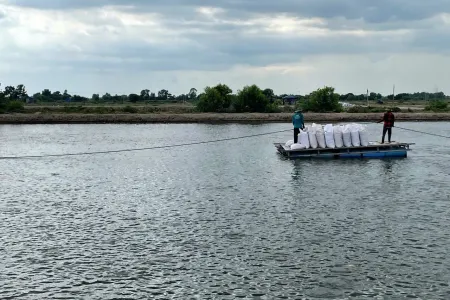
Artificial Intelligence will be harnessed to detect disease outbreaks in striped catfish ponds in Vietnam's Mekong Delta, in a new international project to help safeguard the country's aquaculture industry.
The project led by Charles Darwin University (CDU) and Can Tho University recently received funding through Aus4Innovation program, which aims to help strengthen Vietnam's innovation system.
Aus4Innovation is funded by the Department of Foreign Affairs and Trade, co-funded and managed by CSIRO and delivered in partnership with Vietnam’s Ministry of Science and Technology.
Vietnam is the world's largest producers of striped catfish (Pangasianodon hypophthalmus). Farming is concentrated in the Mekong Delta, with annual production at around 1.7 million tons.
Aquaculture is crucial to the country's economy, producing USD $12 billion in exports – representing around 43 per cent of the country's agricultural export value.
However, climate change and intensification of farming practices are increasing the frequency of disease outbreaks in catfish ponds, resulting in significant economic losses.
To prevent this, the project will develop a real-time monitoring system able to identify early warning signs of disease risk.
Sensors installed in commercial ponds in the Mekong Delta will collect data on fish behaviour, biomass distribution, and environmental conditions.
This data will be fed into a digital platform where machine learning models will analyse patterns associated with disease emergence.
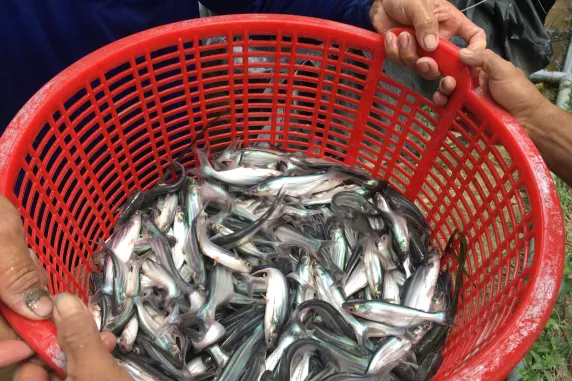
Project lead and CDU Professor of Tropical Aquaculture Sunil Kadri, who is with the Research Institute for Northern Agriculture (RINA), said this method would empower farmers to shift from reactive treatment to proactive disease prevention.
“Current disease detection methods rely heavily on visual observation and mortality counts, meaning interventions usually occur only after outbreaks have already begun,” Professor Kadri said.
“Farmers will be able to take preventive management actions before outbreaks occur. This has the potential to reduce mortality, improve productivity, and decrease reliance on antimicrobial treatments.
“This system will give remote, marginalised communities access to high-tech aquaculture solutions and training to help manage their farms efficiently, anticipate environmental and health challenges, and promote equitable participation in Vietnam’s aquaculture growth.”
The resulting technology is intended to be developed into a scalable, near-market solution which can be adopted across Vietnam's aquaculture sector. In the future, it will be adapted for other species such as shrimp and tilapia.
Aligned with the United Nations Sustainable Development Goals
Zero hunger
Goal 2
End hunger, achieve food security and improved nutrition and promote sustainable agriculture.
Industry, innovation and infrastructure
Goal 9
Build resilient infrastructure, promote inclusive and sustainable industrialization and foster innovation.
Life below water
Goal 14
Conserve and sustainably use the oceans, seas and marine resources for sustainable development.
Related Articles
Federal funding for Country-based health and climate resilience
A new research collaboration to support and strengthen Country-based health and climate resilience has received funding through the National Health and Medical Research Council’s Centres of Research Excellence scheme.
Read more about Federal funding for Country-based health and climate resilience
New livestream brings remote Australian arid zone waterhole to the world
A new livestream from a remote waterhole in the Northern Territory is giving people around the world the opportunity to observe wildlife in real time.
Read more about New livestream brings remote Australian arid zone waterhole to the world
Leading scientist recognised for lifetime of dedication to Australian biodiversity and conservation
One of the nation’s most distinguished experts in Australian biodiversity and conservation will be celebrated in an upcoming Charles Darwin University graduation ceremony.
Read more about Leading scientist recognised for lifetime of dedication to Australian biodiversity and conservation


