How a bowerbird will boost Papua New Guinea’s numeracy
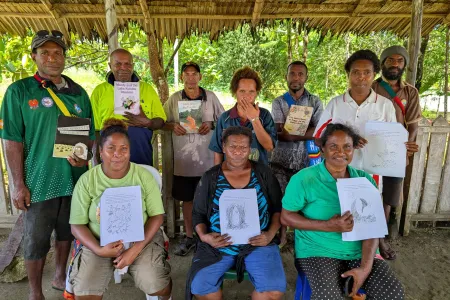
A vibrant new book co-authored by a Charles Darwin University (CDU) researcher is set to boost numeracy in a region where counting isn’t always as straightforward as reciting one through 10.
‘Bob Builds a Nest’, written by CDU Senior Lecturer in STEM Pathways Carla Eisemberg and Piku Biodiversity Network Director Yolarnie Amepou, uses the journey of a bowerbird to encourage children in Papua New Guinea’s (PNG) Gulf Province to better engage with maths.
The book will be launched on November 7 in Darwin at the Radicle Centre at Danala | Education and Community Precinct, with anyone interested in STEM invited to celebrate the book and the diversity of subjects such as maths.
Dr Eisemberg said the province used more than six different languages, each with a unique counting system. For example, Rumu speakers define numbers beyond five as ‘5 + 1’ or ‘5 + 2’, with multiples of five being represented as ‘5 x 1’ or ‘5 x 2’.
“This made the book quite an interesting challenge because each language counts in different ways, so incorporating that needed a bit of consultation,” she said.
Ms Amepou said national skill assessments revealed about two in three Grade 5 students in PNG did not meet expected numeracy standards.
“The book focuses on children in Gulf Province because the region faces some of the steepest challenges in numeracy in Papua New Guinea,” she said.
“Early schooling access is also low in Gulf – only about a quarter of six-year-olds enter elementary preparatory, and this weak start in schooling translates into major gaps in numeracy later on.
“By creating a resource specifically for Gulf Province children, we’re aiming to strengthen their basic number skills from the earliest years, helping to bridge the gap for one of the most disadvantaged regions in the country.”
The book will be a freely available resource for students and teachers to draw on and improve their maths skills a manner considered relatable to the target audience.
Dr Eisemberg said the story is deliberately framed by the perspective of a flame bowerbird because the orange and yellow animal is native to PNG.
“In previous books, I’ve other local animals such as fish, fruit bats, and water rats, and this time I wanted to use a bird,” she said.
“Many similar books talk about counting ‘three elephants’ or ‘five giraffes’, but this will be more relatable for these children – they can count the shells, berries, and flowers Bob the Bowerbird uses to build his nest instead.”
The book was developed by CDU’s Radicle Centre in partnership with the Piku Biodiversity Network Inc., with printing sponsored by ExxonMobil.
Related Articles
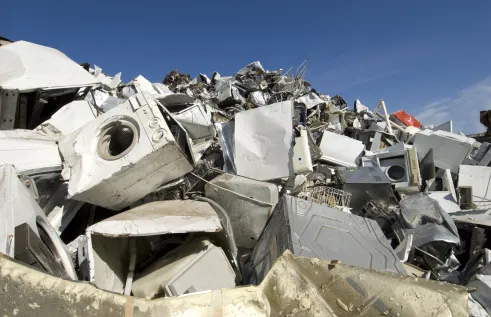
Africans reuse, repair, recycle and resell waste: what’s needed to build on the circular economy basics
Africa’s circular economy is already at work in repair shops and scrap yards. Backing the people who keep goods in use could cut waste and create better jobs.
Read more about Africans reuse, repair, recycle and resell waste: what’s needed to build on the circular economy basics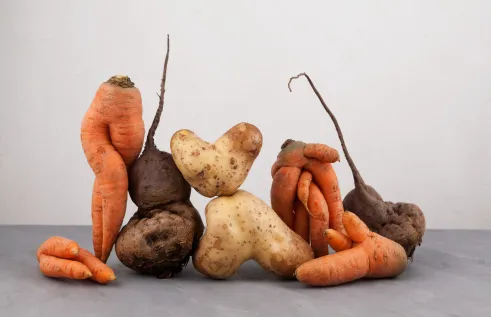
The good, the bad, and the ugly food: Why religious shoppers are buying bruised veggies
A recent study with Charles Darwin University examines how consumers’ religiosity influences the purchase of “ugly foods”, or foods that are aesthetically imperfect but nutritious.
Read more about The good, the bad, and the ugly food: Why religious shoppers are buying bruised veggies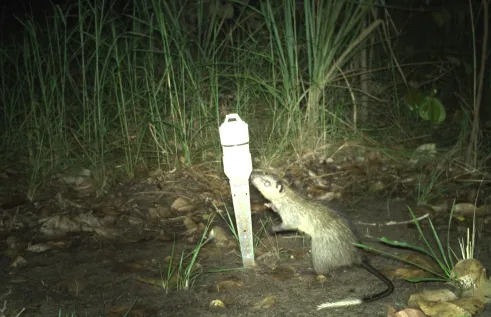
Rangers reimagine AI in wildlife monitoring
As workplaces around the world wrestle to integrate Artificial Intelligence in their operations, researchers and rangers in the heart of West Arnhem are successfully embracing this technology in conservation without compromising respect and knowledge.
Read more about Rangers reimagine AI in wildlife monitoring


