Kids stride into future learning

More than 50 primary school students, some as young as seven-years-old, have celebrated at a university graduation of their very own at Charles Darwin University.
The students garbed in graduation regalia joined thousands of children graduating from the Children’s University program across the country.
Children’s University coordinates a program of high quality, voluntary learning opportunities outside school hours for children from low SES backgrounds, with a focus on rewarding participation, raising aspirations and encouraging engagement with learning.
Children’s University Charles Darwin Coordinator Josh Barnes said offering the opportunity to attend university through engaging, self-directed educational activities aims to encourage future participation in higher education.
Activities ranged from a robot engineering workshop to identifying animals at the Territory Wildlife Park. For each activity the students were awarded stamps in a passport towards completing the program.
Manunda Terrace Primary School student Hannah Baczynski said she had participated in the program for the past two years.
“There have been so many fun activities and I have met lots of other kids with similar interests to me,” she said.
Ten-year-old Hannah said the highlight of this year was the visit to the Territory Wildlife Park.
“I want to become a Vet or Wildlife Conservationist so learning about the birds, reptiles and amphibians, and feeding the buffalos was really fun,” she said.
For more information about the program visit W: cdu.edu.au/childrens-university
Related Articles
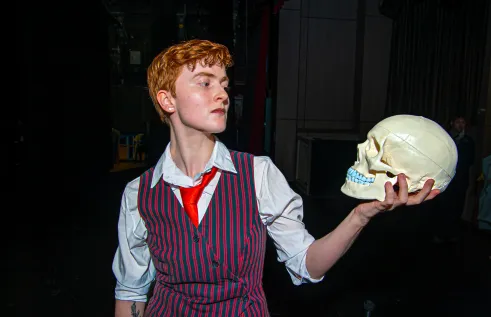
Hamlet gets a contemporary twist in Darwin
Shakespeare’s most famous tragedy will be brought into the modern world in a bold new production of Hamlet at Charles Darwin University Theatre this month.
Read more about Hamlet gets a contemporary twist in Darwin
The good, the bad, and the ugly food: Why religious shoppers are buying bruised veggies
A recent study with Charles Darwin University examines how consumers’ religiosity influences the purchase of “ugly foods”, or foods that are aesthetically imperfect but nutritious.
Read more about The good, the bad, and the ugly food: Why religious shoppers are buying bruised veggies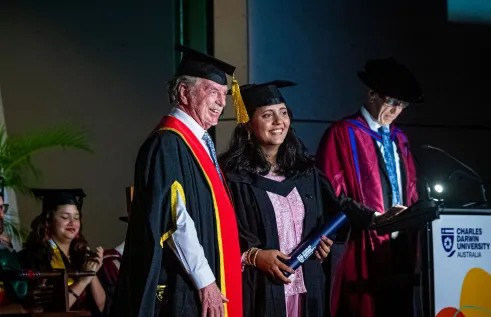
Student Council President celebrates graduation, prepares to pass the torch to new team
After serving as the Charles Darwin University (CDU) Student Council President for two years, Shishtata Bhandari has graduated and is preparing to hand over the reins to the council's next leader.
Read more about Student Council President celebrates graduation, prepares to pass the torch to new team


