New CDU studies finds two native Australian plants have healing properties
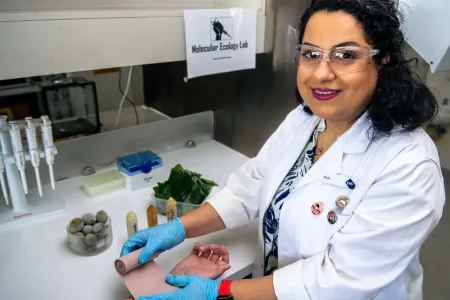
Two plants native to Northern Australia could have significant medicinal potential in the prevention and treatment of diseases, according to two studies by a Charles Darwin University (CDU) PhD candidate.
Lead author and CDU Faculty of Science and Technology candidate Elnaz Saki explored the potential of Calophyllum inophyllum seed oil (CSO) and Tinospora smilacina leaves water extract (TSWE) as alternative sources of medicine in two separate studies.
In the first study Dr Saki explored the wound healing potential of CSO after turning it into a nanoemulsion, a mixture of liquids with a nano-sized droplet of oil. The second paper studied the impact of adding TSWE to the CSO nanoemulsion.
“The study has shown that CSO and TSWE contain bioactive compounds such as flavonoids and fatty acids, which have potent wound healing, antimicrobial, and antioxidant effects,” Dr Saki said.
“Both nanoemulsions demonstrated an improvement or equivalent activity for biomedical applications such as wound healing, antimicrobial, and antioxidant effects.”
Dr Saki’s extensive interest in the diversity of plant species and their unique chemical compounds inspired her to pursue medical biotechnology, nanobiotechnology and nanomedicine.
She chose to work with C. inophyllum, also known as Alexandrian laurel, and T. smilacina because of their historical use in traditional medicine and bioactive compounds. CSO has been used to treat skin diseases, wounds and pain while T. smilacina, commonly called snake vine, has long been used by First Nations people to treat snake bites, headaches, rheumatoid arthritis and other inflammatory disorders.
“These plants represent a rich source of bioactive compounds that have not been fully explored regarding their potential therapeutic applications,” Dr Saki said.
“With the increasing demand for sustainable and eco-friendly solutions in the pharmaceutical industry, I recognised an opportunity to contribute to this field by investigating the bioactive properties of plant extracts.”
Dr Saki, who recently graduated with a PhD in Nanobiotechnology, hopes to continue her research and explore how these bioactive compounds work in vitro and in vivo.
“I am also interested in exploring the potential of these compounds to be included in novel therapies for various diseases, including anti-cancer, anti-inflammation, multidrug-resistant and infectious diseases,” she said.
“I am interested in partnerships with pharmaceutical, bioceutical and cosmetic companies interested in developing and synthesising new nanomedicine and therapies.”
The first study, ‘Optimisation of Calophyllum inophyllum seed oil nanoemulsion as a potential wound healing agent’ was published in the journal of BMC Complementary Medicine and Therapies.
The second study, ‘Formulation and Biomedical Activity of Oil-in-Water Nanoemulsion Combining Tinospora smilacina Water Extract and Calophyllum inophyllum Seeds Oil’ was published in the journal of Clinical, Cosmetic and Investigational Dermatology.
Related Articles
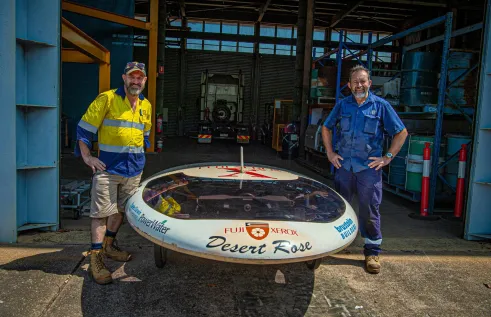
'Desert Rose' to be preserved
The legacy of a world record-breaking solar car, developed by and raced by Charles Darwin University students and staff, will be preserved and celebrated in the Northern Territory’s premier museum.
Read more about 'Desert Rose' to be preserved
Federal funding for Country-based health and climate resilience
A new research collaboration to support and strengthen Country-based health and climate resilience has received funding through the National Health and Medical Research Council’s Centres of Research Excellence scheme.
Read more about Federal funding for Country-based health and climate resilience
New livestream brings remote Australian arid zone waterhole to the world
A new livestream from a remote waterhole in the Northern Territory is giving people around the world the opportunity to observe wildlife in real time.
Read more about New livestream brings remote Australian arid zone waterhole to the world


