New paper suggests how universities can regain control of education from AI

Universities around the world can preserve academic integrity from the threat of Artificial Intelligence (AI) by resisting corporate pressure and prioritising ethics, according to a new paper with Charles Darwin University (CDU).
The study by CDU and Babeş-Bolyai University in Romania explores how universities around the world can adopt and adapt to the ever-increasing popularity of AI in higher education.
The paper highlights how education is controlled by corporations more interested in marketability and data control than meaningful advancements in education policies and learning and teaching solutions, while suggesting how universities can find solutions to maintain academic integrity in the era of generative AI.
CDU AI expert and lead author Dr Stefan Popenici said AI could enhance teaching and learning but must be used and designed with students and teachers at the core.
“Universities should further focus on finding new ideas for AI use in reconfiguring teaching practices for a more nuanced, human, and balanced approach to higher learning,” Dr Popenici said.
Dr Popenici said areas of focus for universities included data security and transparency, investing in proper technological solutions and more.
“Transparency of AI and edtech use in universities should be secured for all students, including specific and informed consent for the use of AI solutions, especially for the collection and aggregation of student data,” Dr Popenici said.
“Universities should involve higher degree research students in all areas of expertise in projects aiming to regain universities’ control over their technological solutions.
“AI solutions should be also engaged to address social and economic polarisation, inequality and the aims of lifelong learning.”
Dr Popenici said universities could regain control of the harm AI is causing to academic integrity, critical and original thinking, and students’ trust if they commit to prioritising solutions.
“Higher education lost a significant amount of intellectual and moral power to corporate entities and cultures in exchange for some distant gains and market dominance,” Dr Popenici said.
“Universities had, and still have, intellectual and institutional resources to rebuild an independent identity and an agenda organised by ethical standards in the pursuit of higher learning, civil society and democratic values.
“The development of AI in higher education is still in its early stages; however, by ensuring transparency of these systems, responsible data use, and informed data and information collection from our students, with the duty of care and vision for the future placed as guiding principles for action, AI can become the solution for a new revolution in education, to the benefit of students and societies.”
A Systematic Review of the Artificial Intelligence Implications in Shaping the Future of Higher Education was published in journal Educatia 21.
Related Articles

The good, the bad, and the ugly food: Why religious shoppers are buying bruised veggies
A recent study with Charles Darwin University examines how consumers’ religiosity influences the purchase of “ugly foods”, or foods that are aesthetically imperfect but nutritious.
Read more about The good, the bad, and the ugly food: Why religious shoppers are buying bruised veggies
Rangers reimagine AI in wildlife monitoring
As workplaces around the world wrestle to integrate Artificial Intelligence in their operations, researchers and rangers in the heart of West Arnhem are successfully embracing this technology in conservation without compromising respect and knowledge.
Read more about Rangers reimagine AI in wildlife monitoring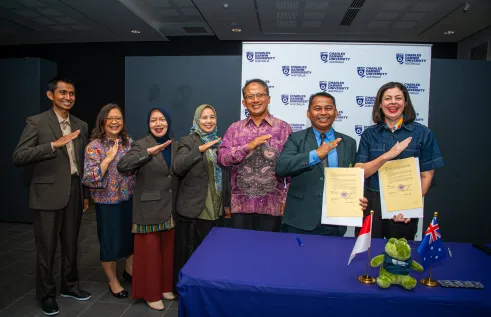
Partnership with Indonesian university to support education and research
A new partnership with one of East Java’s leading education institutions is aligning Charles Darwin University with priorities to strengthen Australia’s relationship with Indonesia.
Read more about Partnership with Indonesian university to support education and research


