News
New research skill building program at CDU
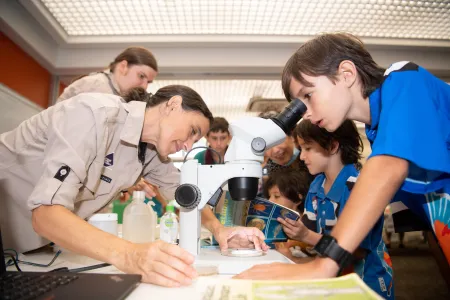
Charles Darwin University (CDU) has launched a series of new professional development training programs to support researchers at the university.
The Early Career Researcher (ECR) Skills Upgrading Program and The Foundation ECR (fECR) program are designed to equip research staff with the right tools to build their research outputs and skills.
More than $1 million has been invested in the ECR and fECR programs over five years.
CDU's Pro Vice-Chancellor Research and Innovation Dr Steve Rogers said the program was part of CDU’s strategy to further enhance the university’s research quality and enhance staff development.
“The program will help early-career researchers get a head start on producing high quality research,” Dr Rogers said.
“We want to nurture and promote our researchers and enhance our research impact as a university to solve real-world problems.”
The activities include workshops, networking events, online modules, mentoring schemes, and reward systems that are tailored specifically for early career researchers.
Early career researchers are those who earned a PhD in the last five years.
CDU Vice Chancellor Professor Scott Bowman CDU said the program was focused on making sure the needs of its research community are met through a quality training system to grow the university’s research capacity into the future.
“CDU has some of the world’s best researchers in their fields, and we’re focused on developing the next generation of researcher into the future ,” Professor Bowman said.
“I encourage all CDU researchers to participate in this excellent professional development opportunity.”
Professor Drew Dawson from Central Queensland University has been appointed to lead the new initiative.
Professor Dawson expertise in organisational psychology and human behaviour will be vital contribution to help new researchers to CDU in adapting to the Territory’s research environment.
Related Articles

Federal funding for Country-based health and climate resilience
A new research collaboration to support and strengthen Country-based health and climate resilience has received funding through the National Health and Medical Research Council’s Centres of Research Excellence scheme.
Read more about Federal funding for Country-based health and climate resilience
New livestream brings remote Australian arid zone waterhole to the world
A new livestream from a remote waterhole in the Northern Territory is giving people around the world the opportunity to observe wildlife in real time.
Read more about New livestream brings remote Australian arid zone waterhole to the world
How ants are cashing in on the fight against money laundering
An AI model inspired by ants, bees, and birds could be the key to cracking down on blockchain-based money laundering, new research led by Charles Darwin University (CDU) has found.
Read more about How ants are cashing in on the fight against money laundering


