News
New study finds there needs to be clearer career pathways to get First Nations teachers in schools
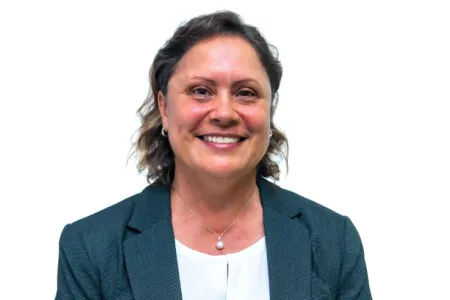
A Charles Darwin University (CDU) researcher has found there needs to be more clarity and communication about possible pathways into teaching to increase the number of First Nations teachers in the Northern Territory.
Senior Lecturer in Indigenous knowledge at CDU’s Northern Institute, Dr Tracy Woodroffe is conducting research to address a critical shortfall of First Nations educators in the Northern Territory, a place that has the highest percentage of First Nations students in Australia.
Dr Woodroffe a proud Warumungu Luritja woman who has extensive experience working in early childhood, primary and secondary classrooms, said the Australian teacher workforce is characterised by a distinct lack of parity between First Nations teacher numbers and non-First Nations counterparts.
“We know that there is an astounding teacher shortage at the moment, especially out in remote communities and teachers are coming from interstate,” Dr Woodroffe said.
“These teachers are responsible for the teaching of First Nations students, but they have a different culture, different ideas about teaching and learning and there are language barriers.”
“Having more First Nations teachers could really help increase First Nation student engagement numbers, help to apply more First Nations educational approaches, and help create more role models in the community,” she said.
To address the shortfall of First Nations teachers, Dr Woodroffe’s project is focused on understanding the various educational pathways on offer to First Nations students to enter teaching.
Dr Woodroffe has spoken to a range of people such as education lecturers, support staff, career education teachers and NT teacher registration board staff to understand the pathways available.
“There is a potential study pathway for First Nations senior secondary students to enter into teaching but unfortunately it is not clearly articulated or widely known,” Dr Woodroffe said.
“If we are going to increase the number of First Nations teachers, we need a coordinated approach to change processes and practices to improve pathways and better support First Nations students,” she said.
Dr Woodroffe has recently received a First Nations Fellowship from the Australian Centre for Student Equity and Success (ACSES) - formerly the National Centre for Student Equity in Higher Education (NCSEHE) - at Curtin University to continue with the project.
The next phase will focus on understanding the aspirations of First Nations high school students to become teachers, and First Nations teachers’ perspectives about teaching and how to promote teaching to other First Nations people.
This will assist the Department of Education with workforce development and assist universities to increase First Nations enrolments in teacher education.
“My study will specifically focus on promoting teaching as a career of choice for First Nations people to ultimately improve educational outcomes for First Nations students,” Dr Woodroffe said.
Dr Woodroffe will contact around 40 schools across the Territory in urban and remote locations to ask students in senior years and teachers to complete an anonymous survey.
“Through the survey I hope to learn about First Nations perceptions of teaching as a career and how to best promote teaching, in order to inspire and encourage as many First Nations people as possible to become teachers,” Dr Woodroffe said.
ACSES’s First Nations Fellowship program provides year-long fellowships for First Nations Australians working as researchers and practitioners in higher education, to complete a project that will inform an area of higher education equity practice and policy.
Related Articles

The good, the bad, and the ugly food: Why religious shoppers are buying bruised veggies
A recent study with Charles Darwin University examines how consumers’ religiosity influences the purchase of “ugly foods”, or foods that are aesthetically imperfect but nutritious.
Read more about The good, the bad, and the ugly food: Why religious shoppers are buying bruised veggies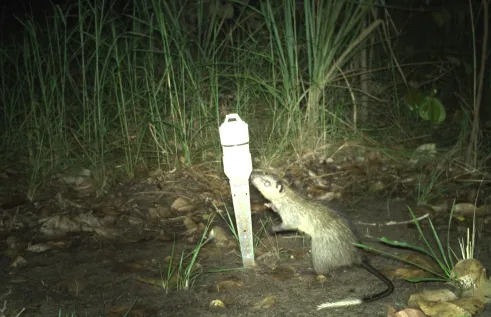
Rangers reimagine AI in wildlife monitoring
As workplaces around the world wrestle to integrate Artificial Intelligence in their operations, researchers and rangers in the heart of West Arnhem are successfully embracing this technology in conservation without compromising respect and knowledge.
Read more about Rangers reimagine AI in wildlife monitoring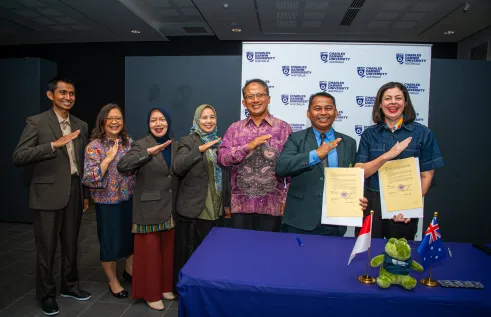
Partnership with Indonesian university to support education and research
A new partnership with one of East Java’s leading education institutions is aligning Charles Darwin University with priorities to strengthen Australia’s relationship with Indonesia.
Read more about Partnership with Indonesian university to support education and research


