News
Reasons for illegal fishing “more nuanced” than previously thought, international research shows
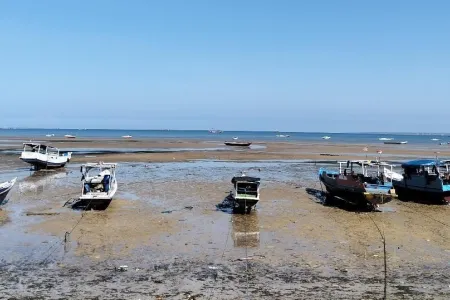
A resurgence of illegal fishing in northern Australian waters is cause for environmental, biosecurity and social concern, and new research suggests the causes of this activity are increasingly complex.
The project, funded by the Australian Centre for International Agricultural Research (ACIAR), was conducted by an international team of researchers from Charles Darwin University (CDU) and Indonesia’s National Research and Innovation Agency, and Nusa Cendana University.
The Australian Fishing Zone (AFZ) covers waters from 3 nautical miles to 200 nautical miles off the Australian coast. Illegal Indonesian fishing incursions in the zone have become a pervasive issue in the last five decades, with 361 boats apprehended in 2005 to 2006 alone.
Despite significant investment from the Australian Government in the surveillance, enforcement, apprehension and prosecution of fishers and their equipment, the AFZ has experienced an influx of illegal fishing activity post-COVID.
Of note there were 337 boats intercepted during the 2021/22 financial year, and recent data shows 172 boards were intercepted in the 2024/25 financial year up to January 7, 2025.
Research conducted in four communities of Nusa Tenggara Timur Province, Indonesia found seven behavioural driver categories of small-scale transboundary fishing: economic and livelihood, COVID-19 related, psychological, environmental, cultural and historical, social, and policy and management.
Within these seven behavioural categories are a further 28 associated drivers.
CDU Professor of Environmental Science Natasha Stacey, leader of the project and research team, said the drivers often overlap.
“For example, during COVID-19, economic hardship among fishing communities increased,” Professor Stacey said.
“However, financial difficulties alone are not sufficient to entirely explain the strong resurgence of illegal fishing, which was likely prompted by a combination of financial hardship, the discovery of new fishing grounds abundant in sea cucumber, and willing patrons to support such ventures into the AFZ.”
Of note, the research incorporated data and perspectives from women on the drivers, risks and impacts associated with their male relatives engaging in the illegal activity, with the results demonstrating how the cycle of this behaviour perpetuates.
“Women research participants expressed that the limited employment or other livelihood options for their menfolk in their communities is a motivating factor to fish in the AFZ,” Professor Stacey said.
“Surveillance and compliance policy responses have resulted in forfeitures, apprehensions and prosecutions of thousands of fishers, boats, catches and equipment. But, in general, we conclude that this has not been a sufficient response to stem the tide of incursions.
“Even in instances when authorities successfully ‘catch’ fishers undertaking illegal behaviour, it is more likely to negatively impact on their households and women further trapping them in debt relationships that will see the fisher crew ‘re-offend’.
“Our research results highlight the need to move beyond fishers’ noncompliance as the main approach to managing illegal fishing, and instead focus on factors which most strongly drive illegal behaviour because of livelihood vulnerabilities within their broader enabling environment.”
It’s proposed further research should explore what drivers can be addressed through behavioural science and rural livelihood transformative initiatives, with efforts made to co-design a program to address key drivers of illegal fishing.
The project results were recently presented to key stakeholders at the Australian Embassy in Jakarta and to the Indonesian government in a report, Towards improved livelihoods for Indonesian fishers in East Nusa Tenggara Province, Indonesia, published by the ACIAR.
The project also produced the academic article The behavioral drivers of illegal Indonesian small-scale transboundary fishing in the Australian fishing zone, published in the journal Maritime Studies.
Aligned with the United Nations Sustainable Development Goals
Life below water
Goal 14
Conserve and sustainably use the oceans, seas and marine resources for sustainable development.
Peace, justice and strong institutions
Goal 16
Promote peaceful and inclusive societies for sustainable development, provide access to justice for all and build effective, accountable and inclusive institutions at all levels.
Related Articles
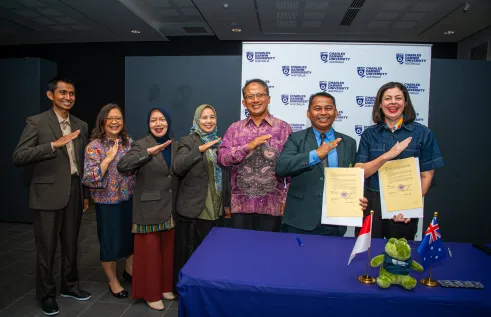
Partnership with Indonesian university to support education and research
A new partnership with one of East Java’s leading education institutions is aligning Charles Darwin University with priorities to strengthen Australia’s relationship with Indonesia.
Read more about Partnership with Indonesian university to support education and research
Federal funding for Country-based health and climate resilience
A new research collaboration to support and strengthen Country-based health and climate resilience has received funding through the National Health and Medical Research Council’s Centres of Research Excellence scheme.
Read more about Federal funding for Country-based health and climate resilience
New livestream brings remote Australian arid zone waterhole to the world
A new livestream from a remote waterhole in the Northern Territory is giving people around the world the opportunity to observe wildlife in real time.
Read more about New livestream brings remote Australian arid zone waterhole to the world


