News
Red tape and regulations: A powerful weapon in new economic reality, study finds
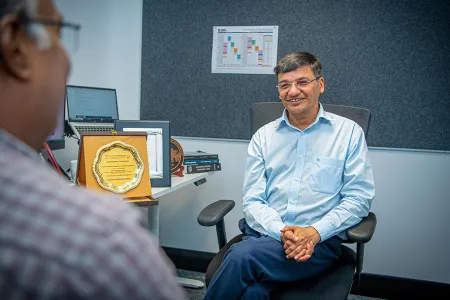
The global financial order has entered a new, shifting and disruptive era of nationalism and these changes lay bare the difference between the haves and have nots, according to a new study with Charles Darwin University (CDU).
The study by Griffith University, CDU and Ho Chi Minh City University of Economics and Finance has found that regulatory quality and global power shape international financial markets movement over time.
Regulatory quality (RQ) refers to a government's ability to design and enforce policies that support private sector development, and global power (GP) is a country's economic, political and military influence.
Both factors have become critical in the way stock markets are shaped, particularly post-2020 when some economies began shifting towards financial nationalism, prioritising domestic production and imposing tariffs.
The study examined these factors across 17 G20 economies between 1996 and 2022 and found strong evidence that both RQ and GP positively influence stock market integration, or the process where national markets become linked with global systems.
However, co-author and CDU Associate Professor in Accounting and Finance Rakesh Gupta said together that these factors combined can have negative results.
“This is particularly relevant for economies like the United States and China, where institutional power may support financial leadership, yet simultaneously buffer against full synchronization with global markets,” Associate Professor Gupta said.
“Geopolitical tensions and regulatory differences are accelerating fragmentation in the global financial system. This has led to heightened demands for better international coordination, stronger digital and climate finance frameworks, and more robust global institutions to protect financial stability and inclusion.”
According to the study's data, the United States is the only country (of the examined) with both high RQ and GP. Countries with high RQ but low GP include Canada, Australia, the United Kingdom, Japan and Germany.
China's GP has increased in recent years to near comparable levels with the United States, but its RQ has fluctuated. Argentina has the lowest RQ of the countries examined.
Lead author and Griffith University PhD candidate in Finance Sama Haddad said the research underscored the importance of international cooperation.
“Financial integration is no longer uniform; it depends on how regulatory strength and global influence interact,” Ms Haddad said.
“For policymakers and investors alike, this means global markets can diverge at critical moments, weakening traditional diversification strategies.
“Strong domestic regulation alone is no longer sufficient. Policy coordination across borders is becoming essential as global financial systems fragment.
“In today’s environment, regulation is not just about stability; it also shapes how economies connect or disconnect from global markets.”
How Regulation and Global Standing Shape Stock Market Co-Movements: A G20 Panel Study was published in the International Review of Finance.
Aligned with the United Nations Sustainable Development Goals
Decent work and economic growth
Goal 8
Promote sustained, inclusive and sustainable economic growth, full and productive employment and decent work for all.
Related Articles

Rangers reimagine AI in wildlife monitoring
As workplaces around the world wrestle to integrate Artificial Intelligence in their operations, researchers and rangers in the heart of West Arnhem are successfully embracing this technology in conservation without compromising respect and knowledge.
Read more about Rangers reimagine AI in wildlife monitoring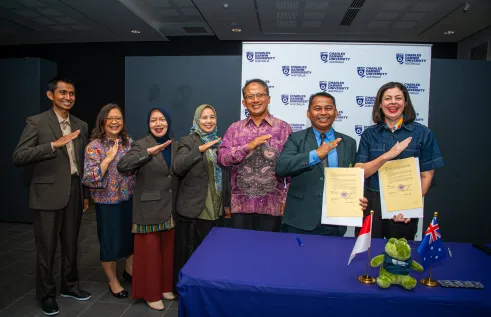
Partnership with Indonesian university to support education and research
A new partnership with one of East Java’s leading education institutions is aligning Charles Darwin University with priorities to strengthen Australia’s relationship with Indonesia.
Read more about Partnership with Indonesian university to support education and research
Crocheted landscape takes the gold in architecture competition
When tasked to defy growing reliance on artificial intelligence and create a landscape model without digital tools, Charles Darwin University (CDU) Bachelor of Architectural Design student Jorja Handebo turned to her hobby of the past five years: crochet.
Read more about Crocheted landscape takes the gold in architecture competition


