news article
The Resilience Project founder to feature at CDU youth event

The Resilience Project founder, responsible for his work with schools and some of Australia’s most famous athletes, will be the keynote speaker at the Charles Darwin University’s Youth Futures Workshop next week.
Hugh Van Cuylenburg has become renowned for producing a specially designed journal which helps users practice gratitude, mindfulness and empathy.
Many athletes have been using the journal, including AFL triple Norm Smith Medallist Dustin Martin and former Australian Test cricket captain Steven Smith, who both hailed the product’s impact on their outstanding form.
Martin and Smith have both been using the journal since 2017, saying it helps them feel calmer in pressure situations and reminds them to be grateful for everything they have.
The Resilience Project program – which Van Cuylenburg founded in 2011 – is not just for athletes.
Van Cuylenburg has since spoken to more than 250,000 school students, teachers and parents as well as a host of professional NRL, AFL, cricket, soccer and netball sides across the country.
He said while mental health issues in sport are “frightening”, they affect all sections of society.
“The aim of the journal is to help people appreciate what they have, be present and think of others,” Van Cuylenburg said.
“To practice gratitude, it’s about paying attention to things you do have, not the things you don’t, which can be a trap for elite sportspeople.
“Mindfulness is all about being present in the moment and also practicing empathy by doing kind things for people.
“There’s so many proven benefits that come from this, and many of the athletes I work with will do things like buy a coffee for someone else in a queue, work with the homeless, send thoughtful emails to those close to them or make an effort with friends who might be struggling.”
CDU Student Recruitment and Events Manager Marissa Briston said organisers were thrilled to secure someone of Van Cuylenburg’s profile for the event.
“The objective of this workshop is to help youths understand and strengthen their skills to assess their mental health, develop positive mental health and build self-esteem in order to support better decision-making and kickstart goals for early career development and aspirations for their futures,” she said.
“We want to ensure youths prepare themselves mentally and are aware of their support systems as they start deciding career pathways at their local university and local job opportunities available in the Northern Territory.
“To have someone of Hugh’s calibre as the keynote speaker will be a great experience for the youths attending and we are also excited at the other guest speakers we have presenting.”
Other speakers at the event include Dr Joanne Wicks (CDU Alumni and former Lecturer, Play Therapy), Malia Ford (CDU Occupational Therapy student, Board Member and Lived Experience Specialist from charity mental health organisation Two Two One) and Russel Kundu (CDU Law Alumni and current CDU Student Advisor).
The event will also be accessible for all young people in regional and rural/remote NT via a livestream and recording.
CDU’s Youth Futures Workshop, which is part of NT Youth Week, will take place on 15 April from 9am to 2pm onsite at CDU Stadium, Marrara. For more information and to register for the event visit cdu.edu.au/events
Related Articles
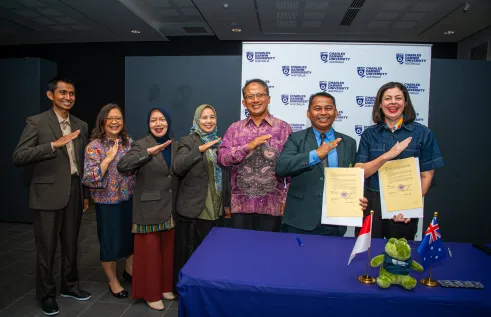
Partnership with Indonesian university to support education and research
A new partnership with one of East Java’s leading education institutions is aligning Charles Darwin University with priorities to strengthen Australia’s relationship with Indonesia.
Read more about Partnership with Indonesian university to support education and research
Darwin needs a BBL: Architecture student's vision for the Top End
A vertical promenade designed by a Charles Darwin University (CDU) architecture student and inspired by Singapore's Gardens by the Bay offers a glimpse into Darwin's future facelift.
Read more about Darwin needs a BBL: Architecture student's vision for the Top End
CDU improves standing in Times Higher Education rankings
Charles Darwin University (CDU) has improved its standing across all five categories in the 2027 Time Higher Education World University Rankings.
Read more about CDU improves standing in Times Higher Education rankings


