News Article
Salon exhibition to showcase Indigenous artwork
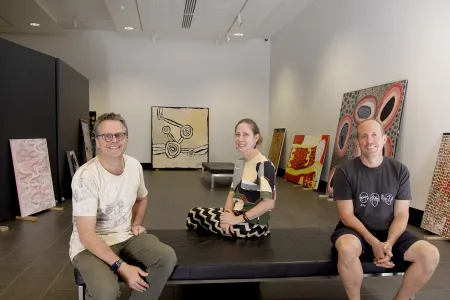
The Charles Darwin University Art Gallery will celebrate five years of hosting The Salon des Refusés exhibition this month, marking the occasion with a tribute to past entries.
The iconic companion event to the prestigious Telstra National Aboriginal and Torres Strait Islander Art Award (NATSIAA) has grown in prominence since its inception in 2013, and will open on 5 August.
CDU Art Gallery Curator Kellie Joswig said the exhibition, which features art works not selected for NATSIAA, had become a must-see event on the Darwin visual arts calendar.
“The exhibition will be slightly smaller this year due to COVID-19, but we are excited to showcase the enormous talent on offer,” she said. “We have social distancing measures in place and sanitiser on hand for visitors.”
Ms Joswig said this year marked a five-year partnership with Salon Art Projects to host the exhibition at the CDU gallery on Casuarina campus, with the goal of showcasing Indigenous art to the community.
“To celebrate five years of our partnership with Salon Art Projects, the Salon des Refusés will also feature a display of artworks acquired by Charles Darwin University from Salon exhibitions since 2016,” she said.
Paul Johnstone Gallery and Outstation – art from art centres instigated the Salon des Refusés in 2013, which allows audiences to access works they were not able to view previously and to judge for themselves.
The original Salon des Refusés was an art exhibition that took place in Paris in 1863, showing works that had been rejected by the official Paris Salon.
Salon des Refusés will run at the CDU Art Gallery from 5 August – 25 September, Wednesday – Friday 10am to 4pm. For more information visit: www.cdu.edu.au/artcollection-gallery
Related Articles
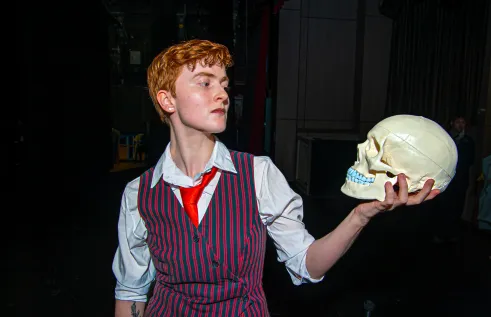
Hamlet gets a contemporary twist in Darwin
Shakespeare’s most famous tragedy will be brought into the modern world in a bold new production of Hamlet at Charles Darwin University Theatre this month.
Read more about Hamlet gets a contemporary twist in Darwin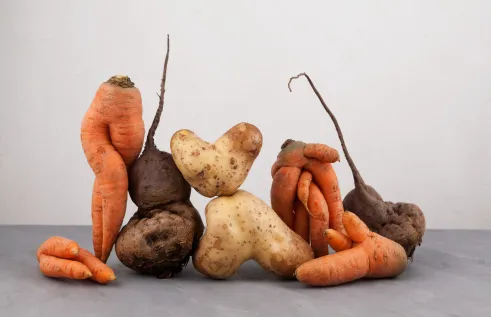
The good, the bad, and the ugly food: Why religious shoppers are buying bruised veggies
A recent study with Charles Darwin University examines how consumers’ religiosity influences the purchase of “ugly foods”, or foods that are aesthetically imperfect but nutritious.
Read more about The good, the bad, and the ugly food: Why religious shoppers are buying bruised veggies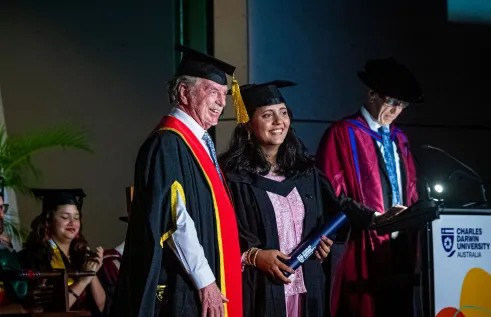
Student Council President celebrates graduation, prepares to pass the torch to new team
After serving as the Charles Darwin University (CDU) Student Council President for two years, Shishtata Bhandari has graduated and is preparing to hand over the reins to the council's next leader.
Read more about Student Council President celebrates graduation, prepares to pass the torch to new team


