Should you study a short course with Harvard or Stanford? New book says to think twice
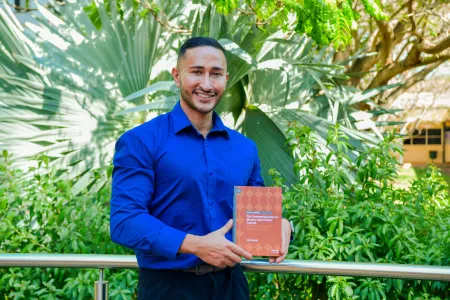
Online platforms which once promised to make learning from universities such as Harvard and Stanford available to the masses are turning education into a product which can be traded, bought, or sold according to a new book challenging the ethics of these sites.
Charles Darwin University (CDU) digital initiatives expert Dr Seb Dianati, who is an academic lead in the Learning Futures team within Education Strategy at the university, recently published The Commercialisation of Massive Open Online Courses: Reading Ideologies in Between the Lines.
The book explores the transition of Massive Open Online Courses (MOOCs) from providing free and inclusive education to becoming for-profit enterprises, focusing on platforms Coursera, edX, Udacity, and Udemy.
MOOCs became widespread after Stanford University pioneered the first free course from a leading university to be accessible to millions of people in 2011.
Many online platforms have shifted from being educational pioneers to commercial entities, with this book shedding light on how the noble idea of accessible education became commodified.
Coursera, edX and Udemy offer courses from world-leading universities and companies such as Harvard University, Johns Hopkins University, Google, Meta and more, while Udacity has courses developed with companies such as Microsoft, Amazon, and Accenture.
In the book, Dr Dianati traced how the ideology and educational motives of these platforms changed over more than a decade.
“For instance, on one website it went from ‘take the world’s best courses, for free’ to ‘take the world’s best courses’,” Dr Dianati said.
The message on these websites promotes a two-tier education system, masked by rhetoric of accessibility, autonomy, and agency. This system divides learners into those who need to find value in their MOOCs and those who participate in a traditional education system.
The book challenges the perspective of learners as mere economic units, advocating for an educational model that empowers individuals to become critical, socially conscious citizens rather than just consumers of education for profit or personal gain.
"If university leaders truly aim to democratise education, they must first examine and reform their own approaches to online learning. The fading promise of 'free' education on major platforms signals a need to question their underpinning ideologies,” Dr Dianati said.
“Change in university practices towards MOOCs should embody a commitment to dismantling barriers, not erecting paywalls that hinder the spread of knowledge.”
Dr Dianati said the book also provided social researchers a step-by-step guide in how they can conduct an ideological critique using any artefact.
The Commercialisation of Massive Open Online Courses: Reading Ideologies in Between the Lines is available on Springer.
Related Articles

First Nations Training and Teacher Education Hub celebrates first major milestone
As Charles Darwin University's (CDU) First Nations Training and Teacher Education Hub draws closer to the end of its first year, one of its greatest milestones to date was conferring its first six graduates.
Read more about First Nations Training and Teacher Education Hub celebrates first major milestone
Federal funding for Country-based health and climate resilience
A new research collaboration to support and strengthen Country-based health and climate resilience has received funding through the National Health and Medical Research Council’s Centres of Research Excellence scheme.
Read more about Federal funding for Country-based health and climate resilience
New livestream brings remote Australian arid zone waterhole to the world
A new livestream from a remote waterhole in the Northern Territory is giving people around the world the opportunity to observe wildlife in real time.
Read more about New livestream brings remote Australian arid zone waterhole to the world


