News
Student research provides insight to support Territory communities
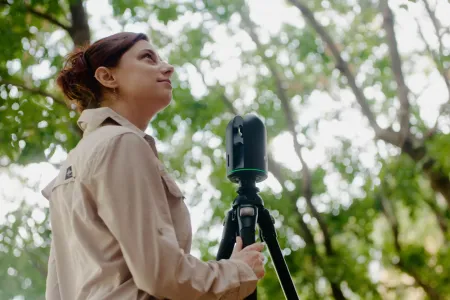
More than 100 Charles Darwin University (CDU) Masters by Research and PhD students will present insight into how their research will contribute to better Territory communities this week.
The three-day Higher Degree by Research (HDR) conference held this week will see students present their research to the Territory community in fields such as maternity care, energy policy, and environmental management and more.
With 337 HDR students currently enrolled at the university, about a third of the students will be presenting at the conference.
The theme of this year’s event is ‘Connect and Succeed: From Research to Real Life Impact’, which is set to highlight how research at CDU can impact Northern Territory communities and the wider Asia Pacific region.
The presentations include:
- How First Nations food preparation traditions can connect different generations and with people from various background (Tereza Hlavackova, CIFEA)
- How communities feel about large-scale renewable energy projects in the Northern Territory – (Yuri Arvian, CIFEA)
- What further research is needed into commercial cultivate of Australia’s wild rice – (Gehan Abdelghany, CEITE)
- Parents’ attitudes and beliefs, and relevant social and contextual factors, which might influence their decisions about using antibiotics on their children - (Stephanie Marsh, CHHS)
CDU Pro-Vice-Chancellor Research and Innovation Professor Steve Rogers said this year’s conference will highlight some of the significant research being done at CDU that would benefit the Territory and beyond.
“We have more than 100 presenters this year, which is just extraordinary and reinforces the university’s reputation in delivering quality research that matters to the Northern Territory,” Professor Rogers said.
“There is research being presented across a wide range of disciplines that has the potential to change communities in the Territory and abroad.”
CDU Masters Student Yuri Arvian will present at the conference on Thursday about how communities feel about large-scale renewable energy projects in the Northern Territory, such as Sun Cable in the Barkly region.
“Sun Cable will be the biggest solar project in the world, bringing jobs and economic activity. It’s going to affect a lot of communities but particularly around Tennant Creek and the Barkly region,” he said.
CDU’s Higher Degree by Research (HDR) conference will be held on June 8 to 10 at Mal Nairn Auditorium at CDU’s Casuarina campus.
Register your attendance and read the full program here
Related Articles
Federal funding for Country-based health and climate resilience
A new research collaboration to support and strengthen Country-based health and climate resilience has received funding through the National Health and Medical Research Council’s Centres of Research Excellence scheme.
Read more about Federal funding for Country-based health and climate resilience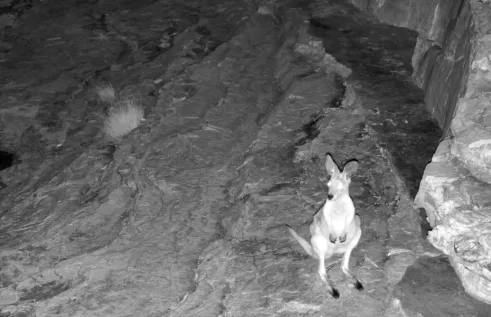
New livestream brings remote Australian arid zone waterhole to the world
A new livestream from a remote waterhole in the Northern Territory is giving people around the world the opportunity to observe wildlife in real time.
Read more about New livestream brings remote Australian arid zone waterhole to the world
How ants are cashing in on the fight against money laundering
An AI model inspired by ants, bees, and birds could be the key to cracking down on blockchain-based money laundering, new research led by Charles Darwin University (CDU) has found.
Read more about How ants are cashing in on the fight against money laundering


