Study explores if sustainable development research is really focused on well-being
The success of the United Nations’ global sustainability targets is often measured through economic growth – but what about how people feel and live?
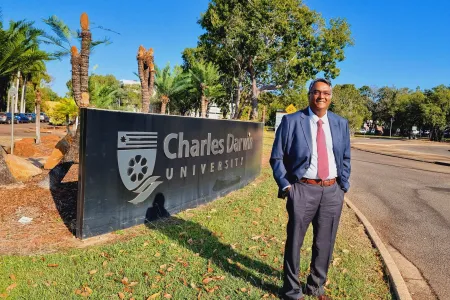
A new study led by Charles Darwin University (CDU) has examined whether human wellbeing — life satisfaction, happiness, quality of life, and living standards — is being sufficiently integrated into the global development agenda.
The paper is the first to examine how wellbeing aligns with the United Nations’ Millennium Development Goals (MDGs) and the Sustainable Development Goals (SDGs).
While well-being is specifically represented in SDG Goal 3, Good Health and Wellbeing, the state of being comfortable, healthy or happy extends across all goals.
The study reviewed research from around the world between 2007 and 2024 which focused on wellbeing in relation to the MDGs and SDGs.
Lead author and CDU Associate Lecturer in Business and Economics Dr Mohammad Rajib Hasan said while wellbeing is widely acknowledged, it remained unevenly explored, with most research focused on wealthier nations and limited representation from developing and Indigenous communities.
“Wellbeing lies at the heart of the global sustainability challenge,” Dr Hasan said.
“It goes beyond health or income—it’s about how people feel about their lives, their sense of security, opportunity, and purpose. Yet, much of global progress is still assessed through GDP and economic output, not human fulfilment.”
“The problem is that wellbeing research and policy are still dominated by high-income countries. The voices and lived experiences of people in the Global South, Indigenous, and remote communities remain largely absent. This gap exists partly because of underinvestment in social science research and the high cost of large-scale surveys capturing people’s real experiences.”
The review shows a strong, positive connection between wellbeing and health (SDG Goal 3), education (SDG Goal 4), environmental quality (SDG Goal 13), and governance (SDG Goal 16).
It also found there to be short-term trade-offs between wellbeing and other goals such as responsible consumption (SDG 12) and climate action (SDG 13), where lifestyle or economic changes may initially reduce life satisfaction.
Education was also identified as a central bridge between sustainability and wellbeing.
Dr Hasan said the findings underscore the need to place people’s wellbeing at the center of development efforts, and that policymakers should begin to measure wellbeing alongside economic indicators.
“Economic growth without wellbeing is hollow. Sustainability must be judged by its capacity to expand people’s freedoms, improve their quality of life, and make them happier, not only by environmental or fiscal targets,” Dr Hasan said.
“Governments should design development strategies that are not only economically sustainable but also socially equitable and culturally meaningful. That ensures the goals of sustainable development truly benefit all people, not just those in developed regions.”
The study was conducted alongside Griffith University Professor of Econometrics Eliyathamby A Selvanathan, and from CDU Lecturer in Business and Economics Dr Bhanu Bhatia, Professor of Marketing Steven Greenland, and Professor of Economics Maneka Jayasinge.
Well-Being and Sustainable Development: A Systematic Review and Avenues for Future Research was published in the journal Sustainable Development.
Related Articles
Federal funding for Country-based health and climate resilience
A new research collaboration to support and strengthen Country-based health and climate resilience has received funding through the National Health and Medical Research Council’s Centres of Research Excellence scheme.
Read more about Federal funding for Country-based health and climate resilience
New livestream brings remote Australian arid zone waterhole to the world
A new livestream from a remote waterhole in the Northern Territory is giving people around the world the opportunity to observe wildlife in real time.
Read more about New livestream brings remote Australian arid zone waterhole to the world
How ants are cashing in on the fight against money laundering
An AI model inspired by ants, bees, and birds could be the key to cracking down on blockchain-based money laundering, new research led by Charles Darwin University (CDU) has found.
Read more about How ants are cashing in on the fight against money laundering


