Study finds AI can help buildings become safer, resilient and more sustainable
Artificial intelligence could be key to designing buildings which are resilient to both climate extremes and infectious disease threats, according to a study with Charles Darwin University (CDU).
The study by the University of Tehran, CDU and Australian Catholic University conducted a review of how AI is being used in smart buildings, with a focus on energy efficiency and management.
Buildings produce more than two-thirds of global carbon emissions and energy consumption but managing and saving energy in buildings is challenging and costly.
Co-author and CDU adjunct Associate Professor Niusha Shafiabady said of note, the review found AI could be valuable in improving building ventilation and thermal comfort.
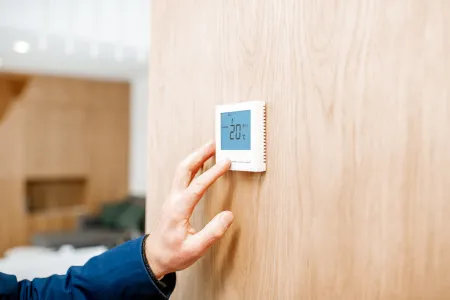
Associate Professor Shafiabady said at present, most buildings use static Heating, Ventilation and Air Conditioning (HVAC) systems, which can impact structure sustainability and the health of occupants.
“Overheated or poorly ventilated spaces not only reduce occupant comfort but also increase the likelihood of airborne disease spread,” Associate Professor Shafiabady said.
“Static HVAC designs fall short under fluctuating climate conditions. The study supports the use of adaptive thermal control systems that respond to occupancy, external climate, and internal heat gains in real time.
“This opens the door for AI-driven optimisation, where machine learning models can predict and adjust thermal conditions to balance comfort, energy efficiency, and health outcomes.”
The study proposes a framework that allows building designers and facility managers to use AI to simulate thermal scenarios and evaluate their impact on airborne transmission risk.
“It’s modular, scalable, and adaptable to different building types, from classrooms to hospital wards,” Associate Professor Shafiabady said.
“Importantly, it provides a quantitative basis for decision-making, enabling stakeholders to prioritise interventions that enhance both thermal comfort and infection control.”
This research was conducted alongside lead author Mohammadreza Haghighat from the University of Tehran and co-author Ehsan Mohammadi Savadkoohi from CDU.
Future potential research includes integrating this framework with real-time sensor data and AI algorithms, using this research to help inform building regulatory standards.
“This research bridges engineering and epidemiology, offering practical guidance for architects, facility managers, and policymakers seeking to future-proof buildings against health threats,” Associate Professor Shafiabady said.
Applications of Explainable Artificial Intelligence (XAI) and interpretable Artificial Intelligence (AI) in smart buildings and energy savings in buildings: A systematic review was published in Journal of Building Engineering.
Related Articles

Federal funding for Country-based health and climate resilience
A new research collaboration to support and strengthen Country-based health and climate resilience has received funding through the National Health and Medical Research Council’s Centres of Research Excellence scheme.
Read more about Federal funding for Country-based health and climate resilience
New livestream brings remote Australian arid zone waterhole to the world
A new livestream from a remote waterhole in the Northern Territory is giving people around the world the opportunity to observe wildlife in real time.
Read more about New livestream brings remote Australian arid zone waterhole to the world
Leading scientist recognised for lifetime of dedication to Australian biodiversity and conservation
One of the nation’s most distinguished experts in Australian biodiversity and conservation will be celebrated in an upcoming Charles Darwin University graduation ceremony.
Read more about Leading scientist recognised for lifetime of dedication to Australian biodiversity and conservation


