News article
Territorians urged to have their say in solar survey
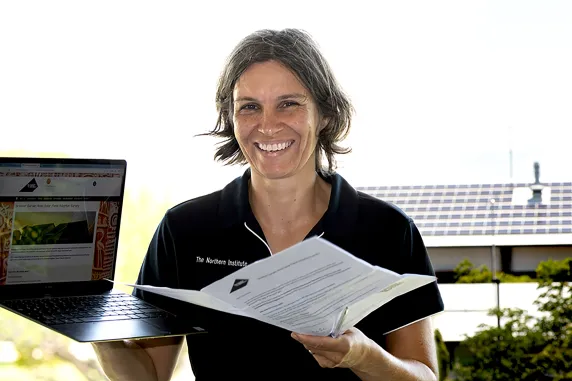
Charles Darwin University Northern Institute Associate Professor Dr Kerstin Zander wants to understand why one of the sunniest places on earth has such a low uptake of solar energy in Australia.
“We have the highest average electricity bills in the country, but the lowest take-up of solar energy,” Dr Zander said.
“Right now, we are on a par with Tasmania with 18 per cent uptake of solar panels, compared to 30 per cent in Queensland and 25 per cent across Australia.”
Dr Zander believes that many people who have moved from southern states are not aware that the NT still has the highest feed-in-tariffs in Australia. In most other states the financial incentives have been cut.
“It makes economic sense to install solar panels,” she said.
“Besides contributing to reductions of carbon emissions, solar panels help people to reduce their electricity bills and protect them from future increases in electricity prices.”
In most cases, selling solar energy back to the electricity provider can become a steady source of income. For landlords and people running pools and air-conditioning or larger homes the savings are still worthwhile.
“The initial outlay of around $7000 to $9000 after rebates is recouped in about five years, and from then on people can make up to $2000 a year from a medium sized solar system of 5 to 6 kWh,” Dr Zander said.
Funded by the NTG Renewable Energy Research and Development Grants Program, the research is being carried out by a team of researchers from Northern Institute at CDU. Home owners should look out for the survey in their letter boxes or check online. The survey will run until the end of the year.
Related Articles
Federal funding for Country-based health and climate resilience
A new research collaboration to support and strengthen Country-based health and climate resilience has received funding through the National Health and Medical Research Council’s Centres of Research Excellence scheme.
Read more about Federal funding for Country-based health and climate resilience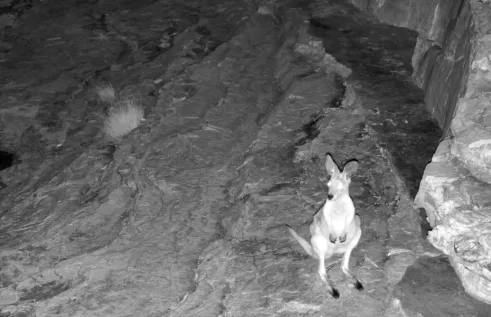
New livestream brings remote Australian arid zone waterhole to the world
A new livestream from a remote waterhole in the Northern Territory is giving people around the world the opportunity to observe wildlife in real time.
Read more about New livestream brings remote Australian arid zone waterhole to the world
How ants are cashing in on the fight against money laundering
An AI model inspired by ants, bees, and birds could be the key to cracking down on blockchain-based money laundering, new research led by Charles Darwin University (CDU) has found.
Read more about How ants are cashing in on the fight against money laundering


