News
Study shows links between Australia’s false killer whales and endangered groups from Hawaii
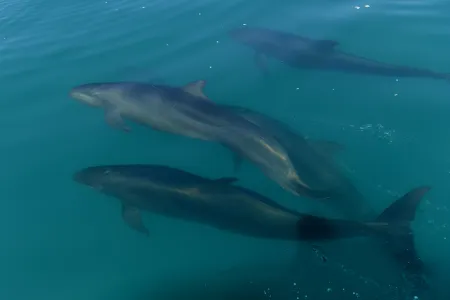
False killer whales off the Northern Australia coast need their conservation status reviewed because of similarities they share with groups from Hawaii listed as Endangered in the USA, a Charles Darwin University (CDU) researcher says.
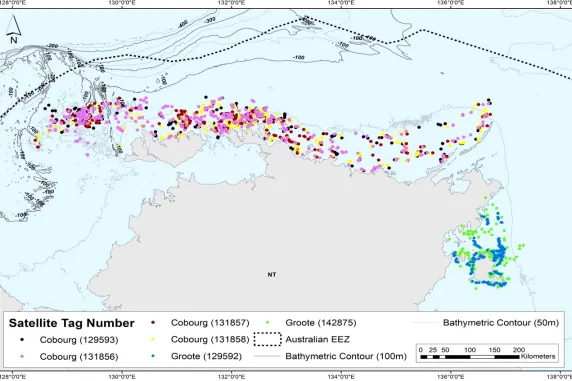
The latest research, published in Frontiers in Marine Science, investigated satellite tag information and DNA samples of the marine mammals from shallow coastal waters from the Cobourg Peninsula in the Northern Territory to the Kimberley region of Western Australia.
In 2012 one of the samples within Port Essington of the Cobourg Marine Park in northern Australia was found to share genetic ancestry with false killer whales found off the coast of Hawaii, and there are other similarities between the groups too.
In Hawaii there are two separate groups of coastal false killer whales - a distinctive species of dolphin - and neither mix with their offshore cousins who live in deep water and this looks like being the case in northern Australia.
Under American legislation however, their false killer whales are labelled as Endangered, whereas in Australia the local populations are listed as Cetaceans, with no Australian Conservation Status.
“We would like to take a precautionary approach and update the conservation status of false killer whales as vulnerable,” said lead researcher, marine biologist Dr Carol Palmer.
“The Australian false killer whales could be genetically unique and also endangered. We need more data to know for sure,” Dr Palmer said.
In Hawaii there are two populations of the coastal false killer whales, one of around 250 individuals and another of about 500.
It is unknown how many are in the Australian populations.
“I think in Australia the populations are naturally small, but we need the funding to get an accurate population estimate,” Dr Palmer said.
The Australian false killer whales seem to travel along the coast, with one tagged individual travelling 7500 kilometres over 105 days, about the same speed as an Olympic long-distance swimmer, she said.
“The tracking and genetic results did show that the false killer whales covered a huge range across Northern Australia.”
First Nations rangers from across the Top End (and the Kimberley), including rangers who were part of the Marine Megafauna workshop and false killer whale research, met at the CDU’s Waterfront campus in mid-February to discuss the findings of this latest study and ongoing marine megafauna work to be carried out in the unique sea country of the NT.
Read the research here.
Related Articles
'Desert Rose' to be preserved
The legacy of a world record-breaking solar car, developed by and raced by Charles Darwin University students and staff, will be preserved and celebrated in the Northern Territory’s premier museum.
Read more about 'Desert Rose' to be preserved
Federal funding for Country-based health and climate resilience
A new research collaboration to support and strengthen Country-based health and climate resilience has received funding through the National Health and Medical Research Council’s Centres of Research Excellence scheme.
Read more about Federal funding for Country-based health and climate resilience
New livestream brings remote Australian arid zone waterhole to the world
A new livestream from a remote waterhole in the Northern Territory is giving people around the world the opportunity to observe wildlife in real time.
Read more about New livestream brings remote Australian arid zone waterhole to the world


