Federal funding for Country-based health and climate resilience

A new research collaboration to support and strengthen Country-based health and climate resilience has received $3 million in funding through the National Health and Medical Research Council (NHMRC)’s Centres of Research Excellence (CRE) scheme.
Country is a Healing and Resilience Pathway (CHiRP)–CRE is an initiative led by Charles Darwin University, in collaboration with national Aboriginal and Torres Strait Islander communities of practice and researchers.
NHMRC’s CRE scheme aims to improve health outcomes and promote or improve translation of research outcomes into policy and/or practice.
CHiRP–CRE will be led by Professorial Research Fellow Linda Payi Ford, a Rak Mak Mak Marranunggu Senior Elder (Kurrindju, NT) woman from CDU’s Northern Institute.
The project aims to support and scale up grassroots initiatives that mitigate climate impacts and promote the promote the health and wellbeing of Country and community.
CHiRP–CRE builds on previous collaborations CRE-STRIDE (2020 to 2025) and the HEAL Network (2022 to 2026), which advanced Indigenous-led primary health care systems research and addressed health and climate resilience respectively.
“As an Aboriginal and Torres Strait Islander-led Centre of Research Excellence, we will be guided by community priorities in climate change, health and wellbeing to build resilience using methodologies that capture the Aboriginal and Torres Strait Islander values of listening, feeling, and caring for Country through lived experiences — while protecting our knowledge systems for future generations.” Professor Ford said.
CHiRP–CRE is a collaboration between researchers from University of Western Australia, Martuwarra Fitzroy River Council, Queensland University of Technology, Southern Cross University, University of Sydney, Australian National University, Murdoch University, and Indigenous health advocate Donna Burns.
CDU Deputy Vice-Chancellor First Nations Leadership Professor Ruth Wallace said the funding of CHiRP-CRE was an important milestone in First Nations research.
"This collaboration will have important, far-reaching outcomes for First Nations people, particularly since the entire research team is made up of First Nations researchers and professionals," Professor Wallace said.
"The knowledge and skills of this national Aboriginal and Torres Strait Islander research team will be invaluable in improving the wellbeing of Country and community amid the climate crisis."
Aligned with the United Nations Sustainable Development Goals
Good health and well-being
Goal 3
Ensure healthy lives and promote well-being for all at all ages.
Related Articles
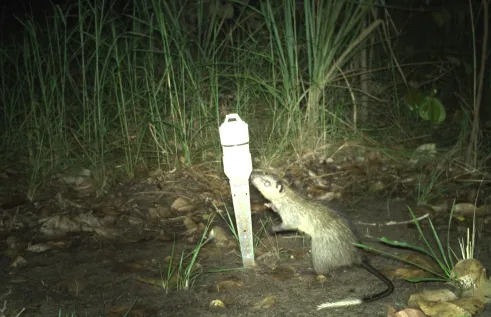
Rangers reimagine AI in wildlife monitoring
As workplaces around the world wrestle to integrate Artificial Intelligence in their operations, researchers and rangers in the heart of West Arnhem are successfully embracing this technology in conservation without compromising respect and knowledge.
Read more about Rangers reimagine AI in wildlife monitoring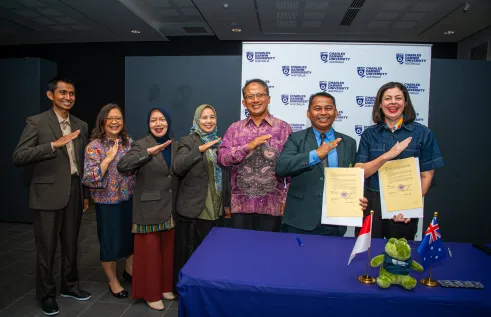
Partnership with Indonesian university to support education and research
A new partnership with one of East Java’s leading education institutions is aligning Charles Darwin University with priorities to strengthen Australia’s relationship with Indonesia.
Read more about Partnership with Indonesian university to support education and research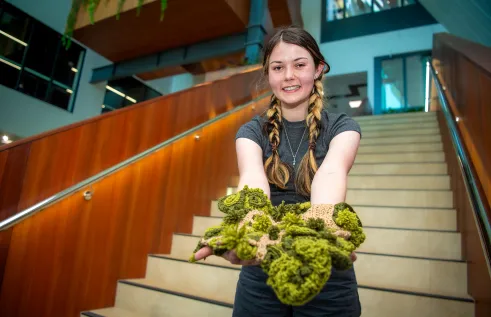
Crocheted landscape takes the gold in architecture competition
When tasked to defy growing reliance on artificial intelligence and create a landscape model without digital tools, Charles Darwin University (CDU) Bachelor of Architectural Design student Jorja Handebo turned to her hobby of the past five years: crochet.
Read more about Crocheted landscape takes the gold in architecture competition


