News
Urgent action needed as Gulf dugong numbers decline, Traditional Owners and researchers warn
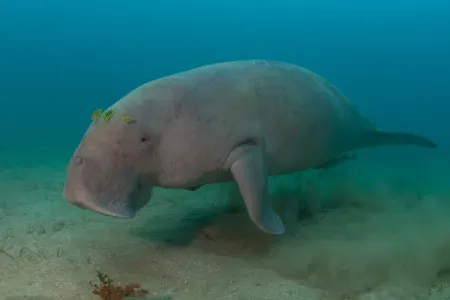
Results from the 2025 Gulf of Carpentaria dugong aerial survey have revealed a sharp decline in numbers compared with the last survey conducted in 2007, sparking a call from Traditional Owners for urgent action.
Charles Darwin University Senior Research Fellow Dr Rachel Groom and James Cook University TropWATER’s Dr Chris Cleguer, Senior Researcher, are calling for researchers to work with Traditional Owners to monitor and protect dugong populations.
In 2007 an aerial survey recorded 471 dugongs in the area, in 2025 only 305 were recorded.
The decrease in the population is most concentrated in the southeast Gulf region, where the survey recorded 231 dugongs in 2007 and 63 dugongs in 2025.
In the Northern Territory, numbers have remained relatively stable, with 242 dugongs recorded in 2025, compared with 240 in 2007.
Yanyuwa Traditional Owner Shaun Evans said that dugong populations cannot be protected without looking after Sea Country as well.
“We need the resources and authority to look after Country properly,” Mr Evans said.
“Dugongs are really important to Yanyuwa people. They are part of our culture and our Country.”
Dr Groom said that a coordinated response from Traditional Owners, rangers, scientists and government representatives was key to ensuring this vulnerable species was protected.
“The message from the Gulf Dugong Workshop in Borroloola is clear - Traditional Owner knowledge, Ranger observations and science need to be brought together,” Dr Groom said.
“Communities need the authority, information and resources to respond when Country is changing.”
“The survey is an important warning signal, but without collaborating to get the whole picture we cannot confirm why this change has occurred.”
Dr Cleguer said regular monitoring was critical, with the existing surveys providing only a snapshot of dugong populations 18 years apart.
“We cannot wait another 18 years for the next Gulf-wide survey,” Dr Cleguer said.
“Just as importantly, we need to support Traditional Owners to lead ongoing monitoring of dugongs and Sea Country between these regional surveys.”
The 2025 Gulf of Carpentaria surveys were funded by the Australian Government under the National Environmental Science Program and the Queensland Government.
Aligned with the United Nations Sustainable Development Goals
Life below water
Goal 14
Conserve and sustainably use the oceans, seas and marine resources for sustainable development.
Related Articles
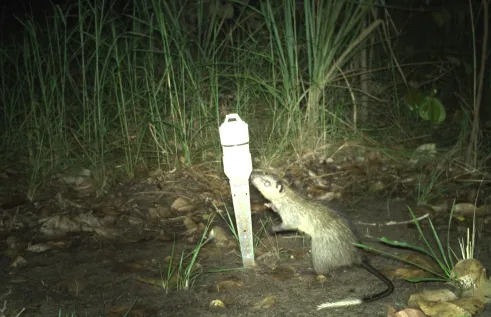
Rangers reimagine AI in wildlife monitoring
As workplaces around the world wrestle to integrate Artificial Intelligence in their operations, researchers and rangers in the heart of West Arnhem are successfully embracing this technology in conservation without compromising respect and knowledge.
Read more about Rangers reimagine AI in wildlife monitoring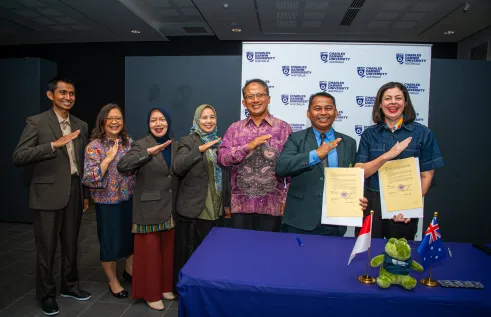
Partnership with Indonesian university to support education and research
A new partnership with one of East Java’s leading education institutions is aligning Charles Darwin University with priorities to strengthen Australia’s relationship with Indonesia.
Read more about Partnership with Indonesian university to support education and research
Darwin needs a BBL: Architecture student's vision for the Top End
A vertical promenade designed by a Charles Darwin University (CDU) architecture student and inspired by Singapore's Gardens by the Bay offers a glimpse into Darwin's future facelift.
Read more about Darwin needs a BBL: Architecture student's vision for the Top End


