Urgent need for science-based approach to shark conservation
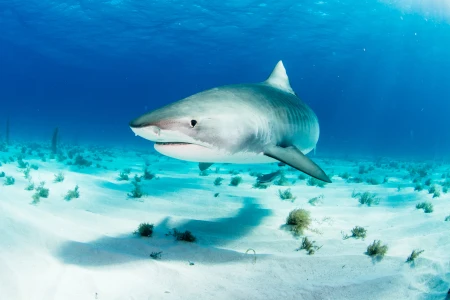
Brazilian authorities must take a science-based approach to shark conservation, with experts warning extreme reactions to bite incidents and population growth will undermine the recovery of the fish.
A new paper with authors from the University of São Paulo in Brazil, Charles Darwin University, the California Academy of Sciences in San Franciso and Ghent University in Belgium has argued proposals such as shark culling and the prohibition of scientific diving could undermine critical conservation efforts in Brazilian Marine Protected Areas (MPAs).
Co-author and CDU Research Fellow for the Research Institute for Environment and Livelihoods Dr Osmar Luiz said there was a disconnect between the goals of conservation efforts in MPAs, and the reaction to the desired outcomes of these efforts.
He cited two recent controversies highlighting this, a 2022 incident with a tiger shark inside marine national park Sueste Bay which has led to “destructive proposals” including shark culling; and the decision to prohibit scientific diving in the St Peter and St Paul’s Archipelago area due to “life-threatening risks” to diving researchers from an increased shark population.
“Shark population recovery is among the main goals of conservation initiatives, and scientific research offers valuable tools to assess the outcomes of regulations and ecological progression of MPAs,” Dr Luiz said.
“The prohibition of scientific diving and proposals for shark culling have been made without considering any scientific evidence or reasonable criteria.
“Shark culling does not necessarily control the number of shark bites and has the potential to catch a high diversity of undesired and endangered species. The lack of surveillance and monitoring of sharks could quickly reverse the progress made by conservation efforts and monetary investment in the past few decades in Brazil.”
Dr Luiz said new strategies and solutions were needed for shark management and should be grounded in a science-based approach which aligns with conservation goals, with potential economic benefits.
“There is a need for studies to assess the reasons behind recurrent shark incidents. Understanding shark behaviour, habitat use, and abundance could provide insights into why these incidents are occurring and how they can be prevented,” he said.
“Second, the potential for further incentives for sustainable activities such as shark diving tourism should be explored. These activities not only have economic benefit but can also contribute to the conservation efforts by raising awareness and appreciation for sharks.
“Third, the immediate resumption of scientific diving and long-term underwater monitoring programs in research stations is crucial. Interaction between sharks and SCUBA divers are rare, and the activities that were recently stopped provide valuable data that can help assess the outcomes of conservation initiatives and the ecological progression of MPAs.”
Beyond fear: a new paradigm to manage shark recovery in Brazilian marine protected areas was published in Perspectives in Ecology and Conservation.
Related Articles
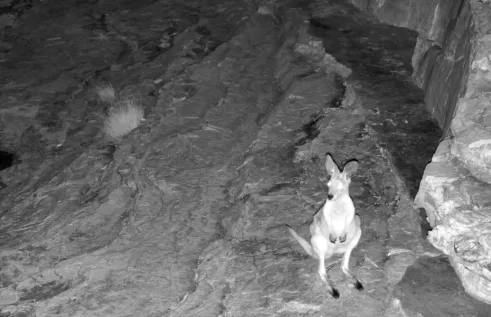
New livestream brings remote Australian arid zone waterhole to the world
A new livestream from a remote waterhole in the Northern Territory is giving people around the world the opportunity to observe wildlife in real time.
Read more about New livestream brings remote Australian arid zone waterhole to the world
Leading scientist recognised for lifetime of dedication to Australian biodiversity and conservation
One of the nation’s most distinguished experts in Australian biodiversity and conservation will be celebrated in an upcoming Charles Darwin University graduation ceremony.
Read more about Leading scientist recognised for lifetime of dedication to Australian biodiversity and conservation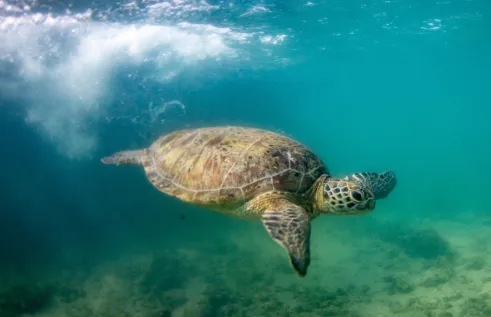
First Nations ranger knowledge reveals the threats facing NT’s green turtles
First Nations ranger groups working in protected areas such as national or marine parks identified illegal commercial fishing as a major concern for the Northern Territory’s green turtle populations, a study led by Charles Darwin University (CDU) and James Cook University (JCU) has found.
Read more about First Nations ranger knowledge reveals the threats facing NT’s green turtles


