Victim-blaming, manipulation, and denial: How terrorists use language to justify violence
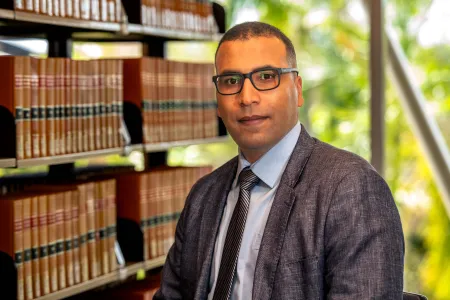
Victim-blaming, denial and reversal are among the tactics used by terrorists to justify their violent actions and influence audience perceptions of harm and agency, according to a new Charles Darwin University (CDU) study examining the language of some of the world’s most notorious individuals.
The study by CDU Linguistics Lecturer and Forensic Linguistics expert Dr Awni Etaywe analysed rhetoric used in texts by Osama Bin Laden, former Boko Haram leader Abubaker Shekau, and Christchurch Mosque gunman Brenton Tarrant.
The analysis revealed the individuals used a variety of linguistic tactics to justify their respective violent actions such as ‘discrediting’ that is to tarnish a target subject to challenge their credibility and capabilities, ‘blaming and denying’ to shift responsibility and blame onto victims, and ‘deontic retaliation’ which involves a variety of tactics terrorists use to present an act of violence as a justified response or retaliation to a past event or offence.
The analysis also shows the individuals use the ‘boulomaic function’, chiefly via wording such as ‘want’, ‘wish’ and ‘hope’ to express the fantasy desire to cause harm without coercing specific actions.
Dr Etaywe said while the individuals adopted a variety of the above, all presented themselves positively while portraying victims negatively.
“This approach articulates beliefs advantageous to threateners while discrediting, delegitimising and blaming victims,” Dr Etaywe said.
“Discrediting is notably prominent in the ‘manipulation’ by texts of Bin Laden and Shekau to influence victim’s behaviour through deterrence or compulsion. Bin Laden strategically employs discrediting in his threat texts to sway the American people’s trust in their political leadership, particularly the Bush administration’s propriety, tenacity and veracity, and to influence anti-war sentiment and stance towards war.
“Shekau’s act of discrediting serves to undermine governance and power image in Nigeria. Shekau enhances his own capacity while casting doubt on the victims’ capacity, manipulating their perception of his power and his opponents’ incapability.
“The boulomaic function is evident in Tarrant’s texts. The bursty repetition of the verb ‘want’ in the context of direct threats emphasises this strong inclination.”
Dr Etaywe said by examining the texts, it allows experts to understand how threats can force behavioural compliance (through e.g. manipulation and retaliation) and cause damage to the subjects of the texts, and how threat texts can offer clues to author’s commitment to violence.
“This offers insight to criminal interrogators on why some texts are polarising, radicalising and mind-unsettling,” he said.
Dr Etaywe is a leading expert in forensic linguistics focusing on terrorism, cybercrime, and digital deviance. His previous research includes a study examining how terrorists use language to mobilise support and legitimise harm, and a study on how far-right conspiratorially terrorist discourse leverages social bonds to incite hatred and radical actions – that is the role of social affiliation in incitement.
Dr Etaywe said this analysis helps society to understand how similar linguistic tactics are used by individuals many might not consider violent extremist, such as former President Donald Trump, to influence and manipulate public perception and behaviour in contemporary media discourse.
‘Discursive pragmatics of justification in terrorist threat texts: Victim-blaming, denying, discrediting, legitimating, manipulating, and retaliation’ was published in the journal Discourse & Society.
Related Articles

The good, the bad, and the ugly food: Why religious shoppers are buying bruised veggies
A recent study with Charles Darwin University examines how consumers’ religiosity influences the purchase of “ugly foods”, or foods that are aesthetically imperfect but nutritious.
Read more about The good, the bad, and the ugly food: Why religious shoppers are buying bruised veggies
Rangers reimagine AI in wildlife monitoring
As workplaces around the world wrestle to integrate Artificial Intelligence in their operations, researchers and rangers in the heart of West Arnhem are successfully embracing this technology in conservation without compromising respect and knowledge.
Read more about Rangers reimagine AI in wildlife monitoring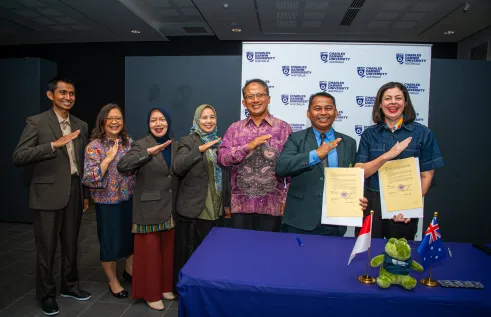
Partnership with Indonesian university to support education and research
A new partnership with one of East Java’s leading education institutions is aligning Charles Darwin University with priorities to strengthen Australia’s relationship with Indonesia.
Read more about Partnership with Indonesian university to support education and research


